
Choosing the wrong sliding system can cause major headaches. This leads to costly callbacks and unhappy clients. Let’s break down how to select the perfect system for any project.
The best sliding door system depends on your project’s specific needs. Consider the door weight, material like wood or glass, its function as a wardrobe or partition, and your budget. The right hardware choice balances performance, durability, and cost-effectiveness for maximum value.
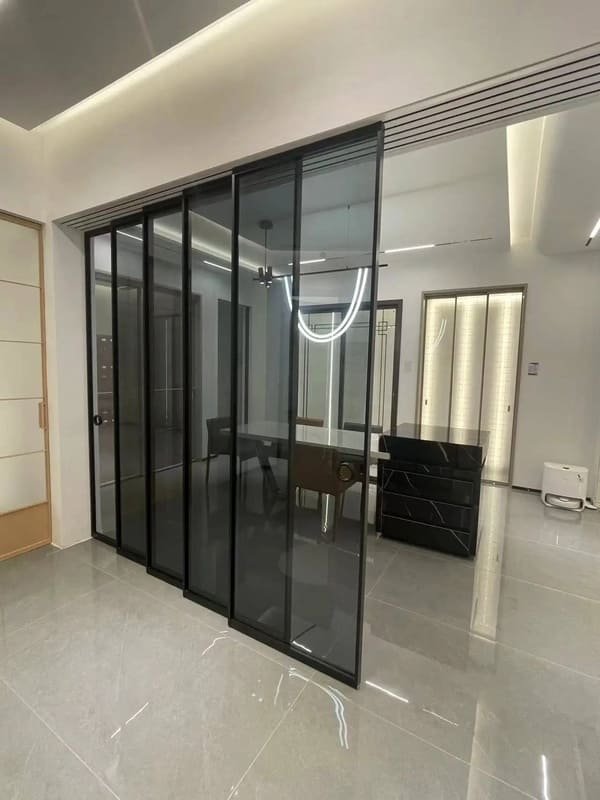
Choosing the right system can feel complex, but it becomes much simpler when you break it down into a few key questions. I’ve learned that focusing on the fundamentals helps me make a smart investment for my business every time. Let’s walk through the exact process I use to make sure every project gets the perfect hardware solution.
How do I choose the right sliding door system?
Feeling overwhelmed by all the options for sliding systems? Picking the wrong one means poor performance and wasted money. I use a simple checklist to match the system to the door.
To choose a sliding door system, first assess the door’s weight and material. Then, consider the application: is it for a heavy partition or a lightweight cabinet? Match these factors with the system’s load capacity and features like soft-close for the best fit.
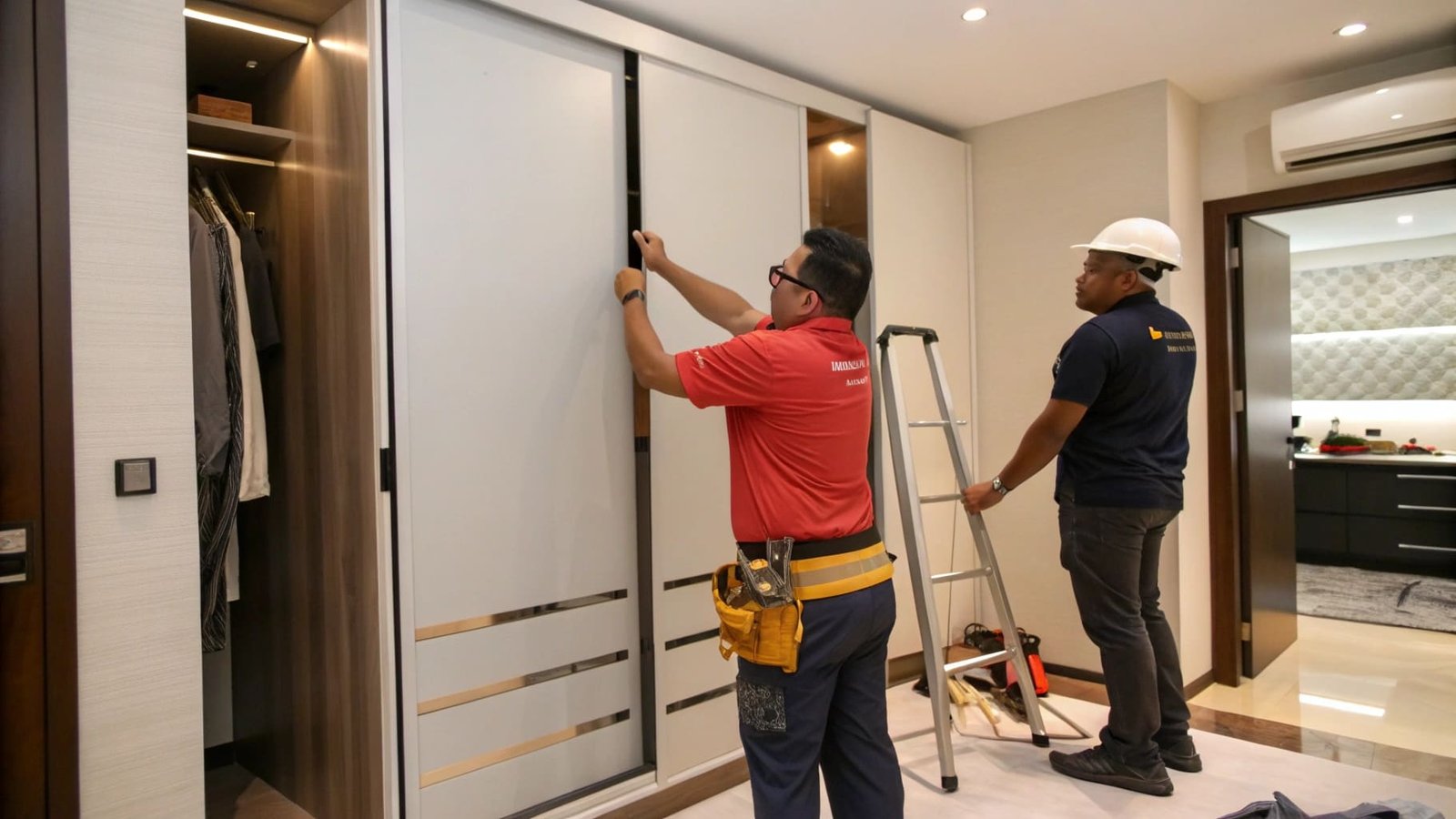
Selecting the right hardware is a critical step that goes beyond just looking at a catalog. Your decision directly impacts the final product’s quality and the end-user’s satisfaction. I always start by analyzing the door panel itself. A heavy, solid wood partition door requires a much more robust system than a lightweight glass cabinet door. You must know the exact weight and dimensions before you even start looking at hardware.
Next, I think about the application. Where and how will this door be used? A high-traffic room divider needs a durable, top-hung system to keep the floor clear, while a simple wardrobe can use a more standard, cost-effective roller system.
Here is a quick guide I use to narrow down the options:
| Application Type | Recommended System | Key Feature to Look For |
|---|---|---|
| Wardrobe or Cabinet Doors | Wardrobe Sliding Wheels System | Smooth, quiet operation at a good price. |
| Interior Room Partitions | Partition Room Sliding Door System | Top-hung to avoid a floor track. |
| Heavy Wooden Doors | Heavy-Duty Lifting Wheel | High load capacity (80kg or more). |
| Glass Doors | Specialized Glass Lifting Wheel | Secure glass clamps and an aesthetic look. |
How do I choose a sliding door track?
A great set of rollers is useless with the wrong track. A mismatched track will cause jamming, derailment, and ultimately, system failure. Let’s focus on material and profile.
Choose a track based on the system’s load capacity and installation needs. Aluminum is a popular choice for its strength and corrosion resistance. Ensure the track profile perfectly matches the rollers to guarantee smooth, stable movement and a long service life.
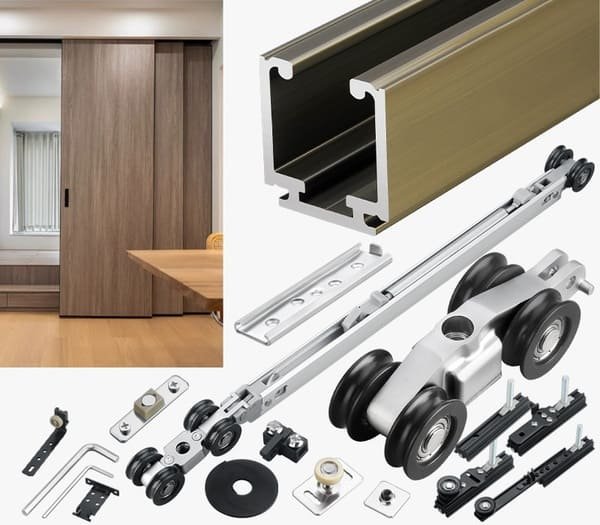
The track is the backbone of any sliding door system, and two factors are most important: its material and its profile. For material, I almost always recommend aluminum. It’s strong enough for most applications, it’s lightweight which helps with shipping and installation, and it won’t rust. This is a huge advantage for projects in humid climates. Steel tracks are an option for extremely heavy industrial doors, but for most furniture and architectural projects, high-quality aluminum is the best choice for performance and value.
The track’s profile, or shape, is just as important. The roller is designed to fit perfectly into a specific track shape. If you use a V-groove wheel on a flat track, it will be unstable and fail. We as a factory ensure our rollers and tracks are engineered as a complete system. You also need to decide between a top-hung or bottom-rolling system. Top-hung systems carry the door’s weight from above, giving you a clean, threshold-free floor. Bottom-rolling systems put the weight on the floor, which is useful when the ceiling or wall can’t support the door.
What is the common problem with sliding doors?
Do you get calls about sliding doors that stick, squeak, or jump off the track? These issues frustrate end-users and create support calls for your business. Most problems come from preventable hardware issues.
Common problems include noisy operation, difficulty sliding, and doors detaching from the track. These are often caused by low-quality rollers, incorrect installation, or a mismatched track. Choosing a high-quality, properly rated hardware system from the start is the best prevention.
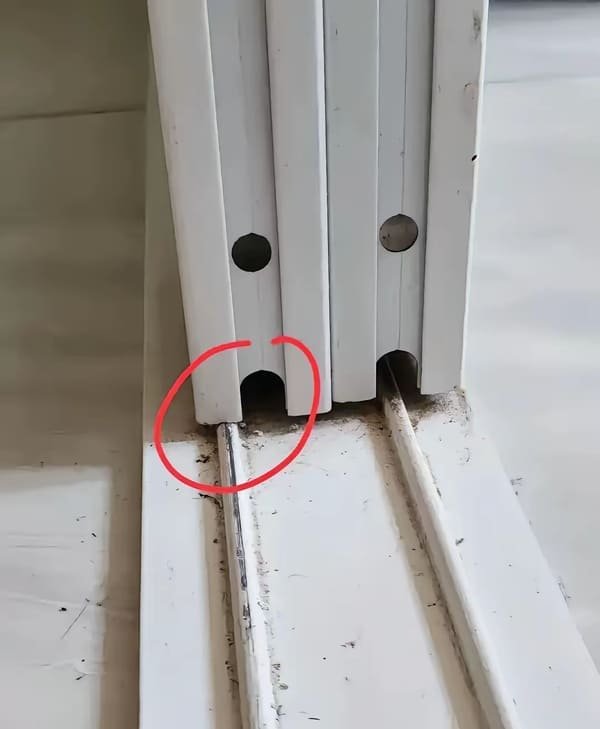
After years in this business, I can tell you that when a sliding door fails, the hardware is almost always the root cause. A beautiful door panel is useless if it doesn’t move properly. Investing in quality hardware upfront saves you from headaches and protects your reputation. Cheap rollers with poor bearings will quickly become noisy and difficult to move. An undersized system that can’t handle the door’s weight will lead to sagging and derailment.
These are not just minor annoyances; they are signs of system failure that reflect poorly on your product. Sourcing directly from a manufacturer who controls the quality of the raw materials and the engineering of the components is the best way to avoid these issues. Here’s a breakdown of common problems and how we solve them from a manufacturing standpoint:
| Problem | Common Cause | B2B Sourcing Solution |
|---|---|---|
| Sticking or Hard to Move | Worn-out rollers, debris in track | Source systems with precision ball bearings and durable nylon wheels. |
| Noisy or Squeaky | Low-quality bearings, poor lubrication | Select rollers with sealed ball bearings that ensure quiet, smooth motion for years. |
| Door Jumps the Track | Incorrect track profile, no anti-jump part | Ensure the system includes an anti-jump mechanism and a perfectly matched track. |
| Door Sags Over Time | System’s load capacity is too low | Always verify the system’s max load capacity and choose one that exceeds the door’s weight. |
Which brand is best for sliding doors?
Choosing a hardware supplier can feel like a big gamble. A bad supplier means production delays, poor quality products, and lost profits. That’s why I look for a partner, not just a brand.
The "best brand" is actually the best manufacturing partner for your business. Look for a factory like opensliding that offers top-quality materials, customizable options, strict quality control, and direct communication. A reliable partner is more valuable than any retail brand name.
For B2B purchasers like us, the name on the box is less important than the capabilities of the factory that made the product. A public-facing "brand" often just adds another middleman and another markup. I learned to look past the marketing and focus on what truly matters for my business’s success. The best supplier is a true partner who helps you deliver a better product to your customers.
When I evaluate a new supplier, I focus on a few key things. First, I want to work directly with a factory. This gives me confidence in quality control, better pricing, and a direct line of communication. Second, I look at material quality. Are they using high-grade aluminum and certified components? Third, I need flexibility. The ability to do ODM work or add my logo to products (OEM) is crucial for building my own brand. Finally, I look for the best overall value, or cost-performance. It’s not about the cheapest price, but the best quality for that price. A reliable partner that delivers a durable product on time is the best investment I can make.
Conclusion
Choosing the right sliding door system is simple when you focus on the door’s weight, application, and a reliable manufacturing partner. This approach ensures quality and performance every time.