
Struggling with bulky swinging doors that eat up your floor space? This wasted area frustrates designers and builders, limiting layout options. A pocket door system is the sleek, space-saving solution.
A pocket door system is a sliding door that disappears into a compartment, or "pocket," inside the adjacent wall. It runs on a track and roller system, freeing up the floor space that a traditional swinging door would need and creating a clean, minimalist look.
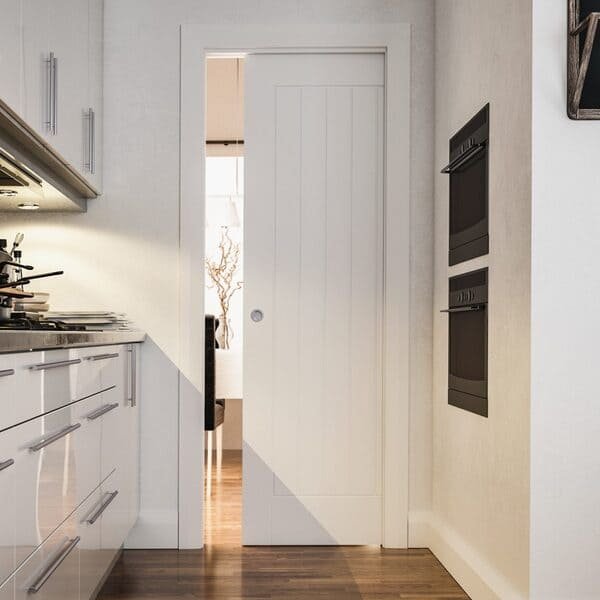
A pocket door is one of the best ways to save space in a project. As a factory owner, I’ve seen them used in countless designs to solve tricky layout problems. But getting it right means understanding more than just the basic idea. You need to know where they work best, what parts are involved, and what the potential problems are before you start cutting into a wall. Let’s dive into the details so you can decide if a pocket door system is the right choice for your next project.
Where can pocket doors be installed?
You want to add a door, but the space is too tight. A swinging door would just knock into furniture or block a hallway. It’s an annoying problem in many builds. Pocket doors are perfect here, letting you add privacy without any wasted space.
Pocket doors are best for tight areas where a swing door is impractical, such as ensuite bathrooms, walk-in closets, pantries, and laundry rooms. They can be installed in most non-load-bearing walls that are thick enough to contain the door and its hardware.

The key to a successful pocket door installation is planning where it will go. The wall needs to be able to house the door completely. The best time to do this is during new construction. My insights show that in an ideal scenario, the system is installed in a new stud or U-section wall. This creates a dedicated cavity for the door and gives you the thinnest, most stable wall profile.
But you can also add them to existing rooms. This is called retrofitting. You just need to make sure the wall is not load-bearing, meaning it doesn’t support the weight of the structure above it. You also need to check for pipes, wiring, or vents inside the wall. Common places where my clients install pocket doors include:
- Ensuite Bathrooms: This is the most popular use I see. It separates the bathroom from the bedroom without a door swinging into either space.
- Walk-in Closets & Pantries: You get full access to the space inside without a door getting in your way.
- Home Offices: A pocket door can close off an office from a living area, reducing noise without breaking up the open feel when it’s not in use.
- Laundry Rooms: These are often small, and a pocket door helps keep the area feeling less cramped.
What is pocket door hardware?
You know you need a pocket door, but the list of parts seems complex. Choosing the wrong hardware can lead to a disaster: a door that wobbles, sticks, or falls off its track. Fixing that inside a wall is a massive headache.
Pocket door hardware is the full mechanical kit that allows a door to slide into the wall. The essential parts are the overhead track, the rollers that hang the door, floor guides to prevent swinging, and stops to keep it from sliding too far.
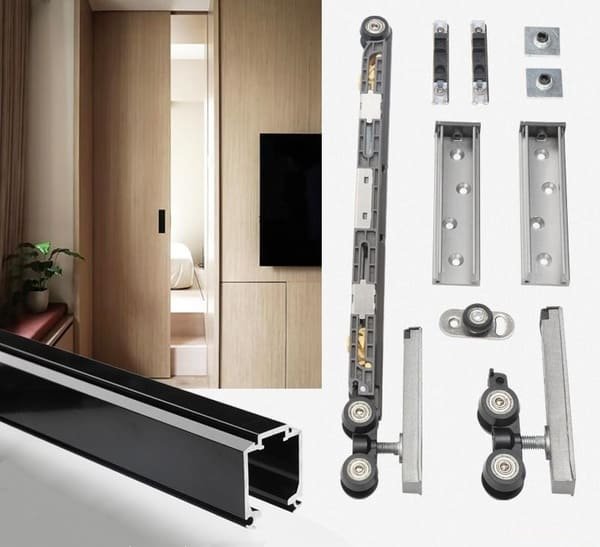
As a manufacturer, this is where I tell my customers like Jacky not to cut corners. The quality of the hardware determines the quality of the entire system for years to come. A cheap system might save a few dollars upfront, but a high-quality system from a reliable factory like ours ensures a smooth, quiet door that won’t cause problems later. The main parts are straightforward once you know them.
Pocket Door Hardware Breakdown
| Component | Function | Why Quality Matters |
|---|---|---|
| Track / Rail | An aluminum or steel channel installed inside the wall header that the rollers run along. | A strong, straight track prevents sagging and ensures smooth travel. |
| Hangers / Rollers1 | Wheel assemblies that attach to the top of the door and roll inside the track. | This is the most critical part. Ball-bearing rollers ensure a quiet, effortless glide. |
| Door Guides | Small plastic or metal pieces installed on the floor to fit into a groove at the bottom of the door. | These keep the door stable and prevent it from swinging back and forth. |
| Stops | Rubber bumpers or T-stops inside the pocket and at the closing end to prevent the door from slamming. | Protects the door and frame from damage caused by hard impacts. |
| Soft-Close System2 | An optional damper mechanism that catches the door at the end and pulls it gently shut. | Adds a premium, luxury feel and prevents slamming. Our soft-close systems are very popular with high-end projects. |
What is the disadvantage of a pocket door?
Pocket doors seem perfect, but you’re right to be cautious. What if something goes wrong? The fear of a door getting stuck in the wall or being difficult to operate is a real concern for many contractors and installers.
The main disadvantages are a more complex installation process, difficulty accessing the hardware for repairs once the wall is closed, and a weaker seal for sound and light. Also, the wall section housing the door cannot support heavy fixtures or electrical outlets.

While pocket doors are great, they are not perfect for every situation. You have to weigh the pros and cons. I always advise my customers to think about these potential issues before starting.
First, the installation is more involved than hanging a standard door. It requires opening up the wall, building a new frame, and finishing the drywall. It’s not a beginner-level job.
Second, repairs can be tricky. If a roller wears out or the door comes off the track, you might need to remove the door trim to access the hardware. This is why I stress the importance of using top-quality hardware from the beginning. A durable, well-made set of rollers from a factory like ours can last for decades, preventing this exact problem.
Third, the wall with the pocket is "hollow." You can’t hang heavy items like a television or large shelving on that area. You also can’t place electrical outlets or light switches there. Finally, they typically don’t seal as tightly as a hinged door, so they may not be the best choice if complete soundproofing or light-blocking is your top priority, though brush seals can help.
Can I install a pocket door without removing drywall?
You love the idea of a pocket door, but you hate the idea of demolition. Creating all that dust and mess from tearing out drywall feels like a huge, complicated project you’d rather avoid.
No, you cannot install a proper pocket door system without removing drywall from at least one side of the wall. The entire pocket frame and track mechanism must be installed inside the wall’s stud cavity, which requires direct access.

I get this question all the time. People are hoping for a magic kit that just slides into place. Unfortunately, the physics of a pocket door makes this impossible. To work, the door needs a hollow space—the "pocket"—to slide into. That pocket is created by a special frame kit that replaces the normal wall studs. You have to remove the existing drywall to take out the old studs and install this new frame.
Think of it this way: you are building a new, thin wall right next to your existing wall, and the door slides in the gap between them. You then cover this entire structure with new drywall to make it look like one solid wall.
If tearing out drywall is absolutely not an option for you or your client, the best alternative is a wall-mounted sliding door, often called a barn door system. The track for a barn door is mounted directly onto the face of the wall, and the door slides alongside it. It saves floor space like a pocket door but doesn’t require any internal wall construction, making installation much simpler and less messy.
Conclusion
Pocket doors are a fantastic way to save space with a clean, modern look. They require good planning and quality hardware, but the payoff in function and style is well worth the effort.