
Struggling to integrate smooth drawers with clean cabinet lighting? It’s a common headache when hardware and electronics conflict, creating a messy, unprofessional finish. A seamless installation is easier than you think.
To install drawer slides for a cabinet with LED lighting, first mount the slides perfectly level inside the cabinet and on the drawer box. Critically, you must plan a clear path for LED wiring that prevents snagging or pinching when the drawer operates. This is key for safety and functionality.
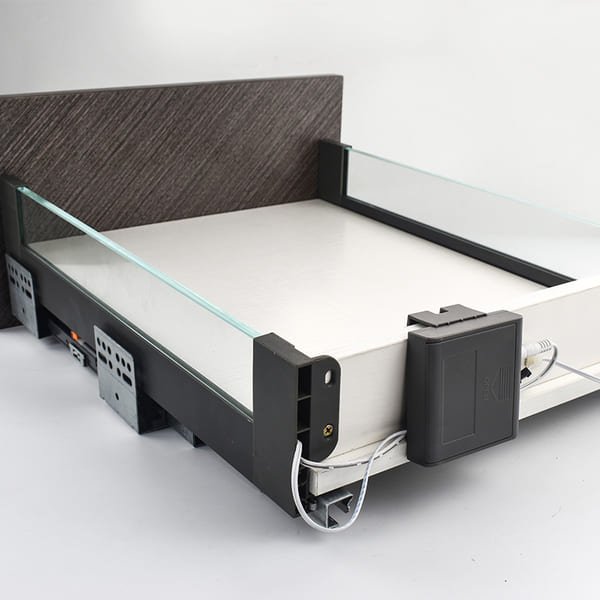
Getting the drawer to slide smoothly is just the start. The real magic happens when you combine flawless mechanical function with beautiful, integrated electronics. I’ve helped countless clients, from furniture factories to custom cabinet makers, solve this exact problem. It’s about thinking through the entire system before you drill the first hole. Let’s break down the steps to ensure you get that high-end, professional result every time you combine drawers and lighting in a project.
What is the best way to install drawer slides?
Worried your new drawers will stick, wobble, or sag? A poor installation can ruin even the highest quality slides. Get it wrong, and you’re left with a frustrating, unprofessional result.
The best way to install drawer slides is to measure meticulously, use a level, and ensure the slides are perfectly parallel. Mark your positions on the cabinet and drawer, install the cabinet members first, then attach the drawer members. Always test for smooth operation before finishing.
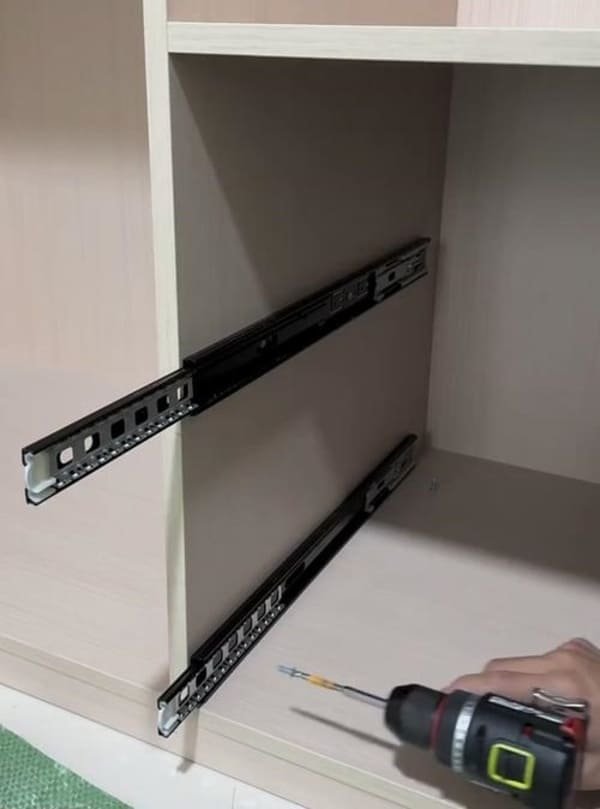
As a factory owner, I see firsthand how important precision is. A client in Canada, a purchaser like Jacky, once told me his team was struggling with callbacks because of sagging drawers. The problem wasn’t our slides; it was a small inconsistency in their installation process. The "best way" is always the most precise way. It starts with having the right tools and a clear plan.
Step-by-Step Installation Guide
Preparation is Key: Before you begin, confirm you have the right slides (side-mount, under-mount, etc.) for your project. Gather your tools: a tape measure, a level, a pencil, a drill, and the correct screws. We always include a screw specification sheet with our wholesale orders.
Mark the Cabinet: Use your level and tape measure to draw a perfectly level line inside the cabinet where the bottom of the slide will sit. Do this on both sides, ensuring they are identical.
Install Cabinet Members1: Align the cabinet slide member with your line and flush with the front of the cabinet (unless your design specifies otherwise). Secure it with screws. Repeat on the other side.
Install Drawer Members: Place the drawer member on the drawer box, ensuring it is level and parallel to the bottom of the drawer. Secure it with screws.
Test and Secure: Slide the drawer into the cabinet members. It should glide smoothly. If it binds or feels tight, re-check your measurements. Once it’s perfect, install the remaining screws.
| Slide Type | Best For | Installation Notes |
|---|---|---|
| Side-Mount | General purpose, high load capacity | Easy to install but requires clearance between drawer and cabinet. |
| Under-Mount2 | High-end, invisible look | More complex installation, requires precise drawer box dimensions. |
| Center-Mount | Lightweight drawers, vintage furniture | Mounts under the center of the drawer, less common in modern cabinets. |
How to properly install LED strip lights?
Do you want that stunning, high-end cabinet lighting without seeing ugly wires or dots of light? Installing LED strips seems simple, but a sloppy job can ruin the entire effect.
To properly install LED strip lights, first thoroughly clean the mounting surface. Plan a concealed route for wires back to the power source. For a professional look, install the strip inside an aluminum channel with a diffuser, then securely press it into place. Use clips to manage wiring.
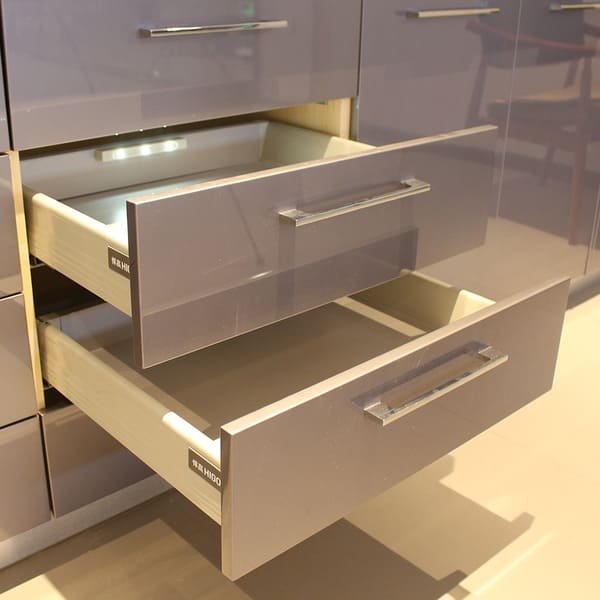
The difference between an amateur and a professional lighting job is in the details. It’s not just about making things light up; it’s about how the light is delivered. At my factory, we’ve developed lighting systems that integrate with our hardware because so many B2B clients were asking for a complete solution. They wanted the clean look without the headache of figuring it out themselves. A diffuser is the key. It spreads the light evenly, eliminating the "hotspots" from individual LED chips and giving you a smooth, continuous glow. This is especially important for surfaces like polished stone countertops or high-gloss cabinet interiors where reflections are prominent.
Key Steps for a Flawless Finish
Conceal the Source: The most professional installations hide the LED strip3 itself. Use aluminum channels that can be recessed into a routed groove or mounted in a discreet corner. This not only hides the strip but also acts as a heat sink, extending the life of your LEDs.
Plan Your Wiring: Before you stick anything down, map out the entire electrical path. Where will the power supply be? How will wires run from one cabinet to the next? For drawers, you must leave enough slack for full extension, securing the wire so it never gets pinched.
Surface Preparation is Non-Negotiable: Use isopropyl alcohol to wipe down the surface where the strip or channel will be mounted. Any dust, grease, or moisture will cause the adhesive to fail over time. It’s a simple step that many people skip, leading to callbacks and repairs down the line.
How to install frameless drawer slides?
Are you finding it difficult to align slides in frameless cabinets? Without a front frame to reference, a small measurement error can cause drawers to jam or sit crookedly. It’s a common frustration.
To install slides in a frameless cabinet, you must rely on precision measurements from the cabinet’s edges. Use a combination square or a specialized jig to mark a perfectly parallel line from the front edge. Mount the slide directly to the cabinet wall along this line.

I often speak with furniture manufacturers who are transitioning to modern, frameless designs. It’s a sleek look, but it removes the margin for error that a face frame provides. A client like Jacky, who buys for a large furniture factory, needs a process that is repeatable and foolproof for his assembly line. The answer is almost always a jig. A simple, custom-made jig ensures every slide is installed in the exact same position, every single time. It Clicks into the front corner of the cabinet and gives you a perfect guide for a level and set-back line, turning a complex task into a simple one.
Frameless vs. Face Frame Installation
The core challenge with frameless (or "Euro-style") cabinets is that the slide mounts directly to the interior wall. A face frame cabinet has a solid wood frame on the front that can hide small imperfections and provides a solid mounting point.
| Feature | Frameless Cabinet Installation4 | Face Frame Cabinet Installation5 |
|---|---|---|
| Reference Point | Must measure from cabinet box edge. | Can reference the face frame opening. |
| Slide Position | Flush with the front edge of the cabinet box. | Typically recessed from the front of the face frame. |
| Tools | Jigs, combination squares are highly recommended. | A level and tape measure are often sufficient. |
| Margin for Error | Very low. Precision is critical. | Higher. The frame can hide small gaps. |
To master frameless installations, remember this: your level and your measuring tape are your best friends. Double-check that the cabinet box itself is square before you begin. If the box is racked, your drawers will never run true, no matter how perfectly you install the slides.
How to install LED lights in a cabinet?
Is a dark cabinet hiding its contents and making your space feel less functional? Adding LED lights can completely transform it, but figuring out the wiring and controls can seem overwhelming.
To install LED lights in a cabinet, first decide on your lighting layout and power source. Run low-voltage wires discreetly, often in corners or channels. Mount the lights using their adhesive backing or clips, then connect everything to a power supply and a switch or sensor.
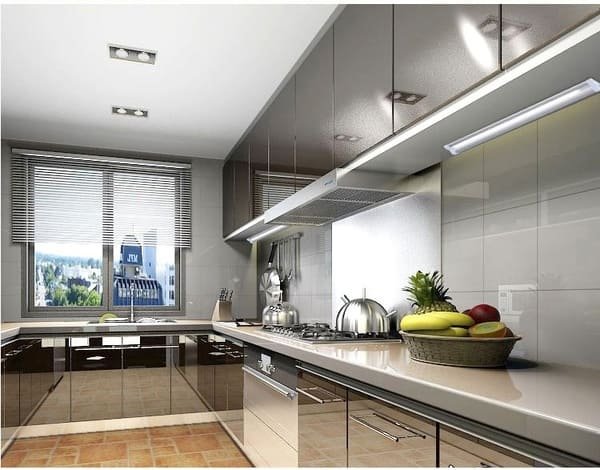
When we started developing our Home Local Lighting Systems, our goal was to simplify this process for our B2B customers. They wanted to offer premium, illuminated furniture without becoming electrical experts. The solution is a plug-and-play system. You have a central power driver, distribution blocks that split the power, and lights and sensors that simply plug in. The key is planning. Think about what you want the lights to do. Should they turn on with a wall switch? Or should they activate automatically when a door or drawer is opened? Each scenario requires a different sensor.
Building Your Lighting System
Power and Control6: Start with the power driver. Calculate the total wattage of all your planned LED strips and choose a driver with at least 20% more capacity. Then, choose your controller. This could be a simple switch, a dimmer, or a sensor.
- Door Sensors: These are small magnetic or IR sensors that turn lights on when a door opens and off when it closes. Perfect for pantries and wardrobes.
- Motion Sensors (PIR)7: These activate light when they detect motion and body heat, ideal for lighting pathways inside walk-in closets.
Wiring Management: Use distribution blocks to create a clean wiring hub. This allows you to run a single wire to a cabinet section and then branch out to individual lights and sensors. Always secure your wires with small clips to keep them tidy and prevent them from getting caught on moving parts like drawers or hinges.
Combining Hardware and Light: The ultimate integration is when the hardware itself triggers the light. For a drawer, an IR sensor positioned at the back of the cabinet can detect when the drawer is opened and activate a light inside that drawer. This requires careful alignment of the sensor and the drawer’s back panel.
Conclusion
Installing drawer slides and LED lights together requires foresight. By planning your wiring, measuring precisely, and using the right tools, you can achieve a functional and beautiful result.
Explore this link to get detailed instructions and tips for installing cabinet members effectively. ↩
Discover the advantages of Under-Mount slides, including aesthetics and functionality, to enhance your project. ↩
Explore this link to learn essential tips and techniques for a successful LED strip installation. ↩
Explore this link to understand the advantages of frameless cabinets, including design flexibility and modern aesthetics. ↩
Discover why face frame cabinets are popular for their ability to conceal imperfections and provide a sturdy mounting point. ↩
Understanding power drivers is crucial for efficient LED lighting. Explore this link to ensure your system is well-designed and energy-efficient. ↩
Learn about the functionality of PIR motion sensors to enhance your lighting system’s efficiency and convenience. ↩