
Choosing the right cabinet hardware feels overwhelming. The wrong knob or pull can ruin a project’s look and feel. Follow a few simple methods to select the perfect hardware easily.
The best method is to decide between knobs, pulls, or a mix based on function and style. Generally, use knobs for cabinet doors and pulls for drawers. Match the hardware’s scale and design to your cabinets and the overall aesthetic of the room for a cohesive look.
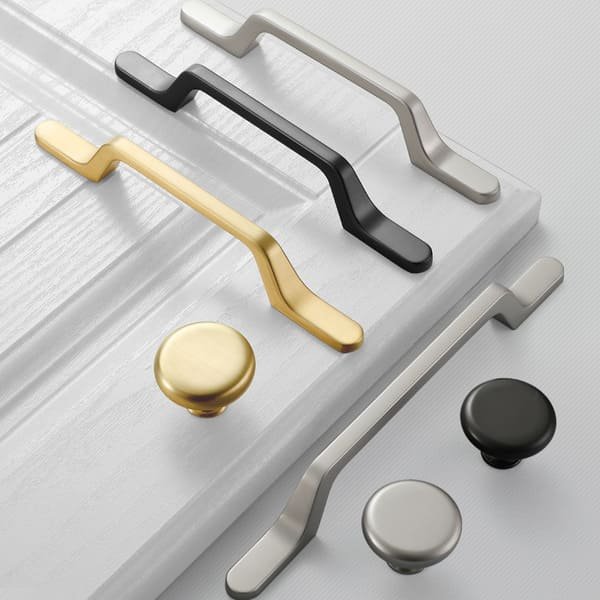
Making the right choice goes beyond just what looks good. You need to think about user experience, durability, and how the hardware fits the cabinet’s construction. As a factory owner, I see how these details make a huge difference in the final product. Let’s break down some common rules and methods to help you specify the perfect hardware for any project.
What is the 1/3 rule for cabinet hardware?
Confused about the right pull size for your drawers? A poorly sized pull looks awkward and ruins the design. The 1/3 rule of thumb is a simple guideline for perfect proportions.
The 1/3 rule suggests your cabinet pull should be about one-third the length of the drawer front. For doors, it’s one-third the height. This guideline creates a balanced, professional look and prevents hardware from appearing too large or small. It’s a great starting point for sizing.
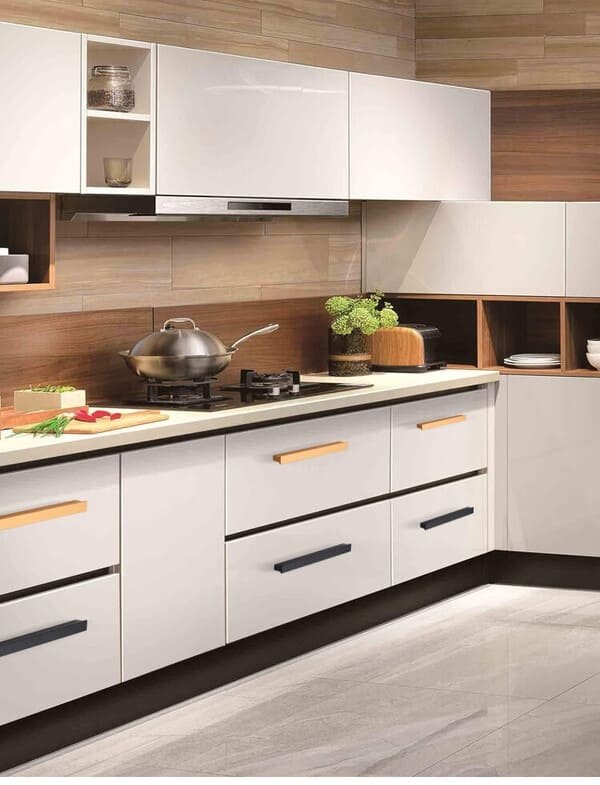
The 1/3 rule is my go-to starting point when advising clients. It provides excellent visual balance. However, you don’t have to follow it exactly. Think of it as a guide, not a strict law. For very wide drawers, over 30 inches (or 76cm), using two smaller pulls is often a better choice than one very long pull. This maintains balance and improves functionality, making the drawer easier to open. When using two pulls, place them so they divide the drawer front into thirds. Another option for wide drawers is a single, longer "appliance pull" for a bold statement. In my experience manufacturing these components, the key is consistency. If you decide to use the 1/3 rule, apply it across all similar-sized drawers for a professional finish.
Applying the 1/3 Rule1: Examples
| Drawer Width | Recommended Pull Length2 (Center-to-Center) |
|---|---|
| 12 inches (30cm) | 4 inches (10cm) |
| 18 inches (45cm) | 6 inches (15cm) |
| 24 inches (60cm) | 8 inches (20cm) |
| 36 inches (90cm) | 12 inches (30cm) or two smaller pulls |
This consistency is why we offer our pull designs in a wide range of standard sizes. It allows designers and contractors to apply rules like this systematically across an entire project, from small cabinets to large pantry doors.
What is the rule of thumb for cabinet knobs?
Picking the right cabinet knob size and placement is tricky. A small mistake can make the entire kitchen look off. A simple rule of thumb ensures perfect results every time.
For knobs, choose a size of 1 to 1.5 inches in diameter. Place them on the door’s stile. For upper cabinets, position them 2.5-3 inches up from the bottom corner. For lower cabinets, place them 2.5-3 inches down from the top corner opposite the hinge.
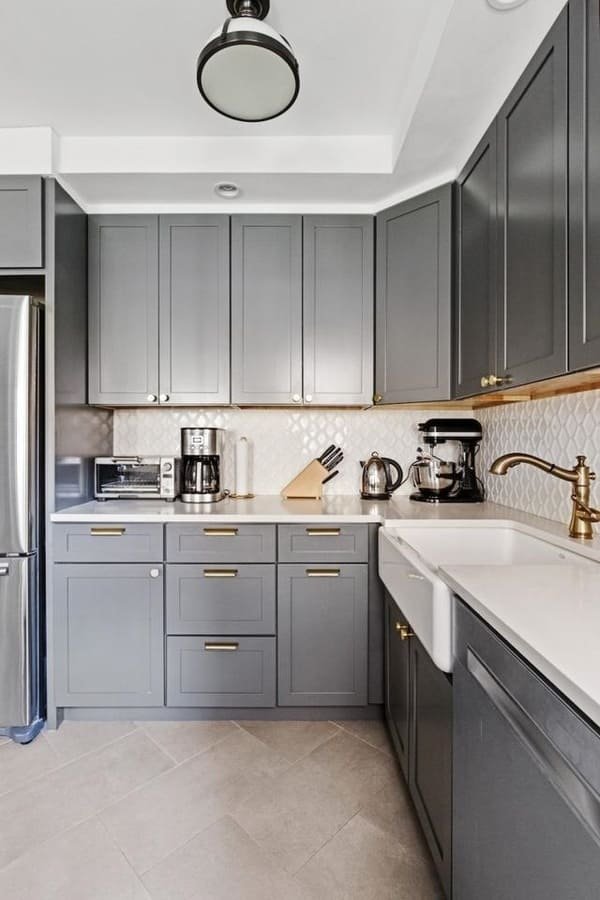
The placement rule is crucial for a professional look. On a traditional five-piece door with a frame (stiles and rails), you always want to mount the knob on the stile. This is not just for looks; it’s also structurally sounder. Drilling into the center panel, which is often thinner, can lead to instability over time. For slab or flat-panel doors where there is no stile, you apply the same placement logic. You keep the same vertical alignment (2.5-3 inches from the corner) and set the horizontal alignment to where the stile would be, typically 1.5-2 inches from the side edge. I often tell my purchasing clients to use knobs on doors and pulls on drawers. This creates a functional and visually interesting combination. Knobs are easy to grab for swinging doors, and pulls provide a better grip for opening drawers. We manufacture both in matching finishes so you can easily create a cohesive knob-and-pull combination for a project.
Knob Placement Guidelines3
| Door Type | Placement Location | Justification |
|---|---|---|
| Shaker/Framed | On the stile, 2.5-3" from corner | Structural integrity4 and classic look. |
| Slab/Flat Panel | 1.5-2" from side, 2.5-3" from corner | Mimics traditional placement, visually balanced. |
What are the three basic methods of cabinet construction?
Does cabinet construction matter for hardware choice? Ignoring it can lead to install issues and poor aesthetics. Understanding the three basic construction methods ensures a perfect fit and style match.
The three main construction methods are framed, frameless, and inset. Framed cabinets have a front frame, giving the doors and drawers an overlay. Frameless cabinets have no frame, creating a seamless look. Inset cabinets have doors that sit perfectly flush inside the frame itself.
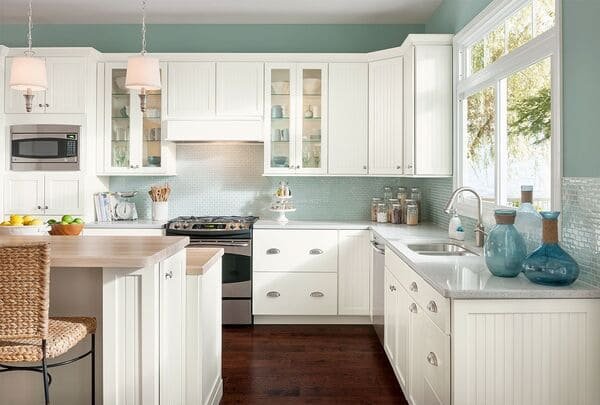
A cabinet’s construction method directly influences the style of hardware that will look best. It’s a key detail I always ask about when a client is sourcing from my factory. For framed cabinets, you have the most flexibility. Almost any style of knob or pull will work. This is the most common type in North America. Frameless, or European-style, cabinets have a very clean, modern look. Here, sleek hardware like bar pulls or minimalist tab pulls are excellent choices. You want to avoid bulky hardware that could interfere with an adjacent door opening. Inset cabinets are a high-end, traditional style. The doors and drawers fit flush inside the frame. This precise construction calls for equally classic hardware. Small knobs, cup pulls, and cabinet latches work beautifully. Often, the hinges are visible on inset cabinets, becoming part of the design. This is also where internal hardware like hinges and drawer slides come into play, which we also specialize in. The construction type dictates the kind of hinge you need.
Hardware Style by Construction
| Construction | Common Hardware Style5 | Reason |
|---|---|---|
| Framed | Versatile (any knob/pull) | The frame provides a classic backdrop for many styles. |
| Frameless6 | Modern (Bar pulls, Tab pulls) | Complements the clean, seamless lines of the cabinets. |
| Inset | Traditional (Knobs, Latches) | Matches the precise, high-end craftsmanship. |
What is the formula for cabinet pulls?
Sizing cabinet pulls feels like a guess. Inconsistent sizes make a project look messy and unprofessional. A simple formula ensures a clean, cohesive design across all your cabinetry.
A common "formula" is to use tiered sizing. Use one standard pull size for all drawers under 24 inches wide. For wider drawers (24-48 inches), use a longer pull or two of the standard pulls. This creates consistency while acknowledging scale. The 1/3 rule is another popular formula.

There are two main systems for sizing pulls: the 1/3 rule and the "tiered system." While the 1/3 rule provides a custom, perfectly scaled look for each drawer, the tiered system simplifies the process. This simplification is often crucial for large-scale projects and for distributors managing inventory. For a purchasing manager, this matters a lot. Instead of ordering five different sizes of pulls, you might only need to order two or three. This reduces costs, simplifies stock management, and streamlines installation on the factory floor. The key to the tiered system is consistency. You decide on your sizes based on the ranges and stick to it. All your small drawers get one size, and all your medium drawers get another. It creates a clean, uniform rhythm that looks very professional. We design our hardware collections with this in mind, ensuring our popular pull designs are available in the key sizes needed for any tiered system.
Example Tiered System for Pull Sizing
| Drawer Width Range1 | Recommended Hardware7 |
|---|---|
| Up to 15" (38cm) | Single Knob or 4-6" Pull |
| 15" – 30" (38-76cm) | 6-8" Pull |
| Over 30" (76cm) | 12"+ Pull or Two smaller pulls |
Conclusion
Choosing the right cabinet hardware is simple. Focus on function, use rules like the 1/3 or tiered system for sizing, and always match the hardware to the cabinet’s construction style.
Exploring the 1/3 Rule will provide insights into effective design principles that enhance the aesthetics and usability of cabinetry. ↩ ↩
Understanding the recommended pull lengths can help you choose the right hardware for your cabinets, ensuring both functionality and style. ↩
Explore this link to understand the essential guidelines for knob placement, ensuring both functionality and aesthetic appeal. ↩
Learn how proper knob placement can enhance the structural integrity of doors, ensuring durability and safety. ↩
Explore this link to understand various hardware styles and how they enhance construction aesthetics. ↩
Discover the advantages of Frameless construction and how it contributes to modern design. ↩
Exploring recommended hardware options helps you choose the most suitable pulls for your drawers, enhancing both usability and design. ↩