
Struggling to find the right sliding door thickness? The wrong choice can lead to installation headaches and poor performance. I can help you get the exact specifications you need.
Generally, a sliding door’s thickness depends on its material. For a door with a glass or mirror core, the standard is 5mm. If you are using a wood core, 10mm is considered the best thickness for durability and smooth operation.
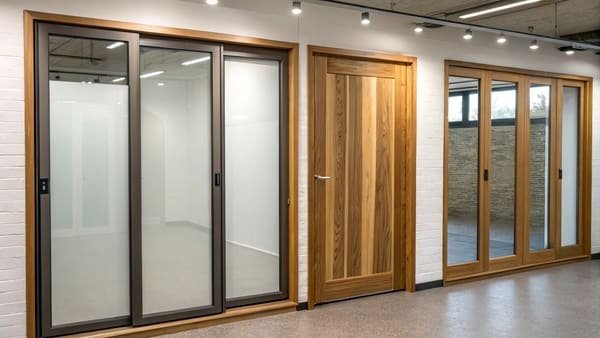
Getting the thickness right is one of the most important details in sourcing sliding doors and their hardware. It affects everything from the weight and stability of the door to the type of rollers and tracks you need to buy. As a factory owner, I see clients overlook this detail all the time, only to face problems later. Let’s break down the specifics so you can make the right choice every single time and avoid costly mistakes.
How thick are sliding doors?
Choosing the wrong door thickness for your project? This mistake can lead to sourcing the wrong hardware, causing delays and added costs. Let me simplify it for you.
The thickness of sliding doors varies significantly based on their type and material. For interior closet doors, you’ll often see thinner panels. For exterior patio doors, thicker, more robust panels are necessary for insulation and security. Custom applications might require unique dimensions.

To help you get a clearer picture, I’ve broken down the common thicknesses based on where the door is used. In my experience supplying hardware to factories and contractors worldwide, these are the standards they most frequently request. Understanding these differences is key to choosing the right components, like our rollers and tracks at opensliding, which are designed to handle specific weight and thickness ranges.
Thickness Based on Door Type
The application of the door is the biggest factor in determining its thickness. An interior wardrobe door doesn’t need the same security or weather-proofing as an external patio door.
| Door Type | Common Thickness Range | Key Considerations |
|---|---|---|
| Wardrobe/Closet | 5mm – 18mm (1/4" – 3/4") | Lighter is better for smooth rolling. Thicker offers a more premium feel. |
| Pocket Door | 35mm – 45mm (1 3/8" – 1 3/4") | Must fit within a standard wall cavity. Thickness is very standardized. |
| Patio Door1 | 45mm+ (1 3/4"+) | Needs to be thick for insulation, security, and to house double-glazed glass. |
| Barn Door2 | 35mm – 50mm (1 3/8" – 2") | Often thicker for a rustic, heavy aesthetic. Weight is a major factor for hardware. |
What is the common thickness of a door?
Confused about standard door dimensions? Ordering the wrong size can stop your production or construction project in its tracks. Let’s look at the industry standards.
The most common thickness for a standard interior door in North America is 35mm (or 1 3/8 inches). For exterior doors, the standard increases to 45mm (or 1 3/4 inches) to provide better security and insulation against the weather.

While those are the standards for typical hinged doors, sliding doors can be different. The requirements change based on the system. For a bypass closet door, the panels can be much thinner, but for a high-end pocket door, the thickness will match a standard interior door at 35mm. It’s crucial to distinguish between them. For a purchaser like Jacky in Canada, knowing these differences is essential. When he orders hardware from my factory, the first question I ask is about the door’s thickness and weight, as that determines which roller system is appropriate. A standard hinged door measurement is a good starting point, but always confirm the specifics for your sliding application.
Sliding Doors3 vs. Standard Doors
Here’s how sliding door thicknesses compare directly to the hinged doors you see every day.
- Interior Hinged Doors4: The go-to standard is 35mm (1 3/8"). This is what you’ll find for most bedrooms, bathrooms, and closets.
- Exterior Hinged Doors: The common size is 45mm (1 3/4"). The extra thickness adds security and insulation.
- Sliding Doors3: This is where it gets interesting. The thickness can range from a very thin 5mm for a simple mirrored wardrobe door up to 50mm+ for a heavy, rustic barn door. The thickness is entirely dependent on the material (glass, wood, composite) and the desired style.
This is why you can’t just assume a standard door thickness when sourcing for a sliding system. You must match the hardware to the specific door panel you’re using.
What is the thickness of a sliding door wall?
Planning to install a pocket door? If you miscalculate the wall thickness, the door won’t fit or operate correctly. This is a common and costly construction error.
For a standard pocket door, which is typically 35mm (1 3/8 inches) thick, you will need a wall that is at least 90mm (about 3 1/2 inches) thick. This is the dimension of a standard 2×4 stud wall frame.

Let’s break down why this specific wall thickness is necessary. The wall has to accommodate not just the door itself, but also the pocket door frame kit that holds the track and guides. This frame usually wraps around the door. Here’s the typical math for a standard interior wall:
Calculating Pocket Door Wall Thickness
- Door Thickness: Starts at 35mm (1 3/8").
- Pocket Frame Clearance5: You need space on both sides of the door for the frame’s steel or wood uprights and for the door to slide without rubbing. This adds approximately 55mm (2 1/8") in total.
- Wall Studs6: The pocket frame is designed to be installed inside a wall built with 2×4 studs, which have an actual width of 89-90mm (3 1/2").
So, Door (35mm) + Frame Clearance (55mm) ≈ 90mm.
This fits perfectly into a standard 2×4 wall. If you want to use a thicker door, say 45mm (1 3/4"), you must build a thicker wall using 2×6 studs to create enough space. This is a critical detail for any construction contractor or builder.
Are there standard sliding door sizes?
Wondering if sliding doors come in standard sizes? Assuming a "one-size-fits-all" approach can lead to products that don’t fit your market’s needs. Let’s clarify.
Yes, there are standard widths and heights for sliding doors, but thickness is more variable. Standard heights are often 2040mm or 2400mm (80 or 96 inches). Widths are typically 620mm, 720mm, 820mm, etc. (24, 28, 32 inches).

While width and height are fairly standardized to fit common door openings, the thickness is not. As we’ve discussed, thickness is dictated by the material and the intended use of the door. A lightweight mirrored door is thin, while a solid wood barn door is thick. This is the most important factor when you are purchasing sliding door hardware. At my company, opensliding, our entire catalog is organized around the weight and thickness the hardware can support. A roller system designed for a 10mm-thick wardrobe door will fail if you try to use it on a 40mm-thick solid wood door. That’s why I always tell my B2B clients to specify their door thickness first before we even talk about roller styles or finishes.
Why Thickness is More Critical than Standard Sizes
- Hardware Compatibility7: The roller, track, and guides are all designed for a specific thickness range. Mismatching them causes poor performance or failure.
- Weight Calculation8: Thickness is a primary factor in the door’s total weight. This weight determines the load capacity required for the entire sliding system.
- Stability and Durability: A thicker door is generally more stable and less prone to warping, but it requires more robust hardware to handle it.
- Customization: While height and width are often fixed by the building’s structure, clients often request custom thicknesses to achieve a certain look, feel, or function. This versatility is a key reason sliding doors are so popular.
Conclusion
In short, sliding door thickness varies by material and use, from 5mm for glass to 10mm for wood, and must be matched with the correct hardware for optimal performance.
Explore the advantages of thick patio doors for insulation and security, ensuring your home is both stylish and safe. ↩
Learn how to select the perfect barn door thickness for aesthetics and functionality, enhancing your home’s rustic charm. ↩
Discover the various thickness options for sliding doors, helping you select the perfect style and material for your needs. ↩ ↩
Explore this link to understand the standard thicknesses for interior hinged doors, ensuring you choose the right fit for your space. ↩
Understanding Pocket Frame Clearance is essential for ensuring proper door installation and functionality. ↩
Learning about Wall Studs helps in making informed decisions for structural integrity and design. ↩
Understanding hardware compatibility is crucial for ensuring optimal performance and longevity of sliding door systems. ↩
Exploring weight calculation helps in selecting the right sliding door system for safety and efficiency. ↩