
Struggling with tight spaces where a normal door won’t fit? Conventional swing or sliding doors can eat up valuable room, making your design feel cramped and inefficient.
A PD door, also known as a PT door, is a space-saving door that combines the functions of both swinging and sliding. It first swings open slightly and then slides to the side, requiring minimal clearance and maximizing your usable floor space.
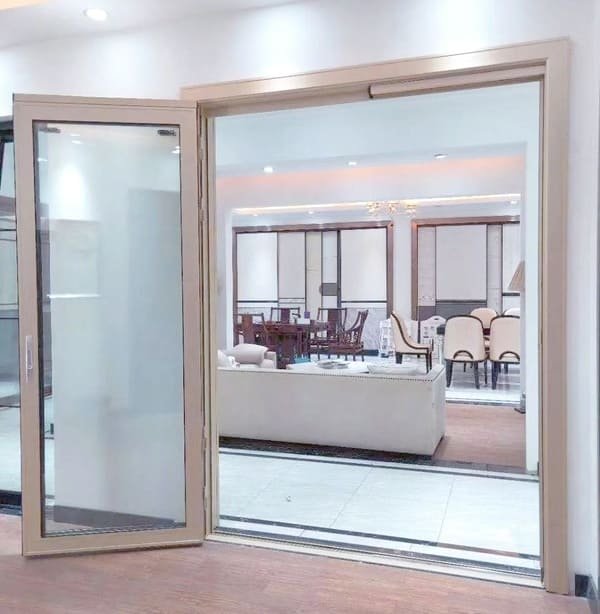
In my years of manufacturing door hardware, I’ve seen countless innovative designs come and go. But the PD door system has stuck around for a very good reason: it solves a fundamental problem that architects and builders face every day. It’s a clever piece of engineering that I believe is a game-changer for modern interiors. Many of my clients, purchasers like you, are constantly looking for that next smart solution to offer their customers. Let’s dig deeper into what makes this door so special and why it might be the perfect addition to your product line.
What is the meaning of a PD Door?
Confused by all the new door terminology out there? It can be difficult to keep track of every new system, which makes sourcing the right product a challenge.
The name "PD Door" stands for "Push-Dual," referencing its two-step opening action. It is also called a "PT Door," from the Chinese "Ping-Tui" (平推), which translates to "push-pull," describing its combined swing and slide movement.
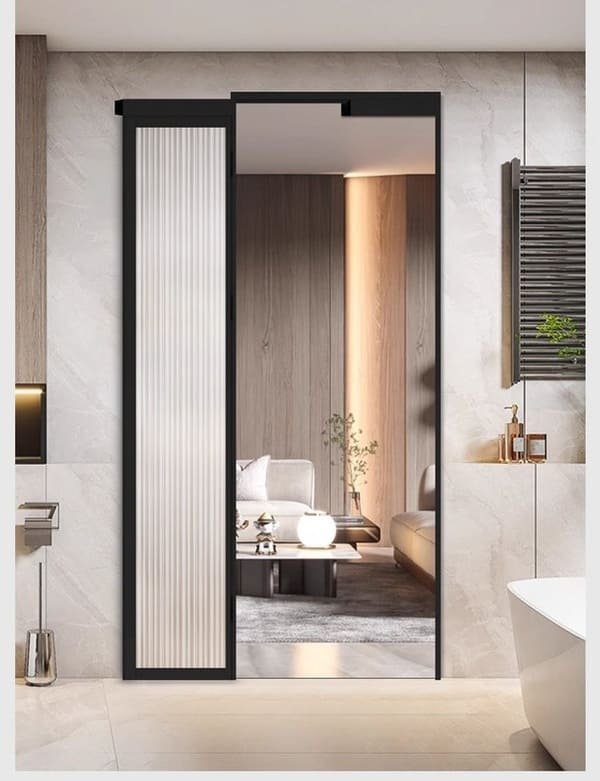
When I first encountered these doors, the name immediately helped me understand the mechanics. It’s not just a marketing term; it actually describes the function. This design originated in Singapore, a place where smart, space-efficient living is a necessity. The goal was to create a door that didn’t have the large swing arc of a traditional door or need the full wall width of a sliding door. The solution was this hybrid motion.
How the Mechanism Works
The magic of the PD door is in its specialized hardware, the kind of components we focus on at opensliding. It operates using a unique system that doesn’t rely on a traditional floor track.
- Top Track with Pivot: The door panel hangs from a top track that has a designated pivot point. When you push the door, it first swings open from this pivot, just like a regular door but only for a small arc.
- Slide Function: Once it has swung open about 25% of the way, the pivot mechanism disengages, and the rollers take over, allowing the door to slide smoothly along the rest of the track and sit parallel to the wall.
This simple, two-step motion is what makes it so effective for tight spaces like small bathrooms, pantries, or utility closets.
What is the difference between a PD Door and an SK door?
Choosing between different compact door systems can be tough. If you pick the wrong one, you could end up with a less functional space and an unhappy client.
A PD door swings out slightly and then slides, maximizing the clear opening. An SK (Slide and Keep) door slides to the end of its track and then folds in half, requiring more clearance on the side where the panels "keep" or stack.

As a manufacturer, I deal with the hardware for both systems, and they solve similar problems in different ways. An SK door is essentially a bi-fold door that also slides. While it can create a very wide opening, the folded panels themselves take up space. A PD door, on the other hand, keeps the entire door panel flat, just slid to the side. For a purchasing manager like Jacky, understanding the practical application is key to making the right choice for a project.
Key Differences Breakdown
Let’s compare them directly to see which one fits best for specific needs.
| Feature | PD Door (Push-Dual) | SK Door (Slide and Keep) |
|---|---|---|
| Opening Motion | Swings out partially, then slides parallel to the wall. | Slides to one end, then folds in half like a book. |
| Space Required | Needs minimal swing clearance and wall space for the slide. | Needs space at the end of the track for the folded panels. |
| Clear Walkway | Provides a nearly full, unobstructed opening width. | The folded panels can slightly intrude into the walkway. |
| Hardware | Uses a specialized top-hung pivot and roller system. | Involves a combination of sliding rollers and folding hinges. |
| Best Use Case | Extremely tight spaces like small bathrooms or laundry rooms. | Wider closets or partitions where stacking space is available. |
For your customers, the PD door often feels more streamlined because it’s just a single, solid panel in motion. The SK door’s folding action makes it more suited for applications where you want to open up an entire wall but have room for the folded door to rest.
What is the difference between a slide and swing door and a PD Door?
Are you wondering if a PD door is just a complicated version of a normal door? It’s easy to think so, but the differences are what create its unique advantages.
A swing door needs a large clear arc. A sliding door needs empty wall space. A PD door is a hybrid that combines both motions, needing far less space than either on its own.
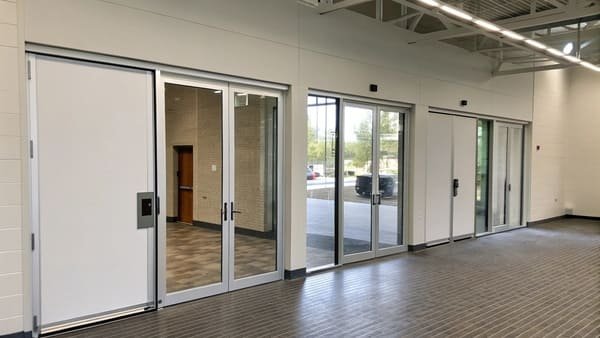
In my factory, we produce hardware for all three types. We make simple hinges for swing doors, entire roller systems for sliding doors, and the specialized mechanisms for PD doors. I can tell you from experience that the engineering for a PD door system is designed to solve a very specific problem: the lack of space. It’s not about being complicated; it’s about being efficient. A purchaser who can offer this smart solution to a contractor working on a small apartment project, for example, becomes an invaluable partner.
Head-to-Head Comparison
Understanding where each door type shines helps you source the right product for the right job.
| Door Type | Space Requirement | Opening Path | Ideal Application |
|---|---|---|---|
| Swing Door | Requires a full, clear swing arc (equal to door width). | Opens inward or outward in a wide arc. | Standard bedrooms and rooms with ample space. |
| Sliding Door | Needs adjacent wall space equal to the door’s width. | Slides horizontally along a track. | Closets, patios, or wide openings with limited swing room. |
| PD Door | Needs a very small swing arc plus adjacent wall space. | Swings partially, then slides horizontally. | Compact bathrooms, kitchens, and laundry areas where both swing and slide space are very limited. |
From a hardware perspective, the PD door system is more advanced than a simple hinge but often simpler to install than a pocket door (a sliding door that disappears into the wall). It gives you a high-tech, space-saving result without the need for major structural changes.
How thick is a PD Door?
Planning to integrate PD doors into a project? The thickness is a critical detail, as getting it wrong can cause major installation headaches with frames and hardware.
A typical PD door panel, usually with an aluminum frame, is between 35mm and 45mm thick. This thickness can change depending on the infill material used, such as glass or composite panels.

When my clients send us specifications for a hardware order, door thickness and weight are two of the most important factors. For PD doors, the thickness is determined by two main components: the frame and the infill. As a buyer, you need to consider this because it impacts the hardware you’ll need, the door’s weight, and its acoustic and thermal properties. A thicker, heavier door may require a heavy-duty version of the PD hardware system, something we at opensliding can easily supply and customize.
Factors Affecting PD Door Thickness
Let’s look at what contributes to the final dimension.
Aluminum Frame
The foundation of most PD doors is an extruded aluminum frame. These frames are designed to be strong but lightweight and typically have a standard profile depth. This profile usually sets the minimum thickness, often around 35mm.
Infill Panel Material
This is where the most variation occurs. The material placed inside the frame dictates the final thickness and performance.
- Tempered Glass: A single pane of 6mm or 8mm glass is common. For better sound or thermal insulation, some designs might use a double-glazed unit, which would significantly increase the thickness.
- Acrylic or Polycarbonate: These are lighter alternatives to glass and come in various thicknesses.
- Composite or Laminate Panels: Solid panels, sometimes with a honeycomb core, can also be used. These offer privacy and can be finished to match any decor.
The combination you choose will determine the final product specs you need to provide to your hardware supplier.
Conclusion
In short, the PD door is a brilliant, space-saving solution for modern interiors. It combines swing and slide functions to fit in the tightest spaces where other doors can’t.