
Choosing a barn door can feel overwhelming with so many options available. A wrong choice can disrupt your room’s design. This guide will help you select the perfect one.
To choose a barn door, you must match the style to your home’s decor, pick a suitable material, and ensure it’s larger than the opening. Finally, select high-quality hardware that complements the door and guarantees smooth, long-lasting operation.
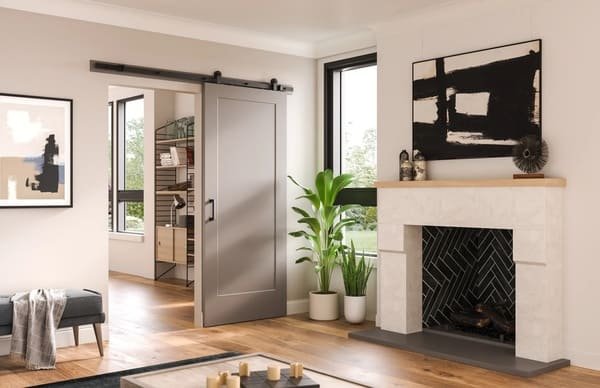
I’ve worked with countless clients in my years in the hardware business, from large door factories to independent contractors. Everyone wants to make a statement with their design choices. Traditional doors get the job done, but they rarely add character. Barn doors are different. They act like a sliding piece of art, saving space and adding a unique visual touch. But getting it right involves more than just picking a door you like the look of. Let’s walk through the exact steps I use to help my clients make the right choice every time, turning their ideas into a reality that is both beautiful and functional.
How to pick a barn door?
Picking a door style feels like a huge commitment. You worry a wrong move will throw off the entire room’s vibe. Let’s break down the core choices simply.
First, match the door style with your home’s existing aesthetic, whether it’s rustic, modern, or industrial. Then, select a material like wood, glass, or metal that fits your budget, durability needs, and the room’s function. This ensures a cohesive and practical result.
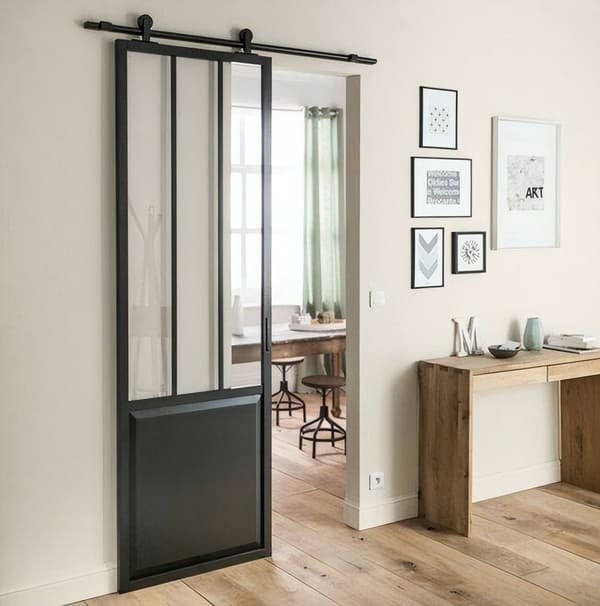
Choosing a barn door is all about creating a focal point that complements your space. You wouldn’t put an ultra-modern door in a classic farmhouse, and the same logic applies here. In my experience, the process is much simpler when you focus on two key areas: style and material.
Matching Door Style to Your Home’s Decor
Think about the feeling you want to create. For a cozy, traditional look, classic brace designs like the "Z-brace1" or "K-brace" are perfect. They bring a warm, rustic charm. If your home is more contemporary, look for doors with clean, simple lines. Doors with frosted glass panels or a minimalist, single-panel design work wonderfully in modern spaces. For an industrial or loft-style interior, a metal door or one made from reclaimed wood can make a powerful statement. The goal is to make the door feel like it truly belongs.
Material Matters
The material you choose affects the door’s look, weight, and price. I’ve seen them all, and each has its place. Here is a simple breakdown I share with my wholesale customers.
| Material | Pros | Cons | Best For |
|---|---|---|---|
| Solid Wood | Durable, classic, can be painted | Can be heavy, more expensive | Living rooms, bedrooms, high-traffic areas |
| MDF/Composite2 | Affordable, smooth finish, stable | Less durable than solid wood | Closets, pantries, budget-conscious projects |
| Metal | Strong, sleek, industrial look | Can be noisy, shows fingerprints | Offices, lofts, modern kitchens |
| Glass Panel | Lets light through, feels open | Less privacy, can be fragile | Home offices, dining rooms, room dividers |
What are common problems with barn doors?
Barn doors look fantastic, but you have probably heard they have downsides. You don’t want to install a beautiful door only to find it’s noisy or doesn’t offer privacy.
Common problems with barn doors include a lack of a complete seal, which affects sound and light insulation. They also require significant clear wall space for the track and can be noisy or difficult to slide if you use low-quality hardware.

I always tell my customers, especially the procurement managers at furniture factories, that being aware of potential issues beforehand is the key to a successful installation. Barn doors are great, but they are not the same as traditional swinging doors. Understanding their limitations lets you plan around them and choose the right components to prevent problems down the line.
The Privacy and Sound Gap
The biggest difference is that barn doors don’t sit inside a frame. They slide over the opening, which leaves a small gap between the door and the wall. This means they don’t block sound or light as effectively as a standard door. For this reason, I usually advise against using them for bathrooms or bedrooms where complete privacy3 is essential. However, for places like a pantry, closet, or home office, they are perfect. For clients who need better sealing, we offer solutions like brush strips and rubber seals that can be fitted to the door to minimize these gaps.
Wall Space and Hardware Quality
This is a practical point that often gets overlooked. You need a clear section of wall right next to your doorway that is at least as wide as the door itself. This is where the door will rest when it’s open. Beyond that, the performance of your door comes down to the hardware. I have seen clients try to save money with cheap hardware kits, and it always leads to regret. The rollers become noisy, the track can bend, and the door becomes difficult to move. This is why we focus on top-quality systems. A quality roller system with a soft-close mechanism ensures a smooth, quiet glide for years. It’s the most important investment you’ll make for your barn door.
How big should a barn door be than the opening?
You’re ready to measure, but you are not sure of the exact dimensions. Getting the size wrong means the door will not cover the opening correctly, which ruins the whole look.
Your barn door should always be wider and slightly taller than the opening it covers. A good rule is to add at least 2 inches to the width and 1 inch to the height of the doorway for a perfect fit and complete privacy.
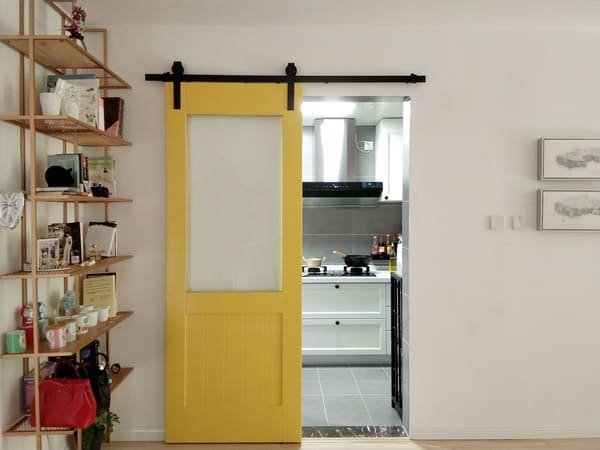
I can’t tell you how many times I’ve consulted with contractors who had to fix a sizing mistake. Getting the measurements right is critical, but it’s actually very simple once you understand why. The extra size is called "overlap," and it’s what ensures your door provides full coverage and privacy when it’s closed. Without it, you’ll see gaps around the edges.
Calculating Door Width
To get the right width, measure your doorway opening from one side to the other. If you have trim or molding around the door, measure from the outer edge of the trim on one side to the outer edge on the other. Then, add a minimum of 2 inches. So, if your opening is 36 inches wide, you should look for a door that is at least 38 inches wide. I often recommend going for a 3 to 4-inch overlap for even better coverage and a more substantial look. It ensures no light peeks through the sides.
Determining Door Height and Track Length
For the height, measure from the floor to the top of the opening (or the top of the trim). Add 1 inch to this measurement. This ensures the door fully covers the opening from top to bottom while leaving enough space to clear the floor. The hardware track will be installed above the doorway. Speaking of the track, its length is also very important. The rule here is simple: the track should be at least double the width of your barn door. For a 40-inch wide door, you need an 80-inch track. This gives the door enough room to slide completely clear of the opening.
What is the barn door protocol?
You’ve picked the door and know the right size. But what about the hardware? The wrong hardware can completely undermine the function and style of your beautiful new door.
The barn door "protocol" is about selecting a complete, high-quality hardware kit. This includes the track, rollers, stoppers, floor guide, and handle. The style must match your door, and the quality must support the door’s weight for safety.
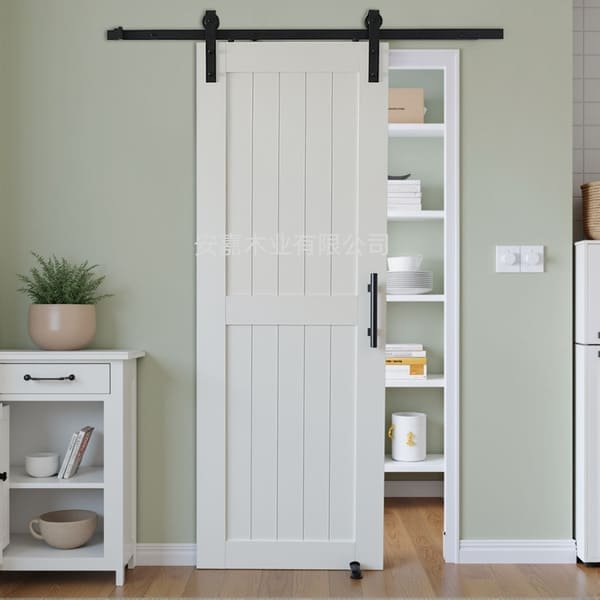
When I talk to buyers, I often refer to the hardware selection as the "protocol" because it’s a set of rules you need to follow for a successful installation. The door is the main feature, but the hardware is the engine that makes it work. A heavy, solid wood door needs a heavy-duty system, while a lighter door can use a more standard kit. It’s about matching the components to the door.
Essential Hardware Components
Every standard barn door kit should include a few key pieces. The track4 or rail is what the door slides on. The hangers or rollers attach to the top of the door and roll along the track4. Door stops are placed at each end of the track4 to prevent the door from rolling off. A floor guide is a small piece installed on the floor to keep the bottom of the door from swinging out. Finally, you have the handle or pull. All these parts must work together seamlessly.
Choosing Your Hardware Kit
The hardware also contributes heavily to the final look. Just like the door, the hardware has a style. A purchasing manager for a large development needs to match the hardware to the project’s overall aesthetic. Here’s a quick guide to popular styles.
| Hardware Style | Description | Best For Room Type |
|---|---|---|
| Classic Strap | A flat strap that loops over the wheel. | Farmhouse, rustic, classic, traditional interiors |
| Top Mount | Hangers attach to the top edge of the door. | Modern, minimalist, contemporary spaces |
| Spoke Wheel | Features a large, cast iron wheel with spokes. | Industrial, steampunk, unique statement pieces |
As a factory direct supplier, we focus on producing hardware that is not only stylish but also incredibly durable and cost-effective. For my B2B clients, this means they get a top-quality product that they can trust, and we can even customize parts with their LOGO for branding purposes.
Conclusion
Choosing the right barn door is easy when you focus on style, size, and quality hardware. You are now ready to transform your space with the perfect door.
Explore the unique benefits of Z-brace doors, perfect for adding rustic charm to your home. ↩
Learn about the cost-effective and stable options of MDF/Composite doors for your projects. ↩
Explore this link to discover innovative solutions for enhancing privacy with barn doors, ensuring comfort in your spaces. ↩
Explore this link to understand the different types of tracks available for barn doors and how to choose the best one for your needs. ↩ ↩ ↩