
Struggling to pick the right sliding door? A poor choice wastes space and function, frustrating your clients. Understanding key factors ensures you select the perfect door for any project.
To choose the most suitable sliding door, first evaluate the available space and the room’s function. Then, select the door material and, most importantly, choose a high-quality hardware system with rollers and tracks that can support the door’s weight and intended usage frequency.
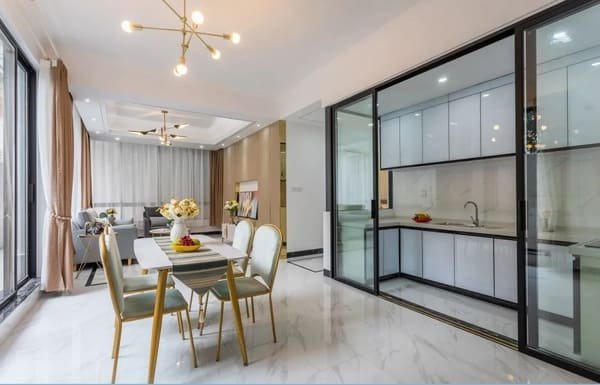
Picking the right door involves more than just how it looks. It’s about how it works, how long it lasts, and how it feels to use every single day. As a manufacturer of the hardware that makes these doors move, I can tell you that the secret to a great sliding door is in the details you can’t always see. Let’s break down the essential things you need to know to make the best choice for your projects.
How to choose sliding doors?
Are you feeling overwhelmed by the sheer number of sliding door options available? Making the wrong choice can lead to callbacks from unhappy customers and hurt your business’s reputation.
To choose sliding doors, assess the available wall and floor space first. Next, decide the door’s function, like for privacy or an open-plan feel. Finally, select the door material and a durable hardware system suited for the door’s weight and how often it will be used.
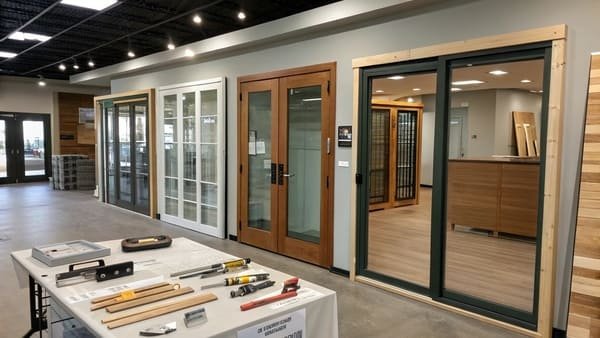
Choosing the right sliding door is a step-by-step process. If you follow it, you can ensure both you and your client are happy with the result. I always tell my customers to think about three main areas.
1. Assess the Space & Function
First, look at the room. Is there empty wall space next to the doorway? A barn door might be perfect. Is there no extra wall space, but you can build into the wall? A pocket door is your best bet. For wide closets, bypass doors work well. Think about the door’s job. Does it need to provide total privacy, like for a bathroom, or just divide a space, like between a living room and dining room? This will guide your choice.
2. Consider the Door Material
Doors can be made from glass, wood, MDF, or metal. The material affects the style, weight, and price. A heavy, solid wood door feels premium but needs a heavy-duty hardware system1. A lighter MDF door is more budget-friendly and requires less robust hardware. The key is to make sure the hardware you choose can handle the door’s weight. An undersized system will fail, it is only a matter of when.
3. Focus on the Hardware System
This is the most critical part. The hardware is the engine of the sliding door. As a factory owner, I see where people make mistakes. A cheap hardware system1 on a beautiful door will lead to problems. Here’s a quick comparison:
| Hardware System | Best For | Key Consideration |
|---|---|---|
| Top-Hung | A clean look with no floor track | Requires a strong header or ceiling support. |
| Bottom-Rolling | Very heavy doors or weak wall structures | The floor track can collect dirt and be a trip hazard. |
| Soft-Close | High-end homes, kids’ rooms | Adds cost but provides safety and a premium feel. |
| Bypass | Wardrobes, wide room dividers | Only half of the opening is accessible at once. |
What is the sliding door theory?
You see sliding doors work every day, but do you know the mechanics behind them? Not understanding the ‘why’ can lead to bad installations and future maintenance problems for your clients.
The theory of a sliding door is simple. It uses a track-and-roller system. Rollers, which are attached to the door, move along a track fixed above or below. This allows the door to slide horizontally, saving the space that a swinging door would need.
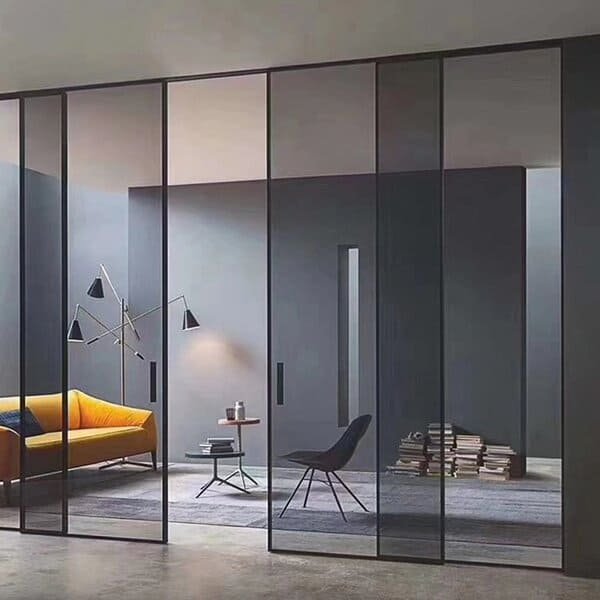
At its heart, a sliding door is a very simple machine. But for it to work smoothly and reliably for years, every part of that machine has to be high quality and installed correctly. Let’s break down the three core components.
The Track System
The track is the path the door follows. It can be mounted on the wall above the doorway (top-hung) or on the floor (bottom-rolling). Top-hung systems are more popular because they leave the floor clear, but they need a strong wall or header to support the entire weight of the door. The track must be installed perfectly level. If it is not level, the door will want to slide open or closed on its own, which is annoying and unsafe.
The Roller (or Hanger) System
The rollers are the wheels that do the moving. This is where quality really matters. The rollers are attached to the top or bottom of the door and sit inside the track. Good rollers have high-quality bearings2, often ball bearings, which allow them to move smoothly and silently. The roller material is also important; nylon is quiet, while steel is stronger for very heavy doors. At my factory, we focus on producing rollers with precise bearings that match the weight capacity required, ensuring a long, trouble-free life.
Guiding and Stopping
A sliding door needs more than just a track and rollers. A small guide, usually on the floor, keeps the bottom of the door from swinging in and out. This adds stability. Also, every system needs stops. These are installed at the ends of the track to prevent the door from rolling right off. Many modern systems, like ours, also include anti-jump blocks. These small but crucial parts prevent the rollers from accidentally coming out of the track if the door is pushed upwards.
What is the common problem with sliding doors?
Sliding doors that don’t work right can be a big headache. A door that sticks, makes noise, or feels wobbly will lead to complaints that can damage your professional reputation.
The most common problems with sliding doors are sticking or jerky movement, loud noise, and the door coming off its track. Almost always, these issues are caused by low-quality or incorrect hardware, poor installation, or a lack of simple cleaning.
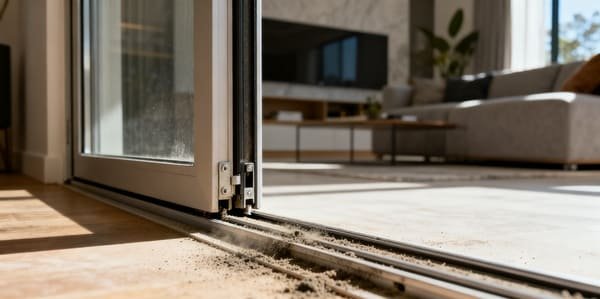
From my experience in manufacturing the hardware, I can tell you that 90% of sliding door problems can be prevented before they start. It comes down to choosing the right components and installing them correctly. If a client does have a problem, it is usually one of a few common issues. It’s smart to know what they are, what causes them, and how to fix them. This knowledge makes you a more valuable partner to your clients.
Here is a simple breakdown of common issues:
| Problem | Common Cause | How to Prevent & Fix |
|---|---|---|
| Sticking / Hard to Slide | The track is dirty, the rollers are worn out, or the door is too heavy for the hardware. | Solution: Keep the track clean. Replace worn rollers with high-quality ones. Always use hardware rated for the door’s actual weight, not just an estimate. |
| Noisy Operation | Low-quality bearings in the rollers, or debris caught in the track. | Solution: Choose hardware with good ball bearings. Check and clean the track. Adding a soft-close mechanism also eliminates the noise of the door hitting the stop. |
| Door Jumps Off Track | The track isn’t level, the floor guide is missing, or the door was hit forcefully. | Solution: Ensure the track is perfectly level during installation. Install all safety parts, like anti-jump blocks. Make sure the floor guide is secure. |
| Wobbly Door | Rollers are worn, the hangers are loose, or the floor guide is inadequate. | Solution: Tighten all bolts on the hangers. If rollers are worn, replace them. Use a robust floor guide that properly holds the bottom of the door in line. |
What type of door would you recommend when space for a door swing is limited?
Facing a tight space? A traditional swinging door just won’t fit the floor plan. This can make a room feel awkward and waste valuable area, leaving your client unhappy.
For a limited space, a pocket door is the best choice because it slides into the wall and disappears, using zero floor space. If modifying the wall isn’t an option, a surface-mounted barn door or a bypass sliding door are also excellent space-saving solutions.

When the arc of a swinging door is not an option, sliding doors are the obvious answer. They trade floor space for wall space. But even within the sliding door category, there are different types, each with unique benefits for small rooms. Choosing the right one depends on the wall structure and the aesthetic you and your client want to achieve.
The Ultimate Space-Saver: Pocket Doors
A pocket door3 is the champion of space-saving. It slides on a track into a hollow "pocket" inside the wall. When open, it’s completely gone. This is perfect for small bathrooms, walk-in closets, or laundry rooms where every inch counts. The key to a good pocket door3 is the hardware kit. Because the track and rollers will be sealed inside the wall, you must use a high-quality, durable system. I always recommend heavy-duty track and roller kits for pocket door3s. A failure is very difficult and expensive to repair later.
The Stylish Alternative: Barn Doors
A barn door4 is mounted on a track that sits on the surface of the wall, above the opening. The door slides to one side, covering a section of the wall. While it needs clear wall space for the door to slide over, it does not require any demolition of the existing wall. This makes installation much easier than a pocket door3. Barn doors are great for adding a design statement—whether rustic or modern—to separate spaces like a home office or a pantry.
The Practical Choice: Bypass Doors
Bypass doors consist of two or more panels that slide past each other on parallel tracks. You often see them on wide bedroom closets. They are practical because they can cover a very wide opening without needing a large empty wall space to slide onto. The main limitation is that you can only ever have about half of the opening accessible at one time. For this application, having smooth, quiet rollers is essential for a good user experience.
Conclusion
Choosing the right sliding door is about matching the door type to the space and function. Most importantly, always invest in high-quality hardware for long-lasting, smooth, and quiet operation.
This resource will help you choose the right hardware system to ensure your sliding door operates smoothly and safely. ↩ ↩
Learn about the significance of high-quality bearings in roller systems to ensure smooth and silent operation, enhancing the longevity of your sliding door. ↩
Explore the advantages of pocket doors for maximizing space in your home, especially in tight areas like bathrooms and closets. ↩ ↩ ↩ ↩
Discover how barn doors can add a stylish touch to your home decor while being functional and easy to install. ↩