
Are your open-plan kitchen and dining rooms feeling a bit predictable? You want a unique design, but you’re stuck with the same old ideas. Let’s explore fresh ways to create a more interesting and functional space.
To make the area between your kitchen and dining room more interesting, think beyond a simple island. Use creative dividers like pocket doors, barn doors, or even strategically placed furniture. These elements help define each zone while adding a unique character and improving the overall flow of your home.
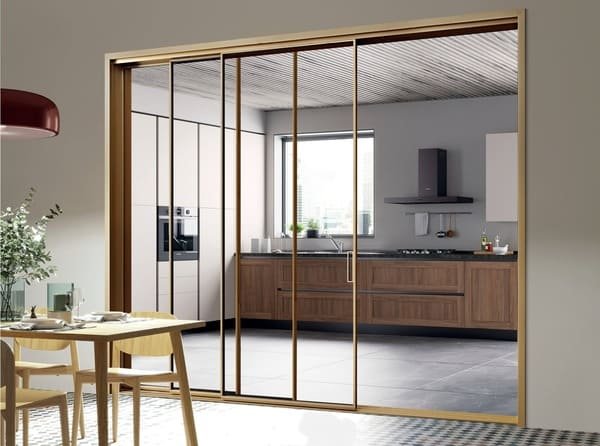
Open-plan living is here to stay. It started getting popular back in the 70s and it just works for modern life. But let’s be honest, popular ideas can get boring. The go-to solution is usually a big kitchen island. It acts as a divider and a breakfast bar. There’s nothing wrong with that. In many homes, especially with new extensions, it’s a perfect fit. Yet, I’ve seen so many projects and I always wonder, how can we make this space feel new and exciting? It’s time to move past the standard playbook and look at some different takes that really make a house stand out. Let’s get into some ideas that I think you’ll find useful for your next project.
How to blend kitchen and dining room?
Your open-plan area feels disjointed, like two separate rooms forced together. Achieving that seamless, harmonious look is tough. Blend them with cohesive flooring, colors, and consistent hardware finishes.
Blend your kitchen and dining room by using a single color palette and the same materials throughout. For example, extend your kitchen countertop material to a dining table or use the same flooring. Consistent and high-quality hardware on all cabinets and furniture also ties the two spaces together perfectly.
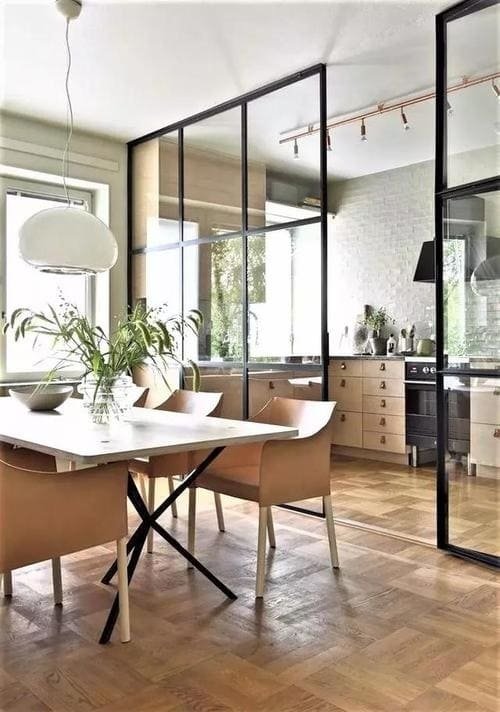
Blending these two areas is all about creating a single, unified visual story. It’s about tricking the eye into seeing one large, harmonious space instead of two separate ones. Based on my experience supplying hardware for countless projects, the magic is in the details. You want to create a sense of continuity. Start with the big surfaces. Using the same flooring, whether it’s wood, tile, or polished concrete, is the most effective way to connect the zones. Then, think about vertical surfaces and colors. A consistent color palette doesn’t mean everything has to be the same color. It means choosing a main color and a few accent shades to use in both the kitchen and dining areas. For example, if you have navy blue kitchen cabinets, you could use chairs in the same shade of navy blue in the dining area.
Here’s where a purchasing manager like Jacky can really make a difference. The choice of hardware is crucial.
| Blending Element | Why It Works | Practical Tip |
|---|---|---|
| Material Continuity | Creates a seamless visual floor and surface plane. | Use the same wood flooring or large-format tiles across both areas. |
| Color Palette | Unifies the space with a consistent aesthetic. | Paint a feature wall in the dining area with a kitchen accent color. |
| Hardware & Fixtures | Small details create a polished, high-end feel. | Use the same finish (e.g., matte black, brushed brass) for all cabinet pulls, hinges, and drawer slides. At opensliding, we offer customizable finishes to ensure a perfect match. |
I’ve seen projects where the whole look was elevated simply because the contractor chose our matte black cabinet hinges to match the black window frames and light fixtures. It’s these small, deliberate choices that transform a good design into a great one.
How to merge kitchen and dining room?
You have two separate rooms and want an open layout. But knocking down walls is a huge, expensive job. A successful merge is about more than demolition; it requires smart spatial planning.
To truly merge a kitchen and dining room, first remove the dividing wall after checking for structural issues. Then, create a unified layout by repositioning furniture for better flow. Using a flexible divider, like a large glass sliding door system, helps define zones while keeping the open feel.

Merging two rooms is a bigger step than blending them. It’s a structural change. The first step is always to talk to a structural engineer before you even think about swinging a hammer. Once the wall is gone, you have a big, empty canvas. The challenge is to make it feel connected but not like a giant, empty hall. This is where you can create a "broken-plan" layout. It gives you the openness you want, with the ability to create separation when you need it.
This is a perfect application for our Partition Room Sliding Door Roller Systems. I’ve worked with many contractors who install large glass pocket or barn doors between the kitchen and dining area. For everyday life, the doors stay open, and the space feels huge. When they have guests over for dinner, they can slide the door closed to hide the cooking mess. It’s the best of both worlds. This approach offers flexibility that a permanent wall or even a large island cannot.
Here’s a simple breakdown of your options for dividing the newly merged space:
| Divider Type | Description | Best For |
|---|---|---|
| Hard Divider | A permanent wall. | Completely separating two very different functions, but reduces flexibility. |
| Soft Divider | Furniture like a bookshelf or sofa. | Creating a subtle visual separation without blocking light or flow. |
| Flexible Divider | A sliding door or folding door system. | Offering the choice between a fully open space and a closed-off room. It’s an ideal solution we specialize in. |
The trend is moving towards this kind of flexibility. Homeowners want options, and as a supplier, providing solutions like our heavy-duty sliding systems allows contractors and factories to meet that modern demand.
What is the room between the kitchen and dining room called?
You have a small, strange space connecting your kitchen and dining areas. You don’t know its name or purpose. This space, a butler’s pantry or servery, can become a stylish, functional hub.
The transitional space between a kitchen and dining room is often called a butler’s pantry or a servery. Historically for storing dishes and plating food, modern designs transform it into a coffee bar, wine station, or extra pantry storage, greatly enhancing the home’s functionality.
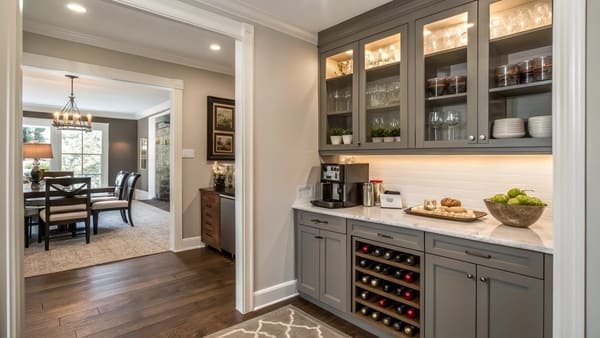
That little in-between room has a rich history. Traditionally, the butler’s pantry was a workhorse space. It was a staging area between the hot, noisy kitchen and the formal dining room. Here, the butler would store the fine china, polish the silver, and put the finishing touches on dishes before serving them. It was a purely functional room, designed to keep the mess of food prep hidden from guests.
Today, with our more relaxed lifestyles, this space has evolved. It’s no longer just a pass-through but a destination with a specific purpose. It’s a fantastic opportunity to add value and a "wow" factor to a home. I’ve supplied hardware for many creative uses of this space. For example, our Cabinet Sliding Door Roller Systems are perfect for creating sleek appliance garages to hide toasters and blenders. Smooth, high-quality drawer slides are essential for cabinets that will hold heavy stacks of plates. The function of this room demands hardware that can handle constant use.
Here are a few modern ideas for this classic space:
| Space Name | Traditional Use | Modern Idea |
|---|---|---|
| Butler’s Pantry | Storing china, silver, and linens. Plating food. | A full storage hub with custom cabinets for pantry overflow, small appliances, and serving pieces. |
| Servery | A simple pass-through for serving food. | A dedicated coffee bar with an espresso machine, cup storage, and a small sink. |
| Passageway | Connecting two rooms. | A wet bar or wine station, complete with a wine fridge, glassware racks, and a counter for mixing drinks. |
By turning this transitional area into a functional zone, you’re not just adding storage; you’re creating a feature that makes the home more enjoyable and efficient to live in.
What is the golden rule of kitchen design?
Planning a new kitchen layout is confusing. There are too many options. Getting it wrong means daily frustration. Just focus on the ‘kitchen work triangle’—the ultimate golden rule for functional design.
The golden rule of kitchen design is the "kitchen work triangle." This principle states that the refrigerator, the sink, and the stove should form a triangle. This layout minimizes the steps a person takes between these key areas, ensuring an efficient and easy workflow for all kitchen tasks.
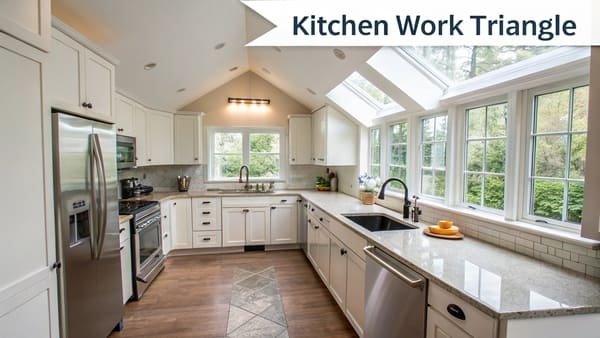
The kitchen work triangle is a concept that’s been around for decades, and for good reason: it just works. It’s based on the three primary activities in any kitchen: storage (refrigerator), cleaning (sink), and cooking (stove). The idea is to place these three items in a triangular layout to make moving between them as easy and efficient as possible. Imagine you’re preparing a meal. You take vegetables from the fridge, move to the sink to wash them, and then turn to the stove to cook them. A good work triangle makes this sequence of tasks smooth and logical, without wasted steps.
However, a perfect layout on paper can be ruined by poor execution. This is where the quality of the hardware becomes non-negotiable. I can’t tell you how many times I’ve seen a beautiful kitchen that is frustrating to use. The work triangle is perfect, but the heavy pantry door is hard to pull open, or the drawer full of pots and pans sticks. The "flow" of a kitchen isn’t just about the floor plan; it’s about how every component operates. This is why at opensliding, our focus is always on top quality. Our heavy-lifting wheel systems for pantry doors and our smooth, full-extension drawer slides ensure that the physical experience of using the kitchen matches the smart design.
When planning a layout, here are the general guidelines for the triangle:
| Triangle Leg | Recommended Distance | Reason |
|---|---|---|
| Each Leg | Between 4 feet (1.2m) and 9 feet (2.7m) | Too close feels cramped; too far is inefficient and tiring. |
| Total of all three legs | Between 13 feet (4m) and 26 feet (8m) | This keeps the overall work area compact but not crowded. |
| Traffic Flow | No major traffic should cross through the triangle. | Keeps the cook’s workspace safe and uninterrupted. |
Modern kitchens sometimes have "work zones" instead of a single triangle, but the core principle remains the same: keep related tasks and items close together for efficiency. And always, always invest in quality hardware to make it all work smoothly.
Conclusion
Ultimately, creating a great kitchen-dining space is about smart design. It’s about blending zones with cohesive details, using flexible dividers, and building it all with reliable, top-quality hardware.