
Struggling with faulty sliding doors? A poor hardware choice leads to jams and frustration. Find the perfect gear for a smooth, lasting solution that satisfies your customers.
To choose the right sliding door gear, first assess your door’s weight and material to determine the required track and roller capacity. Then, select a track type and roller material that suits your installation environment and aesthetic needs for optimal performance and longevity in the final product.

Getting the basics right is crucial for any project. I’ve learned from years of manufacturing that success lies in the details. My clients, professionals like Jacky from Canada who buys hardware for large-scale projects, know this all too well. They often ask specific questions that make all the difference between a failed project and a successful one. Let’s break down some of the most common questions I get about choosing the right hardware.
How to pick the right door pull for a sliding door?
Standard door knobs snag on sliding doors. The wrong pull looks awkward and is hard to use. You need a handle that is both functional and stylish for your door.
For sliding doors, choose low-profile flush pulls or recessed handles that don’t obstruct the door’s path. Consider the door’s style, the material for durability (like stainless steel), and the finish to match other hardware. Ensure the grip is comfortable for the end-user.

A common mistake I see is when designers try to use a standard swinging door knob on a sliding or pocket door. It simply doesn’t work. The door can’t fully open or retract. For your projects, you need to think about clearance and functionality. That’s why we produce specific pulls for sliding systems.
Handle Types and Applications
There are a few main types of pulls to consider:
- Flush Pulls1: These are recessed into the door, creating a clean, flat surface. They are perfect for pocket doors or when you have two sliding doors bypassing each other.
- Bar Pulls2: These are mounted to the surface. They offer a more substantial grip and make a design statement. They work well on barn doors or single sliding doors that don’t need to slide into a wall.
- Edge Pulls: These are tiny pulls installed on the edge of a pocket door, used to pull it out from the wall recess.
The material and finish are just as important for durability and aesthetics. As a factory, we offer a wide range to meet our clients’ needs.
| Handle Type | Best For | Material | Common Finishes |
|---|---|---|---|
| Flush Pull | Pocket doors, bypassing doors, minimalist look | Stainless Steel | Brushed, Matte Black |
| Bar Pull | Barn doors, feature doors, easy grip | Aluminum | Polished Chrome, Brass |
| Edge Pull | Pocket doors (for initial pull-out) | Zinc Alloy | Satin Nickel, Bronze |
Choosing the right pull ensures the finished door is easy to use and looks professional. It’s a detail your customers will notice and appreciate every day.
How do you choose the right rollers for a sliding glass door?
Glass doors are heavy and fragile. The wrong rollers cause grinding, sticking, or even damage. You must choose durable, quiet rollers to protect the door and ensure smooth operation.
For a sliding glass door, select rollers with the correct weight capacity. Use tandem rollers for better weight distribution. Polymer or nylon wheels are quieter and resist corrosion, making them ideal for patio doors exposed to weather. Always check track compatibility.
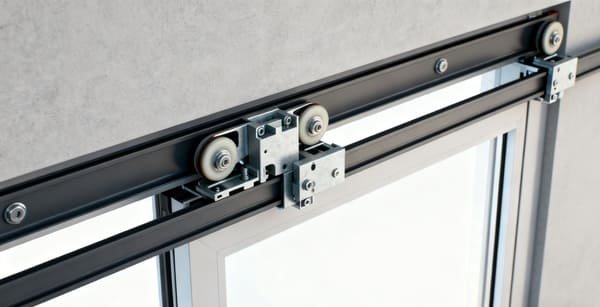
A sliding glass door on a patio is one of the toughest tests for hardware. It’s heavy, used frequently, and exposed to rain, dust, and temperature changes. A client once told me their previous supplier’s steel rollers rusted completely shut within a year. This is why material choice is not a small detail. At my factory, opensliding, we focus heavily on material science to prevent these exact problems.
Key Factors for Glass Door Rollers
- Weight Capacity: A standard glass panel is extremely heavy. You must use rollers rated well above the door’s actual weight for a safety margin. Overloading rollers is the number one cause of failure.
- Roller Material3: Steel rollers can be strong, but they are noisy and can rust if not properly treated. We recommend and produce high-density polymer or nylon wheels. They offer an incredibly smooth and quiet glide, and they will never corrode. This is a huge selling point for high-end residential or commercial projects.
- Bearing Quality4: The bearings inside the roller are its heart. Sealed ball bearings are best because they keep dirt and moisture out, ensuring a long, maintenance-free life.
| Feature | Why It Matters for Glass Doors | Our Recommendation |
|---|---|---|
| Arrangement | Tandem (four-wheel) rollers distribute the immense weight evenly. | Always use tandem rollers. |
| Material | Must be corrosion-resistant and quiet. | High-density polymer or nylon. |
| Bearings | Protects against dust and moisture, ensuring smooth roll. | Precision sealed ball bearings. |
For purchasers like Jacky, specifying rollers with these features ensures their final product is premium, reliable, and free from costly warranty claims.
How do you know if your sliding door is left or right handed?
Ordering a door with a pre-installed lock and getting the handing wrong is a costly mistake. This simple detail can delay entire projects and ruin budgets. Learn how to identify it correctly.
Stand on the exterior (outside) of the door. From this viewpoint, whichever side the primary sliding panel is on when the door is closed determines the handing. If it slides from the right side, it’s a right-handed door.
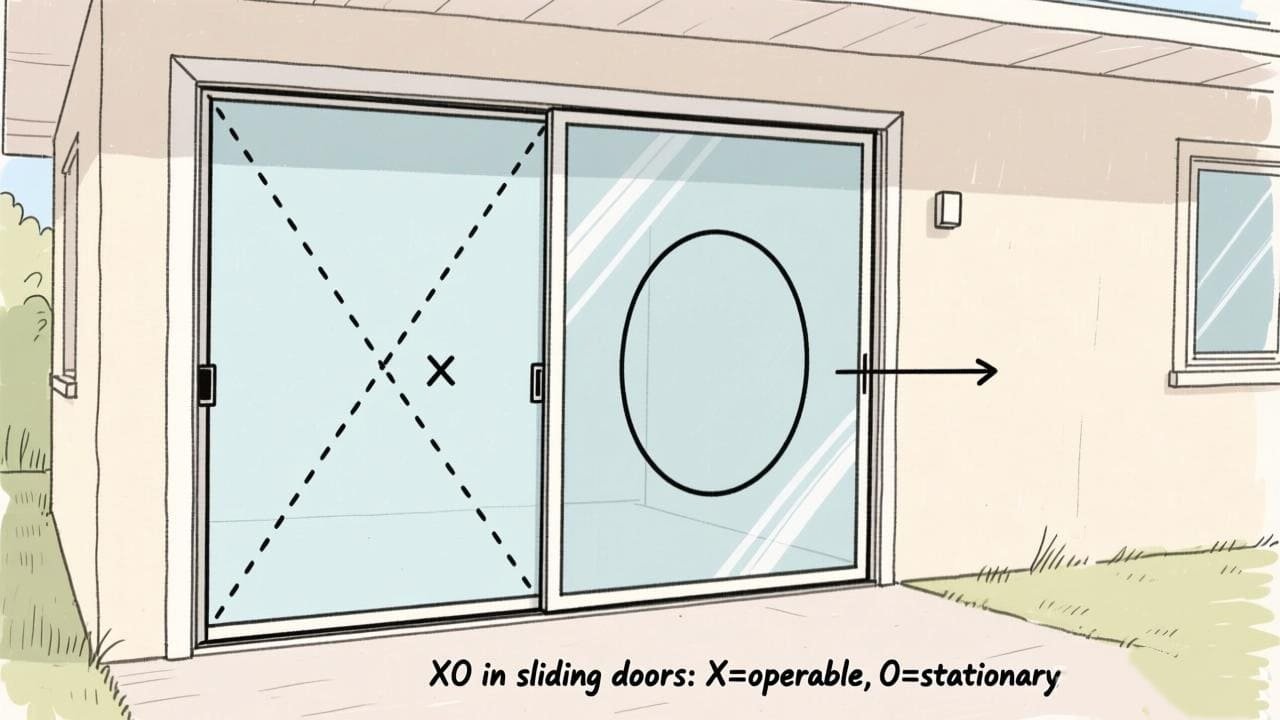
This question causes more confusion than any other. I had a client in Europe who ordered 200 doors and got the handing wrong. The cost to fix the mistake was enormous. Since then, I make sure every new customer understands this simple rule before placing an order for asymmetrical hardware. The rule is based on looking at the door from the outside.
A Simple Guide to Door Handing
Let’s break this down into clear steps so you never get it wrong. This applies to most sliding patio doors.
Step 1: Find the "Exterior"
The exterior is the side of the door that faces outside the building or, for an interior door, outside the primary room it serves. Always use this perspective.
Step 2: Identify the "Active" Panel
The active panel is the one that slides. The other panel is fixed. With the door fully closed, see which panel is the one that moves.
Step 3: Determine the Handing
- If you are standing outside and the active (sliding) panel is on the left, you have a left-handed door. The industry term is often "X-O", where X is the slider and O is the fixed panel.
- If you are standing outside and the active (sliding) panel is on the right, you have a right-handed door. The industry term is "O-X".
This is essential when ordering doors with integrated locks, handles, or specific screen door configurations. Getting it right from the start saves time, money, and headaches for everyone involved in the project.
What is the sliding door theory, and what does it teach us about hardware?
Ever wonder about "what if" moments? The Sliding Doors theory explores how small events create different timelines. A sticky door is a small problem that can ruin a user’s day.
The "sliding door theory," from the movie Sliding Doors, is a metaphor for how small, seemingly insignificant moments can drastically alter outcomes. In our industry, it proves that choosing quality hardware isn’t a small detail; it’s a crucial decision that determines future performance and client satisfaction.

The theory is simple: a woman either catches or misses a train, and her life splits into two completely different paths based on that one moment. I think about this all the time in my work. The choice of a roller, a track, or a handle is one of those "sliding door moments" for a product. It’s a small decision early in the process that has huge consequences down the line. A purchasing manager might save a few cents per unit on a cheaper roller. This seems insignificant.
But let’s look at the two paths this creates:
| The "Sliding Door" Moment | Path 1: Bad Outcome (Low-Quality Hardware) | Path 2: Good Outcome (High-Quality opensliding Hardware) |
|---|---|---|
| Choosing the Roller | The roller jams and grinds. The end-user is frustrated daily. | The door glides silently. The end-user feels the quality and is satisfied. |
| Result for your Customer | They file a warranty claim. Your installation team has to make a costly visit. | They leave a positive review. Their friends ask where they got the beautiful door. |
| Result for your Business | Your brand’s reputation is damaged. You lose money on repairs. | Your brand’s reputation for quality grows. You get more referral business. |
This theory proves that there are no "small" details in manufacturing. As a factory owner, my responsibility is to ensure that when our partners choose our hardware, they are choosing the path that leads to a great reputation and a successful business.
Conclusion
Choosing the right sliding door gear is not just about parts; it’s about ensuring quality and performance. These details build your reputation and ensure every installation operates perfectly for years.
Explore the advantages of Flush Pulls for a sleek design and functionality in pocket doors. ↩
Discover how Bar Pulls can add style and ease of use to your barn door designs. ↩
Explore the advantages of high-density polymer or nylon wheels for glass door rollers, ensuring a smooth, quiet, and corrosion-free experience. ↩
Learn why sealed ball bearings are crucial for glass door rollers, providing durability and maintenance-free operation. ↩