
Struggling with layouts where a swinging door eats up valuable space? You need a solution that maximizes room without compromising on style or function. Pocket doors are the answer.
A pocket door is a type of sliding door that disappears into a hidden compartment, or "pocket," inside the wall when opened. This design saves significant floor space, making it an ideal choice for smaller rooms, closets, pantries, or any area where a traditional swinging door is impractical.

I’ve been in the door hardware business for years, and I’ve seen countless projects transformed by a simple switch in door style. Pocket doors aren’t just a niche product; they are a clever design tool. For purchasing managers and contractors, understanding their mechanics and benefits is key to offering clients superior solutions. They solve real-world space problems elegantly. Let’s look closer at what makes them tick and why they are a smart addition to your product catalog or building plan.
What is the disadvantage of a pocket door?
Worried that a pocket door will be flimsy, noisy, or hard to install? The wrong hardware can certainly lead to problems, creating headaches for both you and the end user.
The main disadvantages are a more complex installation compared to a swing door, potential for noise if cheap hardware is used, and difficulty with repairs once the wall is closed up. Also, the wall containing the pocket cannot house plumbing or electrical wiring.
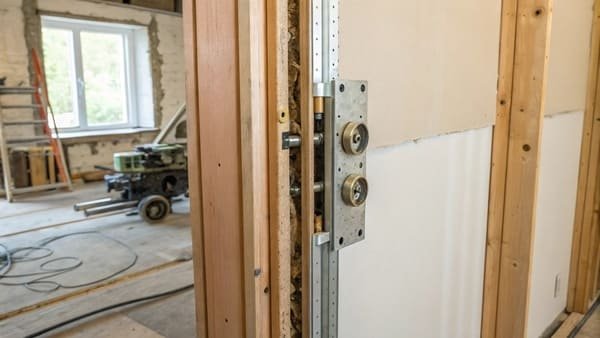
As a manufacturer at opensliding, I see firsthand how hardware quality makes or breaks a pocket door system. The issues people associate with them almost always come down to using subpar rollers and tracks. A cheap system will wobble, make noise, and fail over time. Accessing it for repairs then becomes a major, wall-opening job. This is why we focus on engineering robust systems. A good system should be a "fit and forget" solution.
Here are the common complaints and how to solve them:
Common Disadvantages & Solutions
| Disadvantage | Why It Happens | The opensliding Hardware Solution |
|---|---|---|
| Noise & Wobble1 | Low-quality rollers and flimsy tracks cause rattling and unsteady movement. | We use precision-engineered rollers with high-quality bearings and heavy-duty aluminum tracks. This ensures a silent, smooth glide every time. |
| Installation Difficulty2 | Poorly designed frames and unclear instructions make installation a frustrating and time-consuming process. | Our systems come as complete kits with pre-drilled components and detailed guides. We design them for efficiency, saving contractors valuable time on site. |
| Maintenance Access | If a cheap roller fails, you might have to cut open the wall to replace it. | Our high-quality systems are built to last for decades. Should a part ever need servicing, our tracks are often designed to allow roller replacement without drywall demolition. |
For my clients, like Jacky, who are responsible for sourcing reliable products, choosing a premium pocket door system is a low-risk, high-reward decision. It prevents costly callbacks and protects your reputation for quality.
Why did they stop using pocket doors?
You might think pocket doors are a forgotten trend from the past. Many older homes have them, but they seem less common in mid-century construction, leading to this common question.
They never truly went away, but they did fall out of favor for a time. This was largely due to the failure of early, low-quality hardware systems that were prone to jamming and falling off the track, giving them a bad reputation for being unreliable.
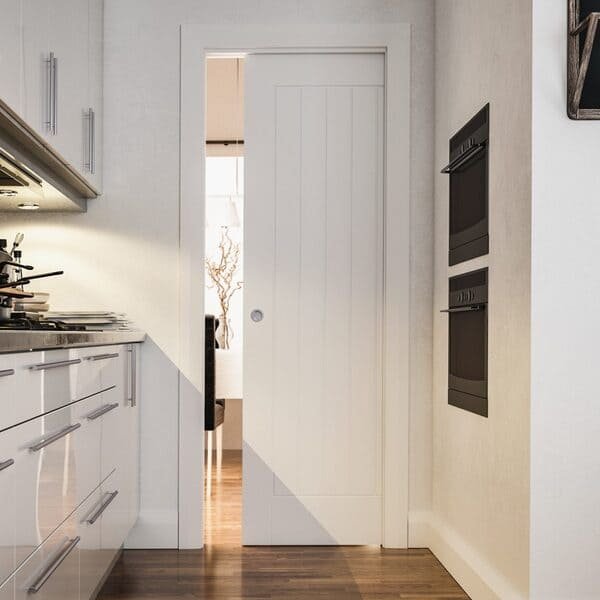
From my perspective in manufacturing, the story of the pocket door is a perfect example of how hardware evolution can revive a design concept. In the past, the track and roller systems were often not strong enough for the weight of solid wood doors. They would warp, and the rollers would wear out quickly. When this happened, the door would get stuck inside the pocket, and the only fix was to tear open the wall. It’s no wonder builders and homeowners grew wary of them and opted for simpler swing doors.
However, modern engineering and materials have completely changed the game. At opensliding, we don’t use the flimsy components of the past. We use high-grade aluminum for our tracks and durable, precision-made polymers and bearings for our rollers. Our soft-close mechanisms, for example, prevent slamming and ensure a gentle operation that puts less stress on the components over time. This resurgence in quality has made pocket doors a reliable and highly sought-after feature once again, especially as living spaces get smaller and maximizing square footage becomes more important.
What is the difference between a sliding door and a pocket door?
Is a pocket door just another name for a sliding door? It’s a common point of confusion, but they are technically different, and the distinction is important for planning and installation.
A pocket door is a specific type of sliding door. The key difference is that a pocket door slides into the wall and disappears, while a standard sliding door (like a barn door or bypass closet door) slides along the face of a wall and remains visible.

For my B2B clients, understanding this difference is crucial for ordering the right hardware and for advising their own customers. The hardware and installation requirements are completely different.
Pocket Door3 vs. Standard Sliding Door4
- Hardware: Requires a "pocket frame kit," which is a split stud frame that gets installed as part of the wall structure. The track is hidden within the top of this frame. At opensliding, our kits are designed for robustness and ease of assembly.
- Installation: It’s more involved. You must build or open up a wall to install the pocket frame. It’s best done during new construction or a major renovation.
- Result: A completely clean look when open, with no visible track. The door itself vanishes, maximizing both floor and wall space.
Standard Sliding Door4 (e.g., Barn Door):
- Hardware: A track and roller system that is mounted directly onto the surface of the wall, above the doorway.
- Installation: Much simpler. It can be easily retrofitted onto an existing doorway without opening up walls.
- Result: The door and the track are a visible design element. It saves floor space compared to a swing door, but requires a clear section of wall for the door to slide over.
When a purchasing manager like Jacky orders from us, they need to know which application their project demands. Both are great space-savers, but one is about concealment and the other is about making a stylistic statement.
Why are pocket doors not more popular?
If they save so much space, why aren’t they in every home? You might wonder why builders don’t just make them the default choice, especially in smaller apartments and houses.
Pocket doors are not more popular primarily due to higher initial costs and installation complexity compared to standard swing doors. The lingering memory of past hardware failures also contributes to some hesitation from builders and buyers.

Let’s break down the barriers from a business and construction perspective. For a high-volume home builder, every dollar and every minute counts. A standard pre-hung swing door can be installed very quickly by one person. A pocket door, on the other hand, requires building the pocket frame, ensuring it’s perfectly plumb and level, and then carefully hanging the door. It takes more time and more skill, which translates to higher labor costs. Add the cost of a quality pocket door hardware kit, which is more expensive than a few simple hinges, and the price difference becomes significant.
However, this is where a shift in thinking is happening. At opensliding, we work with many forward-thinking contractors and furniture factories. They see the value proposition. In a high-value real estate market, the square footage a pocket door saves is worth far more than the extra installation cost. It can make a small bathroom feel usable or allow for a more open-plan design. As a supplier, my job is to make the hardware so reliable and easy to install that it minimizes that cost gap. By providing top-quality, dependable systems, we help our clients offer a premium feature that differentiates their projects and adds real, tangible value for the end user.
Conclusion
Pocket doors are a brilliant space-saving solution, and with modern, high-quality hardware, their past reliability issues are gone. They offer a clean, functional alternative to traditional swinging doors.
Explore this link to understand how to eliminate noise and wobble in sliding doors, ensuring a smoother operation and better user experience. ↩
This resource will provide insights on simplifying installation, saving time and effort for contractors and DIY enthusiasts alike. ↩
Explore the benefits of Pocket Doors for maximizing space and achieving a clean aesthetic in your home. ↩ ↩
Learn how Standard Sliding Doors can add style and functionality to your space while saving floor area. ↩ ↩