
Choosing the right sliding door track is a critical decision. A poor choice can lead to maintenance headaches, trip hazards, and poor performance. Let’s compare the two main options.
For most modern, heavy-duty applications, a lifting rail system is better. It provides effortless operation, superior weather sealing, and a clean, flush look. Ground rails are simpler and more cost-effective but they collect debris, create a trip hazard, and require more effort to slide.
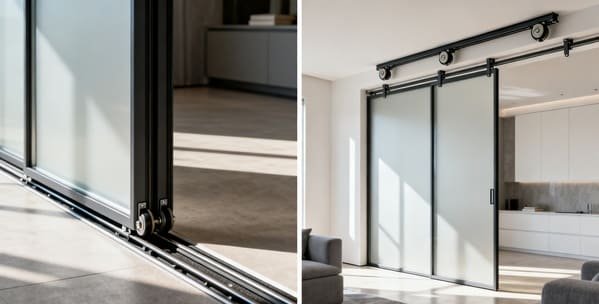
Comparing lifting and ground rail systemsSo, for high performance, the lifting rail often comes out on top. But that’s just the big picture. As a factory owner, I see clients weigh different factors every day when they source from us. The best choice for your project depends on more than just the basics, from door weight to your customer’s budget. Let’s break down the details so you can make an informed decision for your own product line or construction project.
How do I choose a sliding door track?
Feeling overwhelmed by all the track choices on the market? Picking the wrong one can lead to system failures, costly callbacks, and unhappy clients. I’ll guide you through the key factors.
To choose the right track, first consider the door’s weight and size. Then, evaluate the desired level of weather sealing and ease of use. Finally, balance your budget against long-term maintenance needs. Prioritizing these factors will guide you to the best solution for your project.
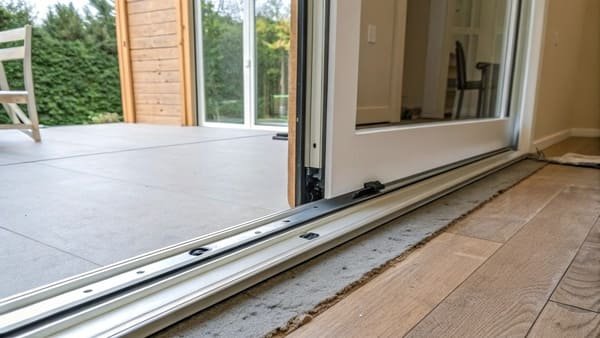
Sliding door track selection guideChoosing the right hardware is something I discuss with my B2B clients all the time. It’s not just about one feature; it’s about the whole package.
Assess Door Specifications
The first thing we look at is the door itself. A heavy, large glass panel door needs a robust system that can handle the weight without strain. This is where lift-and-slide systems excel. For a lighter interior wooden door, a standard bottom-rolling ground rail might be perfectly fine. The material and dimensions of the door panel directly influence the type of hardware required for safe and smooth long-term operation.
Evaluate Performance Needs
Next, think about where the door will be installed. For an exterior patio door, weather sealing is critical to prevent drafts and water ingress. A lifting rail system creates an incredibly tight seal when closed. For an interior room divider, a seamless floor and quiet operation might be more important. In that case, a top-hung system could be the best choice.
I’ve created a simple table to compare these factors:
| Door Weight | Heavy, large panels | Lift-and-Slide1, Heavy-Duty Ground Rail |
|---|---|---|
| Weather Sealing2 | Exterior doors, harsh climates | Lift-and-Slide1 |
| Ease of Use | Oversized doors, accessibility | Lift-and-Slide1 |
| Budget | Cost-sensitive projects | Standard Ground Rail |
| Seamless Floor | Interior dividers, modern aesthetic | Top-Hung System |
What are the different types of sliding door rails?
Do you think all sliding rails are the same? This common mistake can limit your designs and hurt overall product performance. Let’s look at the main types that we manufacture.
The main types are ground rails (bottom-rolling) and lifting rails (lift-and-slide systems). Others include top-hung systems where the door hangs from an overhead track. Each serves a different functional and aesthetic purpose, which is important to understand when sourcing for different projects.
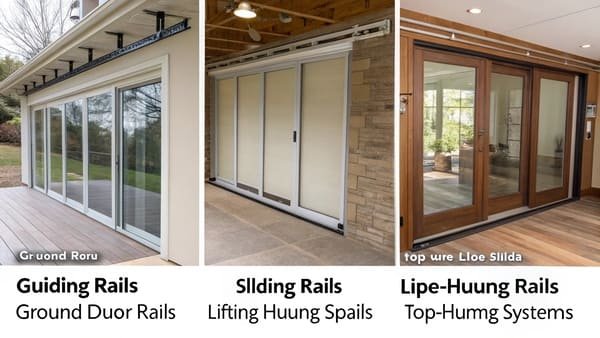
SlidingIn my factory, we produce components for all these systems because our customers around the world have diverse needs. Knowing the difference helps you select the exact right product for your customers.
Bottom-Rolling Systems (Ground Rails)
This is the most traditional and common type. The weight of the door rests on rollers that run along a track installed on the floor. It’s a simple, reliable, and cost-effective design. The major downside is that the track can collect dirt and debris, which requires regular cleaning to keep the door moving smoothly. It also creates a raised threshold that can be a trip hazard.
Lift-and-Slide Systems (Lifting Rails)3
This is a more advanced, high-performance system. When you turn the handle, it lifts the entire door panel up off its weather seals and onto the rollers. This makes even extremely heavy doors feel light and easy to move. When you close the door and turn the handle back, the panel drops down, compressing the seals and creating an airtight, weatherproof barrier. This is the top choice for high-end patio doors and large glass walls.
Top-Hung Systems4
With a top-hung system, the door hangs from rollers that run inside a track mounted above the opening. All the weight is supported by the header. There is no bottom track, only a small guide on the floor to prevent the door from swinging. This creates a completely clear, uninterrupted floor, which is great for interior doors, closets, and creating accessible spaces. However, they don’t provide a weather seal, making them unsuitable for exterior use.
Do all sliding doors need a bottom track?
Are you looking to create a clean, seamless floor line? A bulky bottom track can ruin that modern aesthetic and even create a trip hazard. Let me explain how some systems work without one.
No, not all sliding doors need a bottom track. Top-hung systems suspend the door from an overhead rail, using only a small, discreet floor guide for stability. This creates a clean, threshold-free opening, which is ideal for interior applications or projects with accessibility needs.
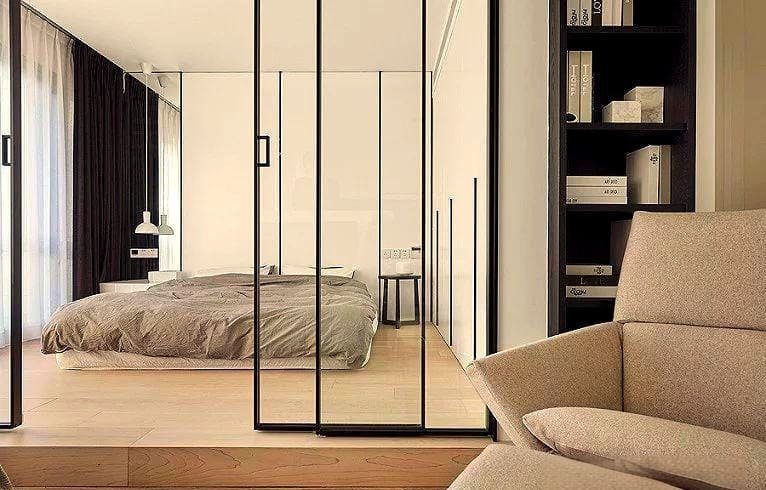
The decision to use a bottom track often comes down to balancing aesthetics with performance requirements like stability and weatherproofing.
When is a Bottom Track Essential?
A bottom track5 is non-negotiable for a few key applications. First, in any bottom-rolling system, the track is what carries the entire weight of the door. Without it, the system simply wouldn’t work. Second, for exterior doors, especially lift-and-slide systems, the bottom track5 is a crucial part of the weather-sealing mechanism. It creates the barrier that stops wind, rain, and dust. For any project involving very heavy doors or requiring a high level of thermal performance, a bottom track5 is essential for stability and function. It distributes the load and ensures the door remains secure.
The Alternative: Top-Hung Systems
When the goal is a minimalist design and an uninterrupted floor, a top-hung system is the answer. By moving all the weight-bearing hardware to the header above the door, the floor is left completely clear. This is why top-hung hardware is so popular for interior room dividers, barn doors, and closet doors. It delivers a modern, clean look that many designers and homeowners want. The main trade-off is the lack of a seal at the bottom, which is why we tell our clients it is strictly for interior use.
How do I make my sliding patio door slide easier?
Is a stiff, hard-to-move sliding door causing you trouble? It’s frustrating for the end-user and it reflects poorly on the quality of the installation. Let me share some factory-tested tips.
To make a sliding door slide easier, first, thoroughly clean the bottom track of all dirt and debris. Then, inspect the rollers for wear or damage and replace them if necessary. Finally, apply a silicone-based lubricant to the track for smooth, lasting operation.
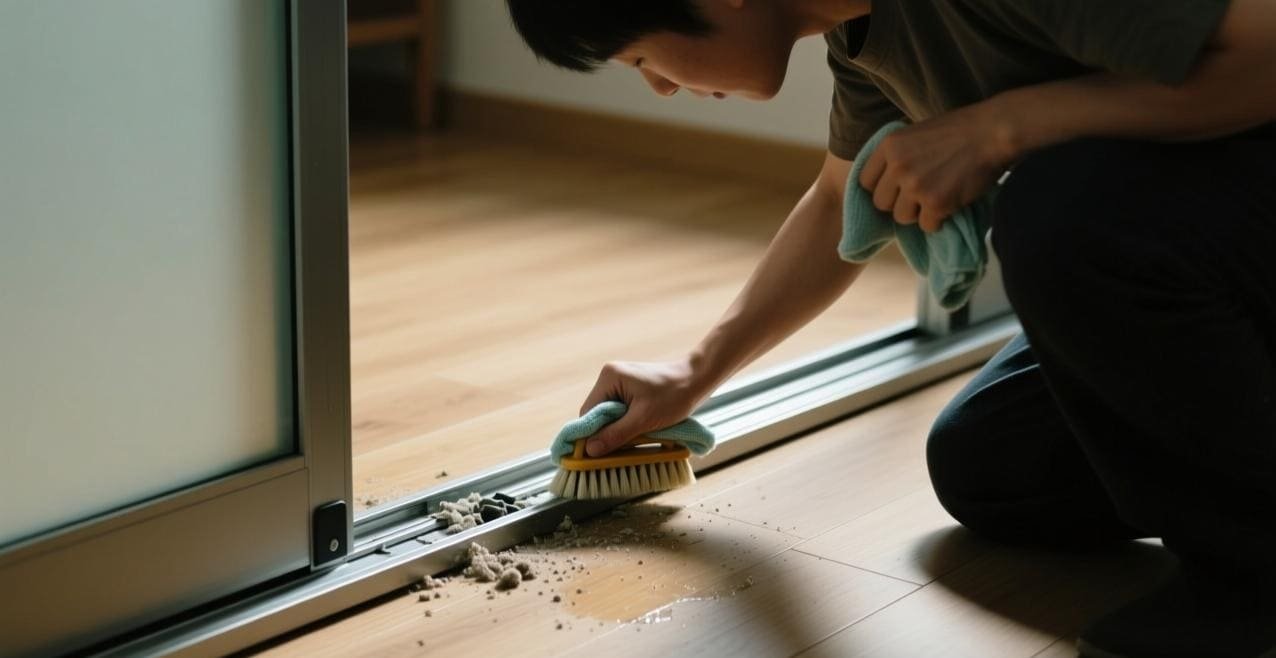
A sticking door is one of the most common complaints, but it’s usually easy to fix with some basic maintenance. Getting this right can save you from a costly service call.
Step 1: Deep Clean the Track
The track is a magnet for dirt, sand, pet hair, and other debris. Over time, this buildup creates friction and can even jam the rollers. Start with a vacuum cleaner using a crevice tool to get all the loose stuff out. Then, use a stiff brush and a mild cleaning solution to scrub away any caked-on grime. A clean track6 is the first and most important step for a smooth-gliding door.
Step 2: Inspect and Replace Rollers
The rollers are the workhorses of the system. Over years of use, they can become worn down, cracked, or clogged. You may need to carefully remove the door panel to get a good look at them. If the rollers are metal and rusted, or plastic and cracked, they must be replaced. As a hardware manufacturer, I can tell you that investing in high-quality replacement rollers7 is a small cost that makes an enormous difference in performance.
Step 3: Lubricate Properly
After cleaning the track and checking the rollers, the final step is lubrication. The key is to use the right product. Avoid oil-based lubricants like WD-40, because they are sticky and will attract even more dirt, making the problem worse over time. A clear, silicone-based spray lubricant is the best choice. It creates a slick, dry film that reduces friction without attracting dust. Apply a light coat to the track and work the door back and forth a few times to distribute it evenly.
Conclusion
Choosing between a lifting and ground rail depends on your project’s needs. A lifting rail offers superior performance and sealing, while a ground rail is simpler and more cost-effective.
Explore the advantages of Lift-and-Slide systems for heavy doors, ensuring durability and ease of use. ↩ ↩ ↩
Learn about weather sealing techniques to protect your home from drafts and water ingress. ↩
Explore this link to understand why Lift-and-Slide Systems are ideal for heavy doors, offering ease of use and superior weatherproofing. ↩
Discover the advantages of Top-Hung Systems, including their space-saving design and suitability for various interior applications. ↩
Understanding the role of a bottom track can enhance your knowledge of door systems and their functionality. ↩ ↩ ↩
Exploring this resource will provide you with effective techniques to maintain a clean track, ensuring smooth door operation. ↩
This link will guide you in selecting high-quality rollers, enhancing the performance and longevity of your sliding door. ↩