
Struggling with sliding doors that stick, make noise, or fail? This reflects poorly on your projects and causes headaches. The fix is simpler than you think: it’s all in the rollers.
Advanced rollers prevent common failures like sticking, noise, and misalignment by using superior materials, precision engineering, and features like sealed bearings. This ensures a smooth, durable, and silent glide for years, protecting your brand reputation and satisfying customers.
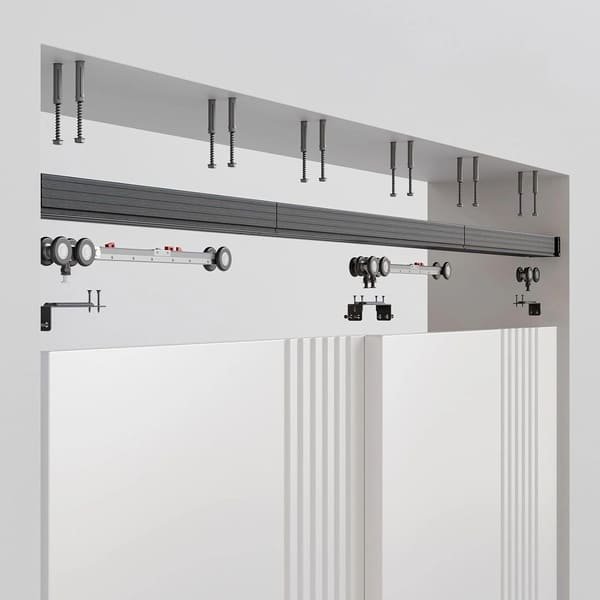
In my years of manufacturing sliding door hardware at opensliding, I’ve spoken with hundreds of purchasers, from door factory managers to large-scale contractors. A common theme I hear is the frustration that comes from system failures. A beautiful design is ruined by a single, low-quality component that stops working as it should. But the good news is that these failures are almost always preventable. It all starts with understanding the real causes of the problems and seeing how the right hardware makes all the difference. Let’s look at the most common issues I see and how to solve them for good.
Why Do Sliding Systems Fail More Often Than You Think?
You install a beautiful sliding system, expecting it to last for years. But soon, you get callbacks and complaints about poor performance. It’s a frustrating and costly cycle for your business.
Sliding systems fail because of low-quality components, especially the rollers. Cheap materials and poor construction can’t handle the daily stress of weight and friction. This leads to quick wear, misalignment, and eventual breakdown, damaging your brand’s reputation for quality.
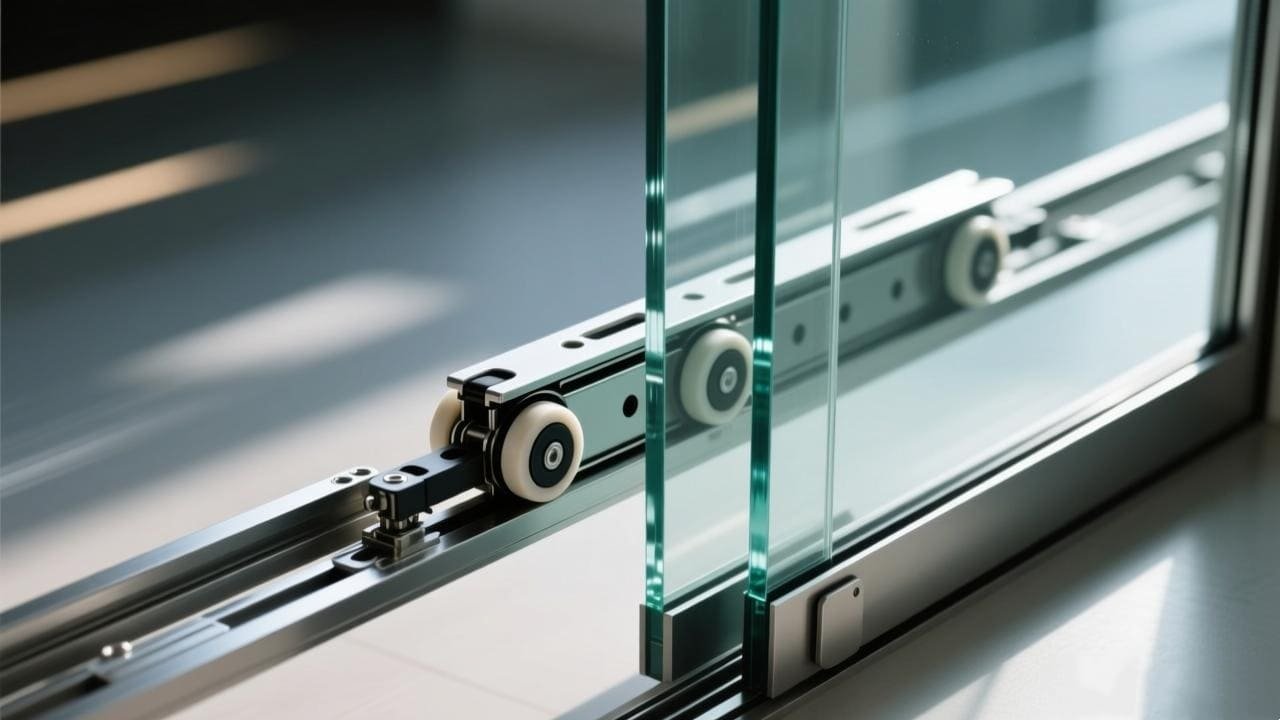
I often talk to experienced purchasers like Jacky from Canada. He’s learned the hard way that saving a few dollars on the initial hardware purchase can cost much more in the long run. The roller is the workhorse of any sliding system. It bears the entire weight of the door panel, day in and day out. When that roller is made from inferior plastic or has poorly designed bearings, failure is not a matter of if, but when. We see this constantly. A developer chooses a cheap system to save on budget, only to face expensive repair calls and unhappy clients a year later. Investing in quality from the start protects your reputation and your bottom line.
The True Cost of a Low-Quality Roller
The initial price is just one part of the total cost. Consider the lifecycle of a cheap roller versus a high-quality one from a dedicated factory like ours.
| Feature | Low-Quality Roller | High-Quality opensliding Roller1 |
|---|---|---|
| Material | Basic plastic, soft metal | High-density polymer, stainless steel |
| Bearing Type | Simple friction sleeve | Sealed precision ball bearings |
| Lifespan | 1-2 years (with issues) | 10+ years (smooth operation) |
| Long-Term Cost | High (replacements, labor, reputation) | Low (install once, reliable performance) |
How Can You Fix Sticking and Jamming in Sliding Doors?
A sliding door that sticks and jams is a major source of frustration for the end-user. This small issue can lead to big complaints and make an entire installation feel cheap.
Sticking and jamming are usually caused by debris in the track or by worn-out rollers that can no longer rotate smoothly. Upgrading to high-quality rollers with sealed bearings prevents debris from getting inside and ensures a consistent, effortless glide, solving this common problem.
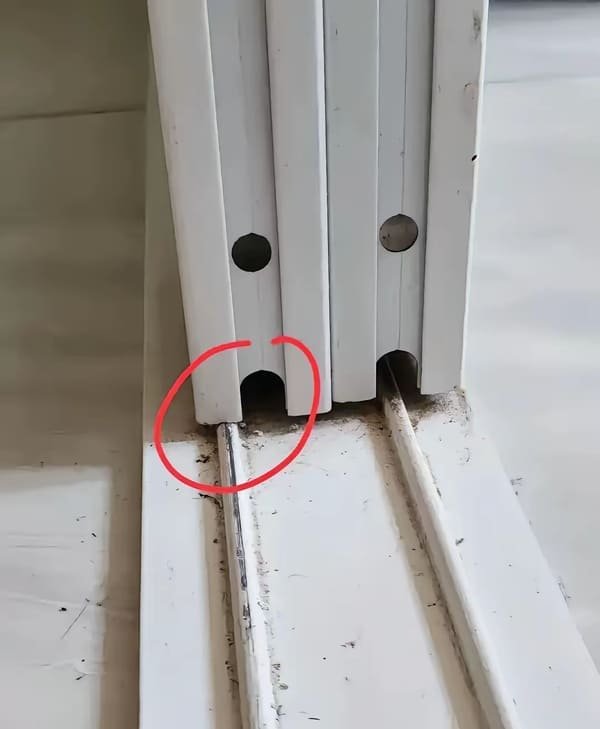
When a door jams, the first instinct is to blame the track. While cleaning the track is important, the real culprit is often the roller itself. In my experience as a manufacturer, I’ve dissected countless failed rollers sent back by clients. The problem is often two-fold. First, low-quality rollers have open designs that easily pick up dust, hair, and other debris, which clogs the mechanism. Second, the roller material itself wears down, creating flat spots. Once a roller has a flat spot, it no longer rolls; it scrapes. This increases friction dramatically, causing the door to stick and jam.
Anatomy of a Jam-Proof Roller
At opensliding, we design our rollers specifically to combat this. Here’s what makes the difference:
- Sealed Bearings2: We use sealed precision ball bearings in our wooden and glass door lifting wheels. The seal acts as a barrier, stopping dust and grime from ever reaching the internal moving parts. This keeps the rolling action perfectly smooth for years.
- Superior Wheel Material3: Instead of basic plastic, we use high-density, wear-resistant polymers. These materials are incredibly durable and resist developing the "flat spots" that cause jamming, even under the weight of heavy doors.
What Makes Sliding Doors So Noisy and How Can You Stop It?
A screeching, grinding sliding door is instantly annoying. It completely destroys the sense of peace and luxury you want to create in a space. This noise is a clear signal of a problem.
Excessive noise comes from friction between low-quality rollers and the track, or from worn-out, unlubricated bearings. Using rollers made from sound-dampening materials like high-density nylon and equipping them with precision ball bearings ensures a silent, smooth operation every time.
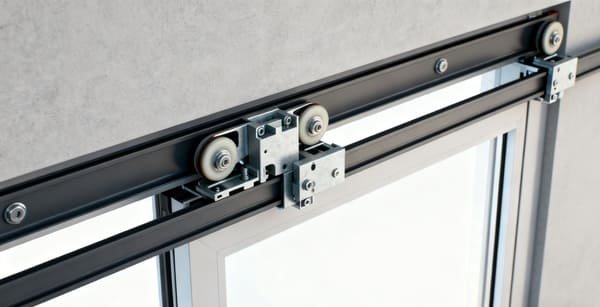
Noise is nothing more than vibration. In a sliding system, that vibration comes from friction. When you have a metal wheel grinding on a metal track, or a poorly made plastic roller scraping along, you get noise. I remember a hotel project I consulted on. They had installed beautiful, heavy glass partition doors, but the rollers were cheap. The sound of guests opening their closets echoed down the hall. We solved it by replacing the hardware with our glass slow lifting wheels. The difference was immediate: near-complete silence. This is because we focus heavily on material science and engineering to eliminate the root causes of noise.
The Science of a Silent Glide
Creating a silent roller isn’t magic; it’s engineering. Here’s how we achieve it in our products, from wardrobe sliding wheels to heavy-duty partition systems:
- Sound-Dampening Materials4: We don’t use hard, brittle plastics. Our wheels are often made from specially formulated polymers that absorb vibration instead of transmitting it. This immediately cuts down on the rolling noise.
- Precision Ball Bearings5: The heart of a quiet roller is the bearing. Cheap rollers use simple axles that create friction. Our rollers use high-grade, lubricated ball bearings that allow the wheel to spin almost frictionlessly, eliminating the grinding sound that signals poor quality.
Why Do Sliding Doors Become Misaligned and Start Dragging?
A door that drags on the floor or hangs crookedly is more than just an eyesore. It looks unprofessional and can cause damage to both the door and the flooring. This is a clear sign of system failure.
Misalignment happens when rollers wear down unevenly or start to deform under the door’s constant weight, causing the door panel to sag. Choosing rollers with a high, verified load-bearing capacity and durable structural components ensures the door stays perfectly level for its entire lifespan.
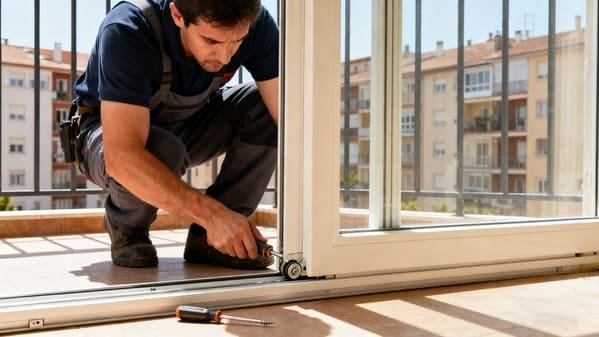
I’ve seen this happen with everything from heavy solid wood barn doors to large glass partitions. A purchaser selects a roller system that looks strong enough, but it hasn’t been properly engineered or tested for the weight of the door. Over time, gravity wins. The cheap metal brackets bend, the plastic wheels deform, and the entire door starts to sag. This puts immense stress on the entire system and eventually leads to total failure. As a factory, we are obsessed with load capacity because we know it is the foundation of a long-lasting, reliable system.
Matching the Roller to the Door’s Weight
This is why we produce such a wide range of hardware, from light-duty cabinet sliding door rollers to heavy lifting wheels. One size does not fit all.
- Load Testing6: Every heavy-duty roller7 we design, like our Partition Room Sliding Door Rollers, goes through rigorous testing. We apply loads far exceeding their rated capacity to ensure they will not bend or fail over time. We can provide these test reports to our B2B clients for their peace of mind.
- Structural Integrity: It’s not just the wheel. The entire roller assembly, including the housing and axle, must be robust. We use reinforced steel or high-grade aluminum for these structural parts to prevent any deformation under load, keeping the door perfectly aligned.
How Can Advanced Rollers Prevent These Sliding System Failures?
You see the common problems: sticking, noise, and misalignment. You know they come from cheap hardware. So, how does an advanced roller actually solve these issues at the source?
Advanced rollers prevent failures through a combination of superior materials, precision engineering, and smart design. They are built as a complete system to handle weight, reduce friction, and resist wear, ensuring long-term smooth and silent operation.
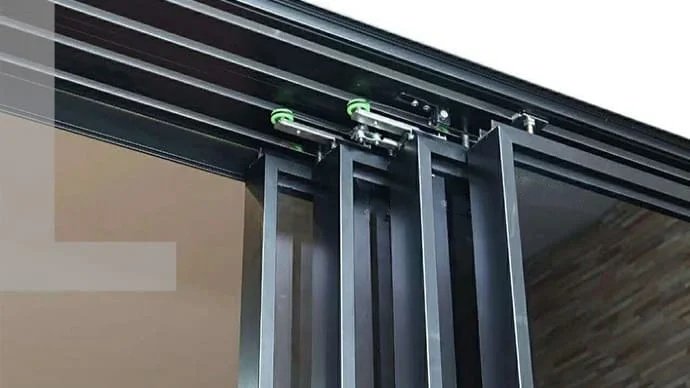
Think of a roller not as a simple wheel, but as a high-performance engine for your door. At my factory, opensliding, this is exactly how we approach it. An advanced roller from us isn’t just one thing; it’s a synergy of components designed to work together flawlessly. We use stainless steel to prevent corrosion, precision bearings to eliminate friction and noise, and engineered polymers that can carry heavy loads without deforming. When you choose a roller like our wooden door slow lifting wheel, you’re not just buying a part. You are buying a pre-engineered solution to all the common problems that plague lesser systems. This is how you deliver a product that feels premium and reliable from the first glide to the ten-thousandth.
The Key Features of an Advanced Roller
| Feature | How It Prevents Failure | Products That Have It |
|---|---|---|
| Precision Sealed Bearings8 | Blocks debris to stop jamming; reduces friction to eliminate noise and wear. | Glass Lifting Wheel, Heavy Lifting Wheel |
| High-Density Polymer Wheels | Resists forming "flat spots" that cause sticking; absorbs vibration for silent operation. | Wardrobe Sliding Wheels System, Cabinet Hinge |
| High Load Capacity | Prevents sagging and misalignment by supporting the door’s full weight without deforming. | Partition Room Sliding Door Rollers, Heavy Lifting Wheel |
| Corrosion-Resistant Materials9 | Uses stainless steel or specialized coatings to prevent rust and wear from moisture. | All opensliding outdoor & bathroom hardware |
| Soft-Close Mechanism | A dampener that ensures a gentle, controlled close, preventing slams and reducing stress. | Wooden Door Slow Lifting Wheel, Glass Slow Lifting Wheel |
How Do You Choose the Right Roller for Your Sliding System?
Knowing that advanced rollers are the solution is the first step. The next, critical step is selecting the exact right roller for your specific application. The wrong choice can still lead to problems.
To choose the right roller, you must match its specifications to the door’s weight, material, usage frequency, and environment. Always check the load capacity, materials, and bearing type to ensure it meets the demands of your project.
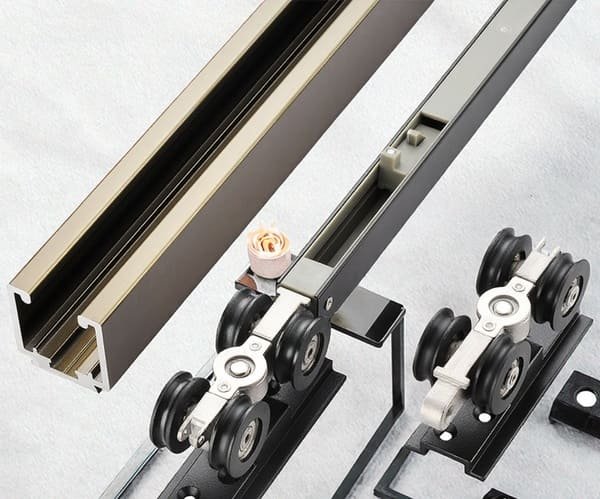
This is where working directly with a knowledgeable manufacturer like opensliding becomes a huge advantage. As an accessories distributor or a purchasing manager for a door factory, you need a partner, not just a supplier. I always tell my clients to give me three key pieces of information: the door’s weight, its material (wood, glass, MDF), and where it will be used (interior, exterior, bathroom). With that information, I can recommend the perfect system. For example, a heavy exterior glass door needs a heavy lifting wheel made from 304 stainless steel to handle the weight and resist corrosion. A lightweight wardrobe door needs a silent, smooth roller like our Wardrobe Sliding Wheels System.
A Quick Selection Guide
Here’s a simplified checklist I use with my customers:
- Determine the Door’s Weight: This is the most important factor. Always choose a roller with a load capacity at least 25% higher than the door’s actual weight.
- Consider the Environment: Will the door be exposed to moisture or humidity? If so, you must choose rollers made from corrosion-resistant materials10 like stainless steel or zinc-alloy with a high-quality finish.
- Think About Function: Do you need a standard roller, or would a feature like soft-close (our slow lifting wheels) add significant value for the end-user? For high-end projects, the answer is almost always yes.
By following this simple process, you ensure that you are building a sliding system that is not only beautiful and functional on day one, but remains that way for years to come.
Conclusion
Common sliding system failures are preventable. By focusing on the roller and choosing an advanced, well-engineered product, you ensure smooth, silent, and reliable performance that enhances your projects and protects your reputation.
Discover the advantages of investing in a high-quality roller for durability and performance. ↩
Explore this link to understand how sealed bearings enhance performance and longevity in roller systems. ↩
Discover why superior wheel materials are crucial for durability and performance in roller applications. ↩
Explore this link to understand how sound-dampening materials can enhance product quality and reduce noise in various applications. ↩
Learn about precision ball bearings to see how they improve performance and longevity in mechanical systems, ensuring a quieter operation. ↩
Learn about load testing methods to ensure safety and reliability in sliding door hardware. ↩
Explore this link to understand how heavy-duty rollers enhance durability and performance for sliding doors. ↩
Discover how Precision Sealed Bearings enhance performance and longevity in roller systems. ↩
Learn about the significance of Corrosion-Resistant Materials for durability in outdoor applications. ↩
Exploring corrosion-resistant materials helps in choosing durable rollers that withstand moisture and humidity. ↩