
Struggling with cramped rooms? Traditional doors eat up valuable floor space, making your home feel smaller. Sliding doors offer a stylish, space-saving solution for a more open feel.
Sliding doors maximize space by eliminating the swing arc of hinged doors. They move along a track parallel to the wall, freeing up floor area and allowing for more flexible furniture placement and creating a more open, functional layout.
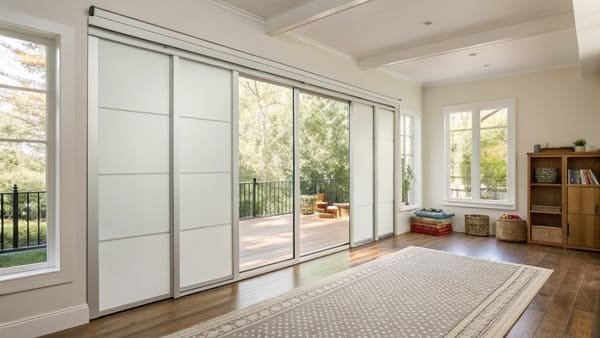
I’ve worked in the hardware industry for years, and I’ve seen how a simple component can completely change a design. Sliding doors are one of the most effective tools for architects and designers looking to make the most of any footprint. It’s a simple concept, but the impact is huge. But the benefits go beyond just saving a few square feet. Let’s explore exactly how they create more usable space and where you can best apply them.
What are the key space-saving benefits of sliding doors?
Feeling like your furniture layout is dictated by door swings? This common problem wastes potential space. The solution is a door that moves sideways, not outwards, instantly reclaiming that lost area.
The main benefit is eliminating "door swing" dead space, which can be up to 10 square feet per door. This allows you to place furniture closer to walls, create wider walkways, and use every inch of your room more effectively.
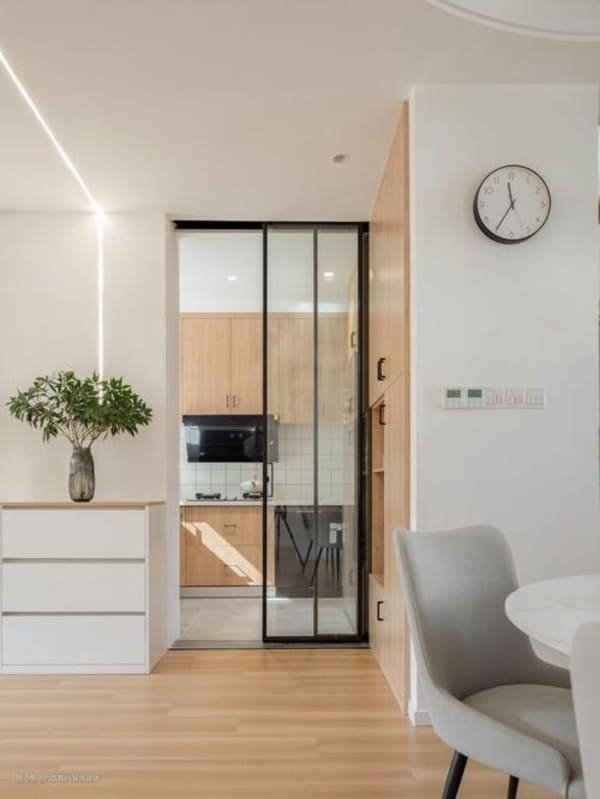
The most obvious advantage is reclaiming the floor area, but the benefits run deeper. When I talk with contractors like Jacky, we often discuss how the right door system can solve multiple design challenges at once. It’s not just about space; it’s about flow and flexibility.
Reclaiming the Swing Zone
A standard hinged door needs a clear arc to open. This means the space in front of and behind the door is essentially unusable. A sliding door removes this limitation entirely. It moves along the wall or into a wall cavity, leaving the surrounding floor space completely free.
Creating Flexible Partitions
Sliding doors1 are perfect for creating adaptable rooms. You can use a large sliding partition to separate a living area from a home office. Close it for privacy during the workday, and open it up for a large, unified space in the evening. This flexibility is impossible with a fixed wall.
| Feature | Hinged Door | Sliding Door |
|---|---|---|
| Space Usage | Requires clear swing area | Slides parallel to wall |
| Flexibility | Fixed opening | Creates large, adaptable openings |
| Aesthetics | Traditional look | Modern, minimalist, or rustic |
| Installation | Simple frame installation | Requires a track system |
What are some sliding door ideas for every room?
Are you looking for a single solution to improve multiple rooms? Traditional doors are often an afterthought, but sliding doors can be a key design feature that adds style and function everywhere.
From a rustic barn door in the living room to sleek pocket doors for a master closet, sliding doors can be adapted to any room. They serve as room dividers, closet doors, and stylish entryways.
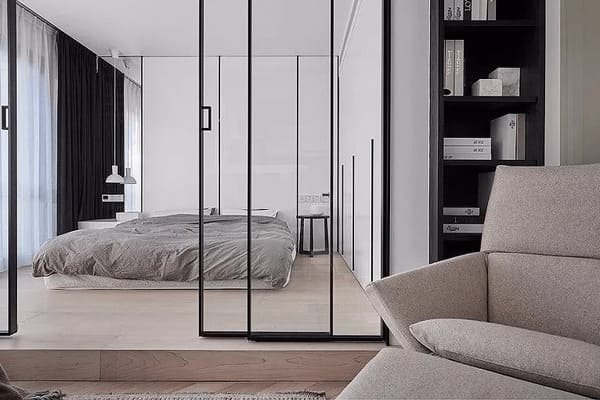
As a supplier, I get to see the creative ways people use our hardware. The versatility is incredible. A sliding system isn’t just a door; it’s a dynamic wall that can redefine your home’s layout and style. Let’s look at some popular applications room by room.
Living Room
Here, sliding doors2 can act as a statement piece. A large barn door can separate the living room from the dining area, adding a rustic or industrial touch. For a more modern look, floor-to-ceiling glass sliders can open up to a patio, blurring the line between indoors and outdoors.
Bedroom
Pocket doors are a fantastic choice for ensuite bathrooms or walk-in closets. They disappear completely into the wall when open, creating a seamless and uncluttered look. This is especially useful in smaller bedrooms where a swinging door would clash with the bed or other furniture.
Kitchen
A sliding pantry door saves precious space in a busy kitchen. You no longer have to worry about a swinging door getting in the way while you’re cooking. Frosted glass sliders can also be used for upper cabinets, offering a modern alternative to standard cabinet doors.
How can you brighten your space with glass sliding doors?
Dark hallways and rooms can make a home feel uninviting. You want to create separation without sacrificing precious natural light. A solid wall or door only makes the problem worse.
Glass sliding doors allow natural light to flow between rooms, even when closed. This brightens up interior spaces, reduces the need for artificial lighting, and makes the entire home feel larger and more connected.
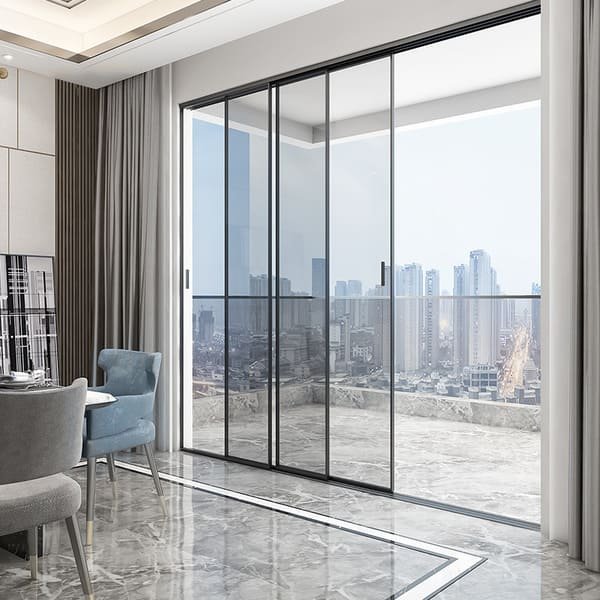
One of the biggest trends I’ve seen in recent years is the demand for hardware that supports large glass panels. People want light. Glass sliding doors are the perfect solution because they offer both physical separation and visual connection. It’s the best of both worlds.
Maximizing Natural Light
The primary benefit is light transmission3. A glass sliding door can "borrow" light from a room with windows to illuminate a darker, interior space like a hallway or office. This creates a brighter, more pleasant atmosphere throughout your home.
Creating a Sense of Openness
Even when closed, the transparency of glass prevents a room from feeling boxed in. Your eyes can see through to the next space, which creates an illusion of depth and makes both areas feel larger than they are.
Balancing Light and Privacy
You don’t have to choose between light and privacy. Here are a few options:
- Clear Glass: Offers maximum light and an unobstructed view. Perfect for connecting living areas to a patio.
- Frosted Glass: Diffuses light beautifully while obscuring the view. This is an excellent choice for home offices or bathrooms where you need both light and privacy.
- Tinted Glass: Reduces glare and adds a sleek, modern aesthetic. It provides some privacy while still allowing light to pass through.
Why are bathroom sliding doors great for small spaces?
Struggling with a tiny bathroom layout? A swinging door can make a small bathroom feel even more cramped, often banging into the toilet or vanity and creating an awkward entry.
Sliding doors, especially pocket doors, are ideal for small bathrooms because they require zero floor space to open. This simple change can make a tight bathroom layout feel much more spacious and functional.
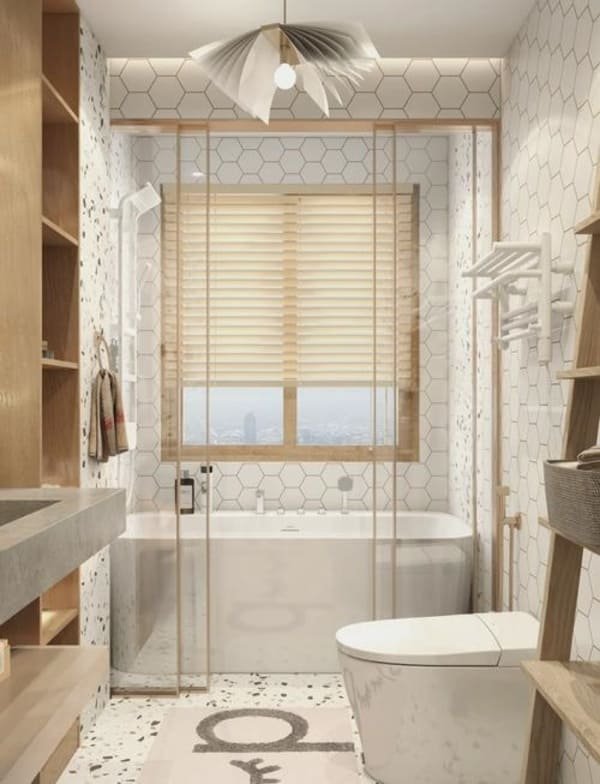
I often speak with contractors who are renovating small homes and apartments. The bathroom is always a challenge. My first suggestion is always to consider a sliding door system. It’s a simple fix that solves the biggest layout problem in a small bathroom: the door swing.
The Ultimate Space-Saver: Pocket Doors
For an ensuite or a small guest bath, a pocket door4 is the best solution. It slides directly into a cavity in the wall, becoming completely invisible when open. This means you can place your sink, toilet, or storage right next to the doorway without worrying about obstruction. It makes the room feel more open and is a game-changer for accessibility.
Privacy and Material Considerations
Privacy is obviously key in a bathroom. A solid wood sliding door5 provides complete privacy. If you want to allow some light in from an adjacent hallway, a frosted glass sliding door is the perfect compromise. It’s also crucial to choose hardware and door materials that are resistant to moisture and humidity to ensure long-lasting, smooth operation. High-quality stainless steel rollers and tracks are a must in a bathroom environment.
What are the best commercial uses for sliding doors?
In a busy office or retail space, efficiency is everything. Clunky, space-wasting doors can disrupt workflow and create a poor customer experience. Businesses need solutions that are durable, flexible, and professional.
Sliding doors are used commercially to create flexible meeting rooms, divide large offices into smaller workspaces, and provide durable, high-traffic entryways for retail stores. They maximize usable square footage and improve operational flow.

My B2B clients, from office designers to construction contractors, are always looking for robust and adaptable solutions. Sliding door systems are a core part of their toolkit. For them, it’s not just about saving space, but also about creating productive environments. The hardware must withstand constant use, which is why quality is non-negotiable.
Adaptable Office Spaces
Open-plan offices are popular, but they lack privacy. Large sliding partitions6 are the perfect solution. You can create temporary meeting rooms or quiet zones on demand. When a big all-hands meeting is needed, the partitions slide away to open up the entire floor.
High-Traffic Retail and Hospitality
Automatic sliding glass doors are standard for store entrances because they are convenient and accessible. Inside, sliding systems can be used for stock room doors or to separate a cafe area from the main retail floor, all without interrupting customer flow with a wide door swing.
Healthcare Facilities
In clinics and hospitals, space is at a premium and hygiene is critical. Sliding doors save space in patient rooms and corridors. Systems with soft-close mechanisms are also beneficial as they operate quietly, which is essential in a healing environment.
What is the role of rollers in sliding door performance?
You’ve chosen the perfect sliding door, but it scrapes, sticks, or feels heavy. A beautiful door is useless if it’s a struggle to operate. The entire experience depends on the hidden mechanism.
Rollers are the heart of a sliding door system. High-quality rollers with smooth bearings ensure the door glides effortlessly and quietly, supporting its weight and guaranteeing long-term durability and performance.
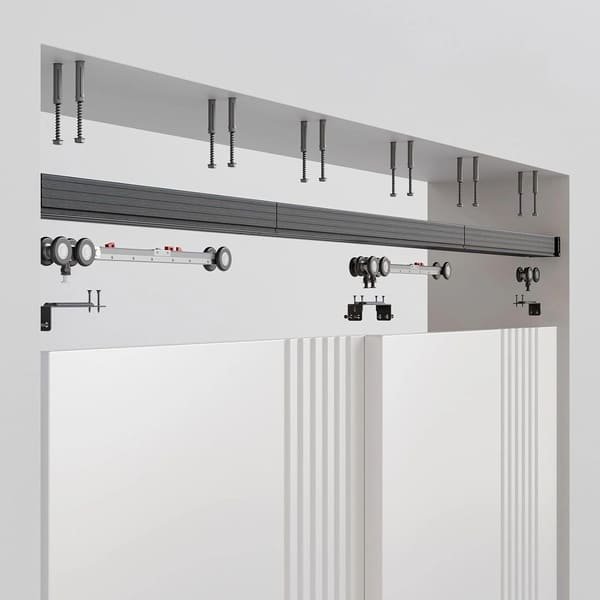
This is my area of expertise. At opensliding, we manufacture these critical components. I can tell you from experience that the quality of the roller is the single most important factor in a sliding door’s success. A cheap roller will fail, but a well-engineered one will last for decades.
The Anatomy of a Quality Roller
It’s not just a wheel. A good roller system is a precision-engineered product.
- Wheel Material7: Nylon or high-density polymers are excellent because they are quiet and smooth. Steel wheels are used for extremely heavy industrial doors.
- Bearings: This is the most critical part. High-quality ball bearings reduce friction to almost zero, allowing a heavy door to be moved with a single finger. Poor quality bearings will quickly wear out and cause scraping or sticking.
- Weight Capacity: Every roller system is rated for a maximum door weight. Using an underrated roller is a recipe for failure. We always advise our clients to choose a roller rated well above their door’s actual weight for a safety margin.
- Soft-Close Mechanism8: Many of our modern systems include a soft-close feature. This hydraulic damper catches the door in the last few inches of travel and closes it gently and silently. It’s a touch of luxury that also prevents slamming and wear.
Investing in quality hardware from a reliable factory is the best way to ensure your sliding door is a pleasure to use for years to come.
How do you choose the right sliding door for your space?
Faced with so many options, picking the right sliding door can be overwhelming. The wrong choice could mean a door that doesn’t fit the style, function, or structural needs of your room.
To choose the right sliding door, first assess your space and needs. Consider the door’s function, the available wall space for a track or pocket, the required privacy level, and your overall design aesthetic.

Helping clients like Jacky navigate these choices is a big part of my job. The process is straightforward if you break it down. It’s about matching the right product to the right application. By thinking through a few key questions, you can confidently select the perfect door system.
Step 1: Define the Function
What is the door’s main job? Is it for a closet, a room divider, a bathroom, or an exterior patio? The function will dictate the best material (wood, glass, composite) and type of system. For example, a patio door needs to be weather-resistant, while a closet door does not.
Step 2: Assess Your Space
Measure the opening carefully. Then, check the surrounding wall space.
- Bypass or Barn Door: Do you have enough clear wall space next to the opening for the door to slide over?
- Pocket Door: Do you have a non-load-bearing wall where a cavity can be built? This requires more construction but offers the biggest space-saving reward.
Step 3: Determine Your Style
The door should complement your home’s decor. A rustic wood barn door looks great in a modern farmhouse design. A frameless glass door fits a minimalist, contemporary aesthetic. The hardware itself—the track and hangers—also contributes to the style. You can choose from industrial black steel, sleek stainless steel, and more.
Step 4: Choose Quality Hardware
Finally, and most importantly, select the right hardware. Match the roller system’s weight capacity to your chosen door. For a premium feel, look for systems with soft-close features. As a manufacturer, I always stress that the door is what you see, but the hardware is what you experience every day.
Conclusion
Sliding doors are a powerful tool for saving space, improving light, and adding style. By choosing the right type and investing in quality hardware, you can transform any room.
Explore the advantages of sliding doors to enhance your home’s space and aesthetics. ↩
Explore the advantages of sliding doors to enhance your home’s aesthetic and functionality. ↩
Understanding light transmission can help you choose the right glass for your space, enhancing brightness and ambiance. ↩
Explore the advantages of pocket doors for maximizing space and enhancing accessibility in your home. ↩
Discover why solid wood sliding doors are ideal for ensuring privacy and style in your bathroom. ↩
Explore how sliding partitions can enhance flexibility and privacy in office environments. ↩
Explore this link to understand the advantages of different wheel materials for optimal performance and durability. ↩
Learn about the benefits of soft-close mechanisms to enhance your sliding door experience and prevent damage. ↩