
Worried your beautiful sliding glass door is a weak point for home security? A standard lock might not be enough, leaving your home and family vulnerable. Simple upgrades offer peace of mind.
To secure your sliding door, you should upgrade the lock, reinforce the glass with security film, install a security bar or a secondary bolt, and ensure the door can’t be lifted off its track by using high-quality rollers and properly aligned tracks. These layers create a formidable barrier.
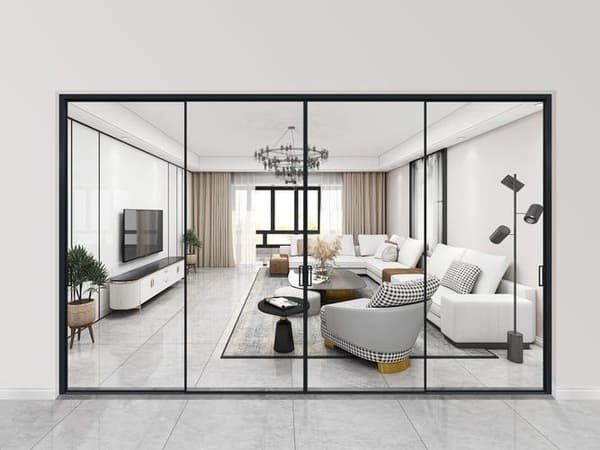
As someone who manufactures sliding door hardware, I appreciate the seamless connection they create between the inside and outside. I’ve seen countless homes transformed by them. But this beauty can also be a vulnerability if not properly secured. The good news is that you don’t have to sacrifice style for safety. I’ve spent years developing and providing hardware that enhances security without compromising function. Let’s look at how burglars see these doors and, more importantly, how we can stop them.
What Are The Common Ways Burglars Bypass Sliding Doors?
You lock your sliding door and think it’s safe. But burglars know simple tricks to bypass standard factory locks, turning your door into an easy entry point. Understanding their methods is key.
Burglars typically bypass sliding doors by lifting them off the track, forcing the flimsy latch, shattering the glass, or prying the door open. These methods exploit common weaknesses in older or standard-issue door hardware and frames, making them prime targets for intruders.
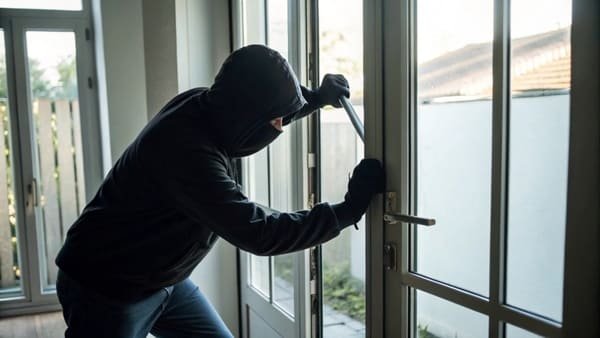
In my experience as a factory owner, I’ve analyzed these failure points to design more robust systems. It’s often not about brute force but about exploiting a simple design flaw. A burglar is looking for the path of least resistance, and a standard sliding door often provides just that. They know that many homeowners overlook these vulnerabilities. The key is to remove these easy opportunities by reinforcing each potential weak spot, turning a vulnerability into a strength. Let’s break down exactly how they do it.
Common Intrusion Methods
| Vulnerability | How It’s Exploited | Why It Works |
|---|---|---|
| Lifting the Door | A crowbar is used to lift the door panel up and out of the bottom track. | Many doors, especially older ones, have too much clearance. Worn-out door rollers can create even more of a gap, making this surprisingly easy. |
| Forcing the Latch1 | The standard latch is jiggled, shaken, or pried until the hook mechanism fails or disengages. | Basic latches are often made of weak metal and are the single point of failure. They aren’t designed to withstand direct force. |
| Breaking the Glass2 | A direct impact shatters the large glass pane, allowing the burglar to walk through or reach in and unlock the door. | Standard annealed glass offers no resistance. While loud, it’s a quick and effective method if no one is home. |
| Prying the Frame | A crowbar is wedged between the door and the frame to force it open. | A slight gap, common in many installations, provides the leverage needed to bend the frame or break the lock through force. |
What Are The Best Ways To Improve Your Sliding Door Security?
Concerned that your sliding door is an open invitation for intruders? Leaving its standard, minimal security features as-is creates a serious risk. Thankfully, several effective upgrades can fortify this entry point.
The best ways to improve security are by installing a superior lock, such as a double-bolt lock or foot bolt, adding a security bar, applying security film to the glass, and upgrading to high-quality security door rollers to prevent lifting.
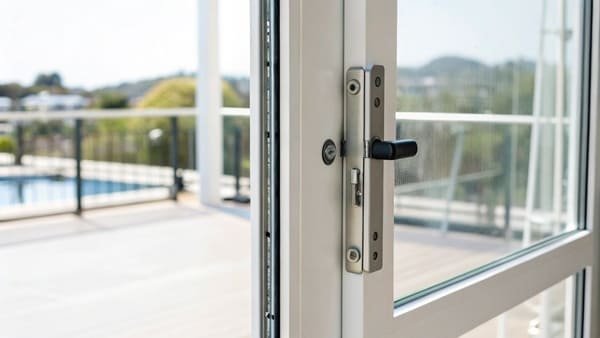
You need a layered defense. Relying on a single lock is a mistake I see all the time. As a manufacturer, I always advise customers like Jacky, a purchasing manager I work with, to source a complete system. It’s not just about one component; it’s about how they all work together. A great lock is useless if the door can be lifted off its track. A strong frame doesn’t help if the glass is easily shattered. Let’s explore the most effective upgrades you can implement.
Key Security Upgrades
Upgrade Your Locking Mechanisms: The standard latch is the weakest link. Replace it with a more robust option.
- Mortise Lock: This type of lock is installed within the door frame itself, making it much harder to pry open.
- Double-Bolt Lock: These locks secure the door to the frame at two points, offering significantly more resistance than a single latch.
- Keyed Locks: Adding a lock that requires a key on both the inside and outside prevents a burglar from unlocking the door after breaking the glass.
Prevent Lifting: As discussed, lifting the door from its track is a common tactic.
- Adjust Rollers: First, ensure your existing
door rollersare properly adjusted to minimize the gap in the track. - Install Anti-Lift Devices: You can insert screws into the upper track or install specialized anti-lift blocks. This physically prevents the door from being raised high enough to be removed. At my factory, we produce
heavy lifting wheelsystems designed with anti-lift features built-in.
- Adjust Rollers: First, ensure your existing
Reinforce the Glass: The large glass pane is an obvious target.
- Security Film: This is a clear polyester film applied to the inside of the glass. While the glass may crack upon impact, the film holds the shards together, preventing easy entry. It’s a cost-effective and powerful deterrent.
Do Sliding Door Security Bars Really Work?
You’ve heard about security bars but wonder if such a simple tool is effective. You might think a modern burglar can easily defeat it. Leaving your door without one is a gamble.
Yes, sliding door security bars work exceptionally well. By physically blocking the door from sliding open, they provide a strong, visible deterrent that is highly effective against forced entry. A bar placed in the track makes it nearly impossible to pry the door open.
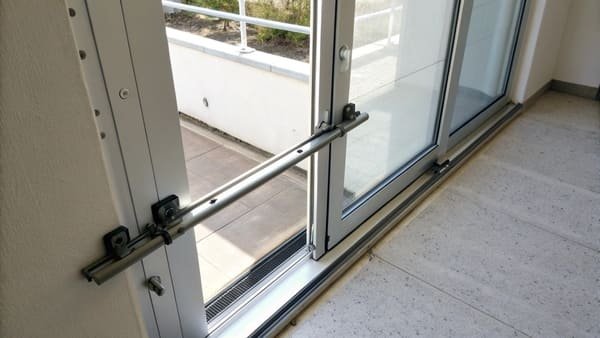
Security bars are a classic for a reason: they are simple, effective, and reliable. There are no complex mechanisms to fail. It’s pure physics. The bar braces against the door frame, transferring any force used to push the door into the solid structure of your wall. From a security standpoint, it’s one of the best pound-for-pound investments you can make. Even if a burglar manages to break the lock, the bar holds the door shut. It’s a powerful secondary line of defense that every sliding door owner should consider.
Types of Security Bars and Their Effectiveness
The Dowel Rod Method: The simplest version is a wooden dowel or a sturdy piece of pipe cut to fit snugly in the bottom track.
- Pros: Extremely cheap and easy to implement. It provides a solid physical block.
- Cons: It can look improvised and may not fit perfectly, potentially leaving a small gap. It can also be forgotten or misplaced.
Adjustable Security Bars3: These are manufactured specifically for doors and windows.
- Pros: They are adjustable for a perfect, tight fit. Many models brace against the frame or jamb for added strength, not just the track. They often have padded ends to prevent scratching your door.
- Cons: They cost more than a simple dowel.
Top-Hanging Security Bars4: These bars mount to the door itself and swing down to lock in place, meaning you can’t lose them.
- Pros: Extremely convenient as they are always attached to the door. They offer a very strong block.
- Cons: Requires installation (drilling into your door frame), which might not be ideal for renters.
No matter which type you choose, a security bar adds a crucial layer of physical security that complements the lock. It’s a visual deterrent that tells a potential intruder this will not be an easy target.
How Can You Add Extra Security To A Patio Door?
You’ve upgraded the lock and added a bar, but still feel anxious. You worry that a determined intruder might find another way. Ignoring these extra steps can leave you vulnerable.
To add extra security, install a secondary locking device like a foot bolt or loop lock, apply a shatterproof security film to the glass, and ensure your door’s hardware, especially the Partition Room Sliding Door Rollers System, is modern and in perfect condition.
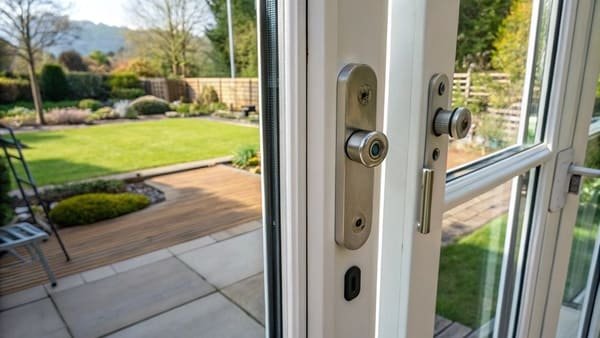
Think of your patio door security like layers of an onion. The more layers an intruder has to peel back, the more likely they are to give up and move on. After securing the lock and track, the next step is to add independent, redundant security features. These devices work separately from the main lock, so even if one fails, the others hold strong. I often tell my clients that peace of mind comes from knowing you have multiple systems in place.
Advanced Security Layers for Your Patio Door
Install a Foot Lock (Kick Lock)5:
- This is a spring-loaded bolt you install at the bottom of the sliding door. With a press of your foot, a steel pin engages a hole in the track or the fixed door, firmly securing it. It’s simple, out of the way, and provides an excellent, strong locking point that is independent of the main handle lock.
Use a Loop Lock:
- A loop lock is a simple but effective device that mounts on the door frame and has a hinged loop that fits over a receiver on the sliding door panel itself. It physically tethers the sliding part of the door to the stationary frame, preventing it from opening more than an inch or two. This is also great for allowing ventilation while keeping the door secure.
Upgrade to an Intelligent :
- For the tech-savvy homeowner, smart locks offer another level of control. These can be integrated into your home security system, allowing you to check the lock’s status remotely, receive alerts if the door is tampered with, and even lock or unlock it from your phone. Many models also have built-in alarms.
Perform a Hardware Audit:
- Regularly check your hardware. Are the screws tight on the frame and lock? Are the
door rollersrunning smoothly, or are they worn and wobbly? As a hardware supplier, I know that worn components compromise the entire system. Upgrading to a modern Wardrobe Sliding Wheels System or patio door equivalent ensures perfect alignment and removes the "slack" that burglars exploit.
- Regularly check your hardware. Are the screws tight on the frame and lock? Are the
By combining these extra measures, you create a truly fortified entryway.
Conclusion
Securing your sliding door involves a layered approach. By upgrading locks, adding bars and films, and ensuring your core hardware is robust, you transform a weak point into a strength.
Discover practical tips to strengthen your door latches and improve your home’s security. ↩
Explore this link to learn effective strategies to enhance your home security against glass break-ins. ↩
Explore this link to understand how Adjustable Security Bars can enhance your home security with their perfect fit and added strength. ↩
Discover the advantages of Top-Hanging Security Bars, which offer convenience and a strong physical barrier for your doors. ↩
Explore this link to understand how a Foot Lock enhances security and provides peace of mind for your home. ↩