
Tired of a sliding door that sticks and scrapes? This daily frustration makes you miss its once-effortless glide. Let’s get that smooth movement back with a few simple steps.
To maintain your sliding door, first, thoroughly clean the tracks to remove debris. Next, apply a silicone-based lubricant for smooth gliding. Finally, adjust the rollers to ensure the door is level and moves freely. This simple routine prevents damage and restores effortless operation.
Before we dive into the steps, it’s worth remembering why we chose sliding doors in the first place. As a manufacturer at opensliding, I’ve seen countless projects transformed by their benefits. They are fantastic space-savers since they don’t swing open. They also bring a modern look and can be customized to fit any design. Properly installed doors even offer good insulation, helping with energy efficiency. Taking care of them protects this great investment. Now, let’s look at the first step to keeping your door in top shape.
How Do You Properly Clean the Tracks of the Sliding Door?
Does dirt and grime in your door track cause it to jam? This buildup is the main cause of a sticky door. A quick, regular cleaning is the solution.
To properly clean your sliding door tracks, first vacuum out all the loose dirt, dust, and hair. Then, use a stiff brush and a cleaning solution to scrub away any stuck-on grime. Finally, wipe the track dry with a clean cloth to prevent rust.
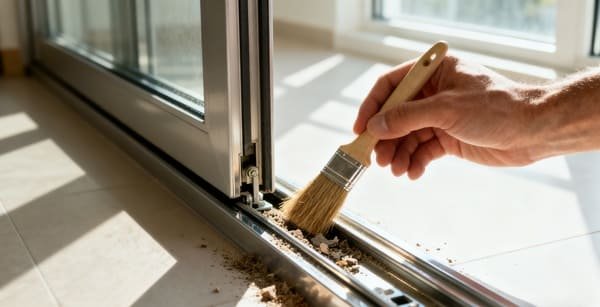
Cleaning the track is the most important part of sliding door maintenance. Over time, outdoor debris, pet hair, and dust get packed into the narrow channel where the rollers move. This is what creates friction and makes the door hard to open. Leaving this debris can even damage the rollers or the track itself, leading to costly repairs. I always tell my clients, like Jacky who purchases hardware for his projects in Canada, that a clean track is the foundation for a smooth door.
Step-by-Step Cleaning Process
- Vacuum: Use a vacuum cleaner with a crevice tool attachment. This is the easiest way to remove all the loose particles from the track. Go over it a few times to get everything out.
- Scrub: Mix a simple solution of soap and water. Dip a stiff-bristled brush1 (an old toothbrush works great) into the solution and scrub the inside of the track. Pay extra attention to the corners where grime builds up.
- Wipe and Dry: Use a damp cloth to wipe away the soap and loosened grime. Afterwards, take a dry cloth and wipe the track completely dry. This is a critical step, especially for metal tracks, as it prevents rust from forming.
What Should You Use to Lubricate the Tracks for Smooth Use?
Is your clean door still not gliding as it should? The friction might come from the moving parts needing lubrication. Applying the right product makes all the difference for effortless movement.
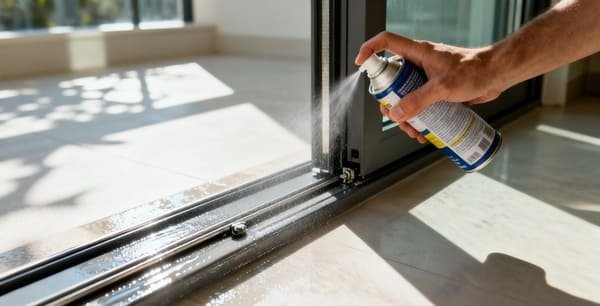
You should use a silicone-based spray lubricant for your sliding door. Unlike oil-based products, silicone lubricant does not attract dirt and dust. It creates a slick, dry film that reduces friction on both the track and the rollers for long-lasting smooth operation.
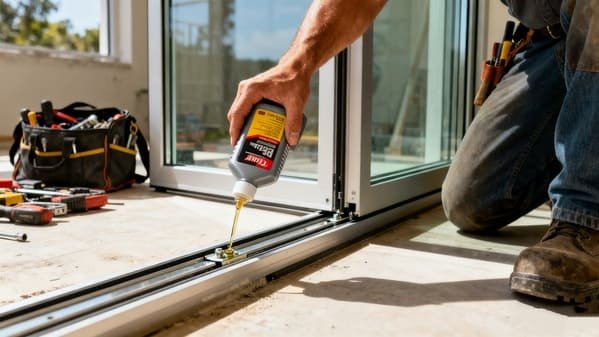
Many people ask me if they can just use WD-40. My answer is always no. While WD-40 is a great product for many things, it’s a water-displacer and solvent, not a true long-term lubricant. It can leave a sticky, oily residue that attracts even more dirt and dust than you started with, making the problem worse over time. This is a common mistake I see. For sliding door rollers and tracks, you need a product that stays clean. A silicone-based spray is the professional choice. It creates a dry, slippery surface that lets the rollers glide without collecting new debris.
Choosing the Right Lubricant
| Lubricant Type | Pros | Cons | Best for Sliding Doors? |
|---|---|---|---|
| Silicone-Based Spray2 | Dries quickly, doesn’t attract dirt, waterproof. | May need reapplication every few months. | Yes, highly recommended. |
| Oil-Based Lubricants3 | Good initial lubrication, penetrates well. | Attracts dust and dirt, can get gummy. | No, avoid for tracks. |
| WD-40 | Cleans and displaces water. | Not a true lubricant, leaves a sticky film. | No, not recommended. |
| Graphite Lubricant | Good for locks, works in extreme temps. | Can be messy (black powder). | Not ideal for tracks. |
To apply it correctly, spray a light coat directly onto the track after cleaning. Also, spray a small amount directly onto the rollers if you can access them. Then, slide the door back and forth a few times to spread the lubricant evenly.
Why and How Should You Adjust the Sliding Door Rollers?
Is your door scraping the track or hanging crookedly even after cleaning and lubricating? The problem is likely misaligned rollers. Adjusting them will level the door and ensure it rolls smoothly.
You should adjust the rollers to ensure the door is level and moves without scraping the frame or track. This is done by turning the adjustment screws, usually found on the bottom or side edges of the door, to raise or lower each corner independently.

Over time, houses can settle, and daily use can cause sliding door rollers to go out of alignment. This makes the door hang unevenly in its frame. You might notice a larger gap at the top on one side, or you might hear the bottom of the door scraping against the track. At my factory, opensliding, we design our roller systems to be easily adjustable because we know this is a common issue. Correcting the alignment not only makes the door easier to use but also ensures the lock engages properly, which is important for security. It’s a simple fix that makes a huge difference.
Finding and Turning the Adjustment Screws
- Locate the Screws: Look for small holes on the bottom edge of the door, on both the left and right sides. Sometimes they are on the inside or outside face of the door, near the bottom. You might have to remove small plastic plugs to see the screws inside.
- Make the Adjustments: The screws are typically Phillips head or Allen key screws.
- To raise that corner of the door, turn the screw clockwise.
- To lower that corner of the door, turn the screw counter-clockwise.
- Level the Door: Have a helper lift the weight of the door slightly while you turn the screws. Adjust one side, then the other, until the gap between the door and the frame is even all the way across the top. Slide the door back and forth to test its movement. You are looking for a smooth roll with no scraping.
Conclusion
Regular cleaning, correct lubrication, and simple roller adjustments will keep your door working like new. These quick maintenance tasks protect your hardware and ensure smooth, effortless operation for years.
Discover the benefits of using a stiff-bristled brush for cleaning, which can enhance your cleaning efficiency and results. ↩
Explore the advantages of Silicone-Based Spray for sliding doors, including its quick-drying and dirt-repelling properties. ↩
Learn why Oil-Based Lubricants can be detrimental to sliding doors, attracting dust and causing gumming. ↩