
Worried about unpredictable lead times for your hardware orders from China? These delays can disrupt your projects and hurt your bottom line. Let’s break down the production cycle together.
For bulk glass sliding door hardware from China, expect a total cycle of 6-12+ weeks. This covers planning, sample approval, production (often 30-35 days), quality control, and sea freight. The complexity and stock status can change this timeline.
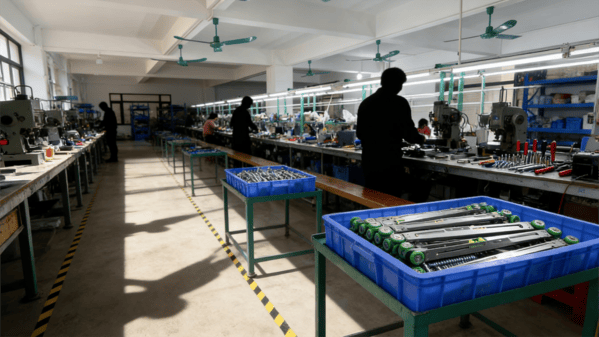
Knowing the overall timeline is a great start. But the real magic happens when you understand the details within each step. This knowledge helps you plan better and even find ways to speed things up. Let’s look closer at the common questions I get from partners like you.
Can I request staggered production for large orders?
Have a massive order but limited warehouse space? Receiving everything at once can create a logistical nightmare and tie up your cash flow. Staggered production and delivery could be the perfect solution.
Yes, absolutely. Most Chinese factories, including us at opensliding, welcome staggered production for large orders. This helps you manage cash flow and inventory. Just be sure to finalize the full schedule with your supplier before production begins to avoid any confusion.
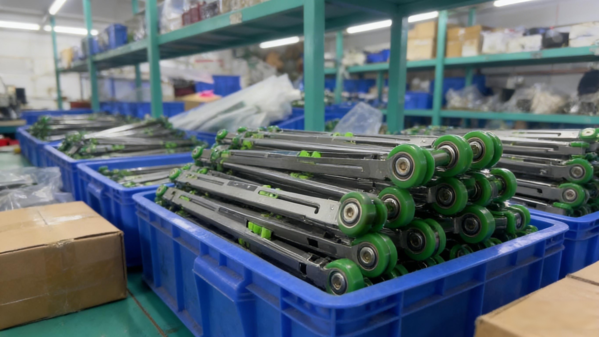
I once worked with a partner in Canada, a lot like you, who was supplying a large condominium development. They needed thousands of our glass sliding door systems, but their on-site storage was extremely limited. A single massive shipment was impossible for them. We worked together to create a staggered delivery plan. They received a set amount of hardware every month for six months. This approach solved their storage problem and helped them manage their project budget more effectively by spreading out the payments. It requires clear communication from the start, but it’s a very powerful tool for large-scale projects.
How Staggered Production Benefits You
This method isn’t just about storage. It offers several strategic advantages for purchasing managers.
- Improved Cash Flow1: You pay for the goods as they ship, not all at once. This keeps your capital free for other business needs.
- Better Inventory Management2: It prevents your warehouse from being overwhelmed. You receive stock as you need it, reducing storage costs and the risk of damage.
- Supply Chain Flexibility: If your project timeline shifts, it can be easier to adjust a smaller, upcoming shipment than to change a single, massive order that’s already in production.
Setting Up a Staggered Schedule
To make it work, planning is everything. You must agree on the entire schedule before signing the purchase order.
| Action Item | Description | Why It’s Important |
|---|---|---|
| Define Total Volume | State the total number of units for the entire order. | Locks in the bulk price and material planning. |
| Create a Batch Schedule | Specify the quantity for each shipment and the ex-factory date. | Creates a clear, actionable plan for both you and the factory. |
| Formalize in Contract | Ensure the staggered schedule is a formal part of your contract. | Protects both parties and prevents misunderstandings later. |
How do seasonal demands affect production time?
Ever notice your orders slow down at certain times of the year? These unexpected delays, especially around holidays, can throw your entire project schedule off track. Knowing these peak seasons helps you plan ahead.
Seasonal demands significantly impact production. The period before Chinese New Year (January/February) is the busiest, causing major delays. The "Golden Week" holiday in October also causes a week-long shutdown. It’s best to place orders well before these periods.

The impact of Chinese New Year (CNY) cannot be overstated. It’s not just a week off; it’s a major annual migration where almost everyone travels home. Factories shut down completely for at least two to three weeks. You need to get your orders in by late November or early December to have any chance of them shipping before the holiday. Production gets extremely busy in the months leading up to it, and the pressure can sometimes affect quality control if you’re not careful. After the holiday, it takes another week or two for production lines to get back to full capacity, as some workers may not return. This "CNY effect" can disrupt supply chains for the entire first quarter of the year if you don’t plan for it.
Key Production Blackout Periods
Understanding the holiday schedule is crucial for any buyer sourcing from China.
- Chinese New Year (CNY)3: This is the big one. It falls in January or February and halts all production for 2-4 weeks. The lead-up is a frantic rush, and the ramp-up afterward is slow.
- Golden Week4: This national holiday runs from October 1st to 7th. While shorter than CNY, it still shuts down factories and ports for a full week.
- Qingming & Dragon Boat Festivals: These are shorter, typically 3-day holidays, but they can still cause minor delays if your production timeline falls over these dates.
Strategies to Mitigate Seasonal Delays
You can’t change the holidays, but you can plan around them.
- Plan Ahead: Place your orders for the first quarter of the year before December. For the fourth quarter, get orders in before the end of August to avoid the Golden Week4 rush.
- Increase Buffer Stock: If you have the warehouse space, order extra inventory ahead of the holiday seasons to carry you through the shutdown periods.
- Communicate Constantly: Talk to me or any supplier. Ask about their specific holiday schedule and production capacity. A good partner will be transparent and help you plan.
Are there ways to shorten production cycles?
Your project is on a tight deadline, and you need your hardware fast. Waiting 12 weeks is not an option. Is it possible to speed things up? Sometimes, yes.
Yes, there are ways to shorten production. Choosing standard, in-stock items is the fastest method. You can also pay for air freight instead of sea, and approve digital samples or pre-approved materials to skip physical sampling steps.

The biggest time-saver is always product selection. If you need a standard glass door roller system from my catalog and it’s something we produce regularly, the cycle will be much faster. We likely have the raw materials in stock and the production line is already set up for it. The moment you require a custom color, a unique finish, or your LOGO etched onto the part, you add time. This customization requires creating new samples, getting your approval, and adjusting our processes. A client once needed a rush order and was flexible on the finish; by choosing our standard polished chrome instead of a custom matte black, we cut their production time by nearly two weeks. It’s a trade-off between customization and speed.
Methods to Accelerate Your Order
If speed is your top priority, here are some levers you can pull.
- Product Selection5: As mentioned, choosing a standard, high-volume product is the number one way to get your order faster. Avoid customization if the timeline is critical.
- Sample Approval: Instead of waiting for a physical sample to be shipped to you, you can approve high-resolution photos and videos. Or, if you’ve ordered before, you can waive the sample step entirely.
- Shipping Method6: This happens after production, but it’s a huge factor in your total lead time. Air freight can deliver your goods in a week, while sea freight takes 4-8 weeks. The cost is significantly higher, but it’s an option for urgent needs.
What to Discuss with Your Supplier
To shorten the cycle, you need to have a direct conversation with your supplier.
- Ask about stock levels: "Do you have the raw materials for this item in stock?"
- Inquire about the production line: "How busy is the production schedule for this specific pulley system right now?"
- Negotiate priorities: For very important orders, you can sometimes negotiate to have your order prioritized, though this may come at a premium.
How is production progress communicated during the cycle?
You’ve placed your order, and now you wait. But you can’t be in the dark for weeks. How do you stay updated on your order’s progress without being a pest?
A reliable supplier provides proactive updates. We use a mix of email, WhatsApp, and scheduled calls. You should expect updates at key milestones: materials sourced, production started, mid-production check-in, quality control finished, and goods shipped.

Communication is built on trust. I make it a point to keep my partners informed so they never have to guess what’s happening. For every bulk order, we establish a primary contact person who is responsible for your updates. After the order is confirmed, we’ll send an email with a projected timeline, marking key dates. When production begins, you’ll get a confirmation. Halfway through, I often send some photos or a short video from the factory floor. It gives you confidence that things are moving along. The most important updates are after the final quality inspection and once the container is booked for shipping. Clear, consistent communication prevents anxiety and helps you manage your own business and customer expectations more effectively.
Key Communication Milestones
A professional factory should provide updates at several key stages of the production process. You shouldn’t have to ask for this information; it should be offered to you.
| Milestone | What to Expect | Why It’s Important |
|---|---|---|
| Order Confirmation | A detailed summary of your order and an estimated timeline. | Confirms all details are correct before any work begins. |
| Production Start | A simple notification that your order has entered the production line. | Signals that the process is officially underway. |
| Mid-Production Check | Photos or videos of your products being made. | Provides visual proof of progress and quality. |
| QC & Packaging7 | Notification that production is complete and has passed quality control. | Assures you that the products meet your standards before shipping. |
| Shipment | Booking confirmation with vessel name, ETA, and container/tracking numbers. | Gives you the final details needed to track your shipment and plan for its arrival. |
The Best Way to Get Information
Every buyer has a preferred communication style. Let your supplier know what works best for you. While email is great for formal records, a quick question is often best answered via a messaging app like WhatsApp. For more detailed discussions, a scheduled video call can be very effective. The fastest way to get answers is always to ask directly.
Conclusion
Understanding the production cycle for glass door hardware is key. Expect 6-12+ weeks, plan for holidays, and communicate clearly with your supplier to ensure a smooth and predictable procurement process.
Understanding improved cash flow can help you optimize your financial strategies and enhance your business operations. ↩
Exploring better inventory management techniques can lead to significant cost savings and efficiency in your operations. ↩
Explore this link to understand how CNY affects production timelines and how to plan your orders effectively. ↩
This resource will provide insights into Golden Week’s impact on supply chains, helping you avoid delays. ↩ ↩
Understanding effective product selection strategies can significantly enhance your order speed and efficiency. ↩
Exploring various shipping methods will help you choose the best option for urgent deliveries, saving you time and money. ↩
Exploring the significance of QC & Packaging can enhance your knowledge of quality assurance in production. ↩