
Struggling with high costs and the complexity of managing many shipments from China? This juggling act eats into your profits and time, creating unnecessary stress. Consolidation is your simple, cost-effective solution.
Yes, you absolutely can and should consolidate different hardware products into one shipment. This common practice involves using a freight forwarder in China to collect goods from your various suppliers into their warehouse. They then ship everything together as a single, streamlined consignment for you.
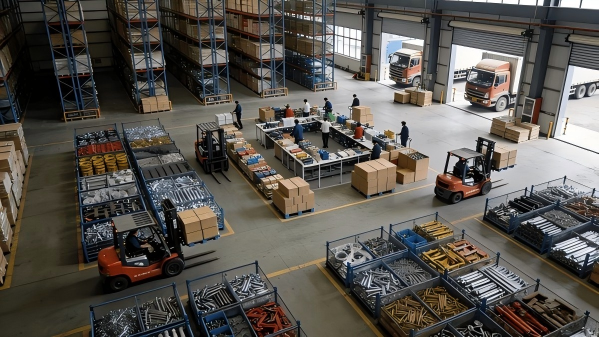
Now that you know it’s possible, you probably have a lot of questions about how to actually make it happen. I get it. I’ve helped hundreds of clients, like Jacky from Canada, navigate this process for years. It’s not as complicated as it seems once you understand the key steps. Let’s walk through the details to make sure your consolidated shipments are smooth, safe, and save you money.
How do I coordinate packing for multiple product types?
Mixing heavy sliding door rollers with delicate lighting components feels risky. You worry about items arriving damaged, causing delays and costly replacements. But clear communication and planning prevent these problems.
Coordinate packing by providing detailed instructions to each supplier and your freight forwarder. Your forwarder is key; they will inspect and consolidate everything at their warehouse, often repacking items onto pallets or into custom crates to ensure maximum protection during transit.

Let’s dive deeper into the coordination process. Success depends on two main areas: communication with your suppliers and the work of your freight forwarder. You need to be very clear with both parties.
Giving Clear Supplier Instructions
Before your goods even leave the factory, you must provide clear packing guidelines. Don’t assume your suppliers will pack for international consolidation. I always tell my clients to send a simple instruction sheet covering these points:
- Box Specifications1: Specify maximum weight per box (e.g., under 20kg) for easier handling.
- Labeling: Each box must be clearly labeled with your company name, a unique SKU or product identifier, and the total box count (e.g., "Box 1 of 5").
- Protection: Request adequate internal protection, especially for fragile items like glass components or intelligent locks.
Your Freight Forwarder’s Role
Your freight forwarder2 is the consolidation expert. Once all your products arrive at their warehouse, their job is to prepare the final shipment. They will:
- Inspect cartons for damage.
- Verify quantities against your packing lists.
- Strategically stack and arrange your goods for safety and space efficiency, often on pallets. They’ll place heavy items like drawer slides on the bottom and lighter items like aluminum rails on top.
This professional repacking is crucial for preventing damage.
Can consolidated shipments reduce shipping costs?
You see separate shipping quotes adding up, eating away at your profit margins. You wonder if there’s a more economical way to get your goods. Combining shipments seems logical, but does it really save money?
Yes, absolutely. Consolidated shipments significantly reduce shipping costs. Instead of paying for multiple Less-than-Container Load (LCL) shipments, you combine them into one larger shipment, often qualifying for better Full Container Load (FCL) rates, which offer a much lower cost per cubic meter.
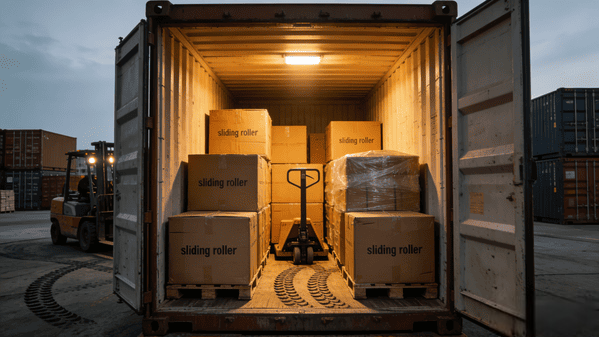
The cost savings are the main reason why experienced buyers like Jacky always choose to consolidate. Let’s break down exactly where this money is saved. The difference between LCL and FCL shipping is huge.
LCL vs. FCL Shipping Costs
When you ship small orders separately, they go as Less-than-Container Load (LCL)3. With LCL, you share container space with other importers, and you pay for not just the space your goods occupy but also for various handling and administrative fees at both the origin and destination ports. These fees can add up quickly.
Here’s a simple comparison:
| Shipping Method | Cost Structure | Best For |
|---|---|---|
| LCL | Per Cubic Meter/Kilogram + High Fixed Fees | Small, individual shipments (<15 CBM) |
| FCL | Flat Rate Per Container4 (20ft, 40ft, 40ft HQ) | Larger, consolidated shipments (>15 CBM) |
By consolidating your orders for Partition Room Sliding Door Rollers, Cabinet Hinges, and Drawer Slides into a single shipment that fills a 20ft container (FCL), you pay one flat rate. This eliminates multiple sets of fixed port fees, customs clearance fees, and trucking charges. The cost per unit drops dramatically, directly increasing your profit margin on every item sold.
Are there risks of damage when combining products?
You’re thinking about putting heavy-duty lifting wheels in the same container as delicate glass door rubber strips. The fear of products crushing, scratching, or breaking during a long sea journey is real and justified.
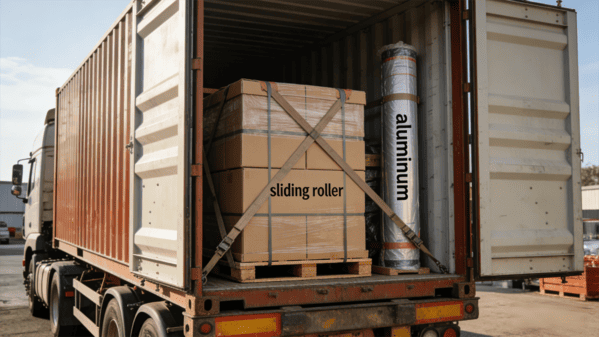
Yes, there are risks, but they are entirely manageable with proper planning and packing. The key is to work with a competent freight forwarder who specializes in consolidation. They will correctly palletize, brace, and secure your diverse products to prevent movement and damage.
I’ve shipped thousands of containers mixing all types of hardware, from heavy steel systems to lightweight aluminum profiles. Damage is rare when you follow the right procedures. It comes down to smart packing inside the container.
The Art of Stacking and Securing
Your freight forwarder is responsible for loading the container correctly. They should follow a few fundamental rules to ensure everything arrives in perfect condition.
- Weight Distribution5: The heaviest and most robust items, like our heavy-duty lifting wheels or drawer slides, always go on the bottom. Lighter and more fragile products, such as brush strips or lighting systems, are placed on top.
- Palletizing6: Whenever possible, goods should be secured to pallets. Palletizing6 standardizes the units, making them easy to move with a forklift and preventing individual boxes from falling or being crushed. It creates stable, stackable blocks.
- Bracing and Dunnage: Empty space is the enemy. Your forwarder will use dunnage (filler material like airbags, foam, or wood) to fill gaps and brace the cargo, ensuring nothing can shift or slide during rough seas. This step is critical for protecting your investment.
By ensuring your forwarder follows these steps, you can confidently mix different products without the risk of damage.
How do I track multiple products in one shipment?
You’ve ordered from five different suppliers. How do you keep track of it all without getting confused? You need a clear system to monitor everything from the factory to your warehouse.
You track multiple products by creating a master packing list and using the tracking system provided by your freight forwarder. Each supplier’s order is a sub-item on your master list, which your forwarder uses to check in goods. Once consolidated, you get one master tracking number.

Staying organized is simple if you set up the right system from the start. Your main tool will be a master packing list, and your main partner is your freight forwarder. Here’s how I advise my clients to manage it.
Creating a Master Packing List
Think of this as your project dashboard. Create a spreadsheet with the following columns:
- Supplier Name
- Product Description (e.g., Wardrobe Sliding Wheels)
- Purchase Order (PO) Number
- Number of Cartons
- Status (e.g., In Production, Shipped to Forwarder, Received at Warehouse)
Share this document with your freight forwarder. As they receive goods from each supplier, they update the status. This gives you a single, real-time view of your entire consolidated order.
Using Your Forwarder’s System
Once your forwarder has collected all your items and packed the container, they will complete the customs declaration and book the shipment. At this point, they will issue you a single set of documents:
- Bill of Lading (B/L)7: This is the official shipping contract.
- Master Tracking Number: This number allows you to track the container from the port of loading to the port of destination.
You no longer have to worry about five or ten different tracking numbers. You have just one shipment to monitor, simplifying the entire process and giving you peace of mind.
Conclusion
Consolidating your hardware shipments from China is a smart move that saves money and simplifies logistics. With clear instructions and a good freight forwarder, the process is safe and easy to track.
Understanding box specifications is vital for safe shipping. Explore this link to learn how to optimize your packing process. ↩
Discover the essential functions of a freight forwarder to ensure your goods are shipped efficiently and safely. ↩
Understanding LCL shipping can help you save costs on small shipments and optimize your logistics. ↩
Exploring flat rate shipping can reveal significant savings for larger shipments, enhancing your shipping strategy. ↩
Understanding weight distribution is crucial for safe shipping. Explore this link to learn effective strategies for optimal load management. ↩
Palletizing enhances shipping efficiency and safety. Discover the benefits and techniques of palletizing to optimize your logistics. ↩ ↩
Exploring the Bill of Lading will help you grasp its significance as a shipping contract and its role in logistics. ↩