
Want to build your brand but stuck with generic packaging? This hurts your professional image. You can absolutely get custom-branded packaging when sourcing hardware from China.
Yes, you can customize brand packaging for glass sliding door hardware from China. Most factories, like us at opensliding, welcome this. We can add your logo and designs, though there might be a minimum order quantity (MOQ) and a small fee for new printing plates.
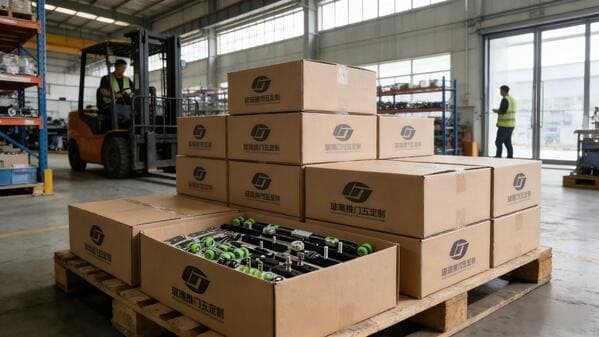
Getting your own branded packaging is a great step. It makes your product look professional and builds customer trust. But I know you probably have more specific questions about the process. Things like design limits, costs, and timelines are really important for purchasers like you. Let’s break down these common questions one by one so you have all the information you need.
What are the design limitations for custom packaging?
You have a vision for your packaging but worry about factory limitations. Will they get it right? Most suppliers are flexible, but you should know the common design constraints first.
Design limitations usually relate to color count (fewer colors are cheaper), material type, and complex shapes. Most suppliers handle standard box designs perfectly. Provide high-resolution files like Adobe Illustrator (AI) or PDF for the best results. Contact your supplier to confirm their specific capabilities.
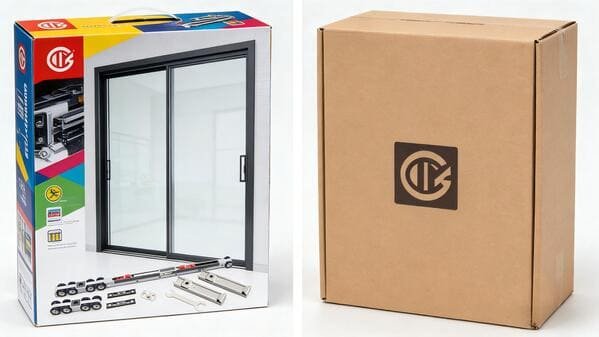
When I work with clients, we often discuss the specifics of packaging design. Understanding the limits helps manage expectations and costs. The main things to consider are printing, materials, and the files you provide.
Color and Printing
The number of colors in your design directly impacts the cost. Each color requires a separate printing plate, and the initial setup for these plates has a fee. A simple one or two-color logo is very cost-effective. Full-color or photographic designs use a process called CMYK printing, which is also possible but can be more expensive. It’s best to use Pantone (PMS) color codes to ensure your brand colors are printed accurately.
Material and Structure
The material depends on the weight and type of product. For a heavy-duty glass door system, a strong corrugated cardboard box is necessary for protection. For lighter components, a simpler folding carton might be enough. You can also request custom foam or cardboard inserts to hold each part securely. Special die-cut shapes or windows are possible but will increase the tooling cost.
Providing the Right Files
To ensure a high-quality print, always provide your design in a vector format. The best file types are Adobe Illustrator (.ai), EPS, or a high-quality PDF. Vector files can be scaled to any size without losing quality. Avoid sending low-resolution JPEGs or PNGs, as they can look blurry when printed.
Here is a simple table to help you understand the options:
| Feature | Basic Option (Lower Cost) | Advanced Option (Higher Cost) |
|---|---|---|
| Printing | 1-2 Pantone colors | Full-color CMYK, custom finishes (glossy/matte) |
| Material | Standard brown or white cardboard | Thick corrugated board, laminated paper, custom colors |
| Structure | Standard rectangular box | Custom die-cut shapes, plastic windows, foam inserts |
| Best File Type | High-resolution PDF with vector logo | Layered Adobe Illustrator (.ai) file with embedded fonts |
Can my logo be printed on each set or box?
You want your brand visible but are unsure if the logo can be on the product itself. Or maybe just on the box? You need clarity on where your brand can be placed.
Yes, your logo can be printed on each individual box. Many suppliers can also add your logo directly to the hardware components through methods like laser engraving or silk screening, depending on the material and your budget. This helps reinforce your brand identity at every level.

Having your brand visible is key. In my experience, most B2B buyers like you want their brand on both the packaging and the product. This creates a complete brand experience for the end-user, whether it’s a contractor or a homeowner. Let’s look at the options for placing your logo.
On the Outer Box
This is the most common and easiest request. Your logo, company information, and product details can be printed on the main shipping carton. This is perfect for distributors and retailers, as it makes warehouse management simple and keeps your brand front and center. You can design the entire box layout. I’ve helped customers create designs that include installation instructions and parts lists printed directly on the box, which is very helpful.
On the Inner Packaging
If your sliding door system comes with multiple components, they are often packed in smaller inner boxes or bags. You can also have your logo printed on these. This adds a professional touch and shows great attention to detail. For example, the rollers might be in one small branded box, and the screws and bolts in a branded bag.
On the Product Itself
This is where you can truly make the product your own. Depending on the component, we can add your logo in several ways:
- Laser Engraving: This is a very popular method for metal parts like the track or roller hangers. It creates a clean, permanent, and high-end look.
- Silk Screening: This works well for printing logos on plastic or metal surfaces. It allows for color, but may not be as durable as engraving.
- Stamping/Molding: For large volume orders, your logo can even be stamped into the metal parts or included in the mold for plastic components. This has a higher initial setup cost but is very cost-effective per piece on large runs.
Discuss these options with your supplier to see what’s feasible for your specific product and order quantity.
How long does custom packaging take to produce?
You need to plan your inventory and launch dates. But you’re worried custom packaging will cause long delays. You need a realistic timeline to manage your project effectively.
Typically, creating new custom packaging adds 10 to 20 days to your first order’s lead time. This includes time for design confirmation, creating printing plates, and the first production run. Subsequent orders using the same packaging will not have this extra delay.

Time is money, especially when you are managing a supply chain. I always tell my clients, like Jacky, to account for the packaging setup time in their initial order schedule. It’s a one-time process, but it’s important to get it right. Here is a breakdown of the typical steps and how long each one takes.
Step-by-Step Timeline
Design Submission and Confirmation (2-5 days): You provide your artwork to the supplier. We then create a digital proof or mock-up and send it back to you for approval. There might be a few revisions back and forth until you are 100% happy with the design.
Tooling and Plate Creation (7-10 days): Once the design is approved, the factory creates the necessary printing plates and any die-cut tooling for the box shape. This is usually the longest part of the setup process. This is a one-time step. For future orders, the plates and tools are already available.
First Packaging Production Run (3-5 days): The factory prints and produces your first batch of custom boxes. This runs parallel to your hardware production. The packaging is then ready for when your sliding door systems come off the assembly line.
Here is a simple timeline:
| Stage | Estimated Time | Notes |
|---|---|---|
| 1. Design & Approval | 2-5 Days | Depends on how quickly you can provide feedback. |
| 2. Printing Plate & Tooling Setup | 7-10 Days | This is a one-time process for new designs. |
| 3. Initial Packaging Production | 3-5 Days | The factory produces the boxes for your current order. |
| Total Added Time for First Order | 12-20 Days | This time is only added to your very first order with new packaging. |
After the first order, your lead time will return to normal because the supplier will have your packaging ready. Many suppliers, including opensliding, can even stock some of your packaging to speed up future orders.
Are there extra costs for branded packaging?
You are always looking for ways to reduce costs. You’re interested in branding but need to know if the extra expense is worth it. You must understand all the potential fees involved.
Yes, there are typically some extra costs for branded packaging. This includes a one-time setup fee for printing plates (usually $50-$200 per color) and a slightly higher per-unit cost for the box itself. However, these costs are often minimal on a large order.

For any purchasing manager, the bottom line is crucial. The good news is that the cost of custom packaging is usually very reasonable, and the value it adds to your brand is significant. Let’s break down exactly where the costs come from so you can budget accurately.
One-Time Setup Fees
The main initial cost is for tooling.
- Printing Plate Fee: Every color in your print design requires a separate printing plate. A simple one-color logo is the cheapest. A four-color CMYK design will be more expensive. This is a one-time charge. As long as your design doesn’t change, you won’t pay this again on future orders.
- Die-Cut Tooling Fee: If you want a custom box shape or a window, the factory needs to create a special tool called a die-cutter. This is also a one-time fee. Standard rectangular boxes do not have this fee.
Per-Unit Cost
The cost of each individual box might be slightly higher than a generic, unprinted box. The price difference depends on several factors:
- Material Quality: A thicker, corrugated box costs more than a thin cardboard one.
- Print Complexity: A full-color print costs more per box than a one-color print.
- Size and Weight: Larger boxes naturally cost more.
- Order Quantity: The most important factor. The larger your order, the lower the per-unit cost for each box. The price difference can become very small on orders of a thousand units or more.
Here’s a quick cost example:
| Cost Item | Example Price | Frequency |
|---|---|---|
| Printing Plate Setup (1 color) | $50 – $100 | One-Time |
| Die-Cut Tool Setup (custom shape) | $150 – $300 | One-Time |
| Per-Unit Box Cost Increase | $0.10 – $0.50 per box | Per Order |
The best way to get an exact price is to send your design and order quantity to your supplier for a detailed quote. At opensliding, we are always transparent about these costs.
Conclusion
In short, customizing your packaging from China is not only possible but also a smart business move. It elevates your brand and adds value with minimal extra cost and effort.