
A pocket door is stuck, and you’re imagining costly, wall-damaging repairs. Ignoring it feels risky, but calling a professional seems expensive. Some common issues have simple DIY fixes.
Many pocket door kit problems do not require a professional. Simple issues like a sticking door or misaligned panel can often be fixed with basic tools, lubrication, or by cleaning the tracks. However, complex problems like a broken track inside the wall should be handled by a professional.
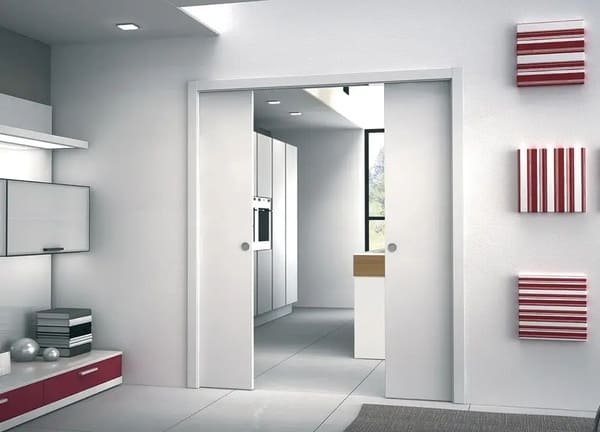
Knowing when to tackle a problem yourself and when to call a professional saves you time and money. As someone who has been supplying door hardware for years, I’ve seen it all. The key is to correctly identify the problem. A noisy door is very different from a door that has completely fallen off its track inside the wall. Let’s break down the common issues you might face, so you can decide the best course of action for your situation and your wallet. Understanding these points helps you make a better choice.
What are the negatives of pocket doors?
You love the space-saving style of pocket doors but worry about the hidden downsides. You might fear they are flimsy or difficult to fix. Understanding their few drawbacks helps prevent them.
The main negatives include potential noise during operation, difficulty in repairing components inside the wall, and providing less insulation and soundproofing than a traditional hinged door. Also, you cannot hang heavy items on the wall where the door retracts.
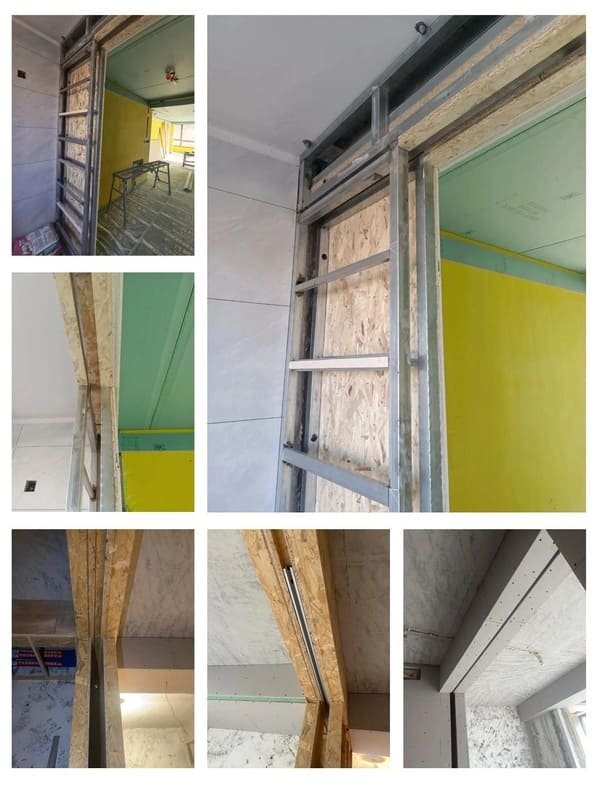
In my line of work, customers often ask about the trade-offs. While pocket doors are fantastic space-savers, it’s important to be realistic about their characteristics. Let’s look at the main concerns.
Potential Drawbacks Explained
- Repair Accessibility1: This is the biggest issue. If a roller breaks or the track gets damaged inside the wall, you often have to cut open the drywall to access it. This turns a small hardware fix into a larger construction project.
- Noise2: Cheaper hardware kits can be noisy. The sound of rollers on a metal track can be disruptive in quiet homes. Investing in high-quality systems with soft-close mechanisms, which we specialize in at opensliding, drastically reduces this noise.
- Sealing: A pocket door doesn’t seal as tightly as a hinged door. This means less privacy, as sound can travel more easily. It also provides less of a barrier against drafts or smells.
| Feature | Pocket Door | Hinged Door |
|---|---|---|
| Space Saving | Excellent | Poor |
| Repair Access | Difficult | Easy |
| Soundproofing | Fair | Good |
| Installation | Complex | Simple |
Choosing a robust pocket door kit from the beginning is the best way to minimize these negatives.
How much does it cost to repair a pocket door off track?
Your pocket door is off its track, and you are dreading the repair bill. The thought of opening up the wall is daunting. But the cost varies, and sometimes it’s surprisingly low.
A simple repair where the door is just off track and accessible might cost a handyman $100-$200. If the track or rollers are broken and the wall must be opened, costs can rise to $400-$1000+ to cover labor, parts, and drywall repair.

The cost to fix an off-track pocket door depends entirely on why it’s off track and how hard it is to access the hardware. I always advise my clients to investigate first before panicking. If you can see the rollers and they simply slipped off, the fix can be quick. But if something is broken inside the wall pocket, the job gets bigger. The cost escalates not because the parts are expensive, but because of the labor involved in opening and closing the wall.
Breakdown of Repair Costs
Here’s a look at what you can expect to pay based on different scenarios.
- Minor Adjustment: If the door just needs to be lifted and re-seated on the track, a handyman can often do this in under an hour. You’re mostly paying for a service call, which is typically in the $100 – $200 range.
- Roller Replacement (Accessible)3: Sometimes, the rollers break but can be replaced without opening the wall. This involves removing the door and trim. The cost includes new rollers and about 1-2 hours of labor, totaling $200 – $400.
- Track Replacement (Wall Opening Needed)4: This is the most expensive scenario. If the track itself is bent or broken, a professional will need to cut the drywall. The cost includes significant labor, new hardware, and subsequent drywall and paint repair, pushing the total to $500 – $1,000 or more.
The best way to avoid these high costs is by installing a top-quality, heavy-duty track system from the start.
Can a beginner install a pocket door?
You want to install a pocket door yourself to save money. You might be worried it is too complex for a non-professional. With the right kit and careful planning, it is an achievable project.
Yes, a beginner with basic carpentry skills can install a pocket door, especially when using a complete kit in a non-load-bearing wall. Success depends on precise measurements and carefully following the manufacturer’s instructions. Anything more complex should be left to a professional.
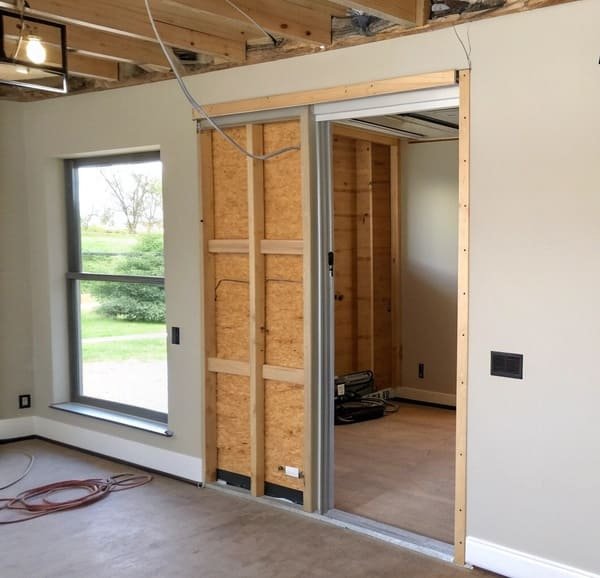
I’ve supplied hardware to countless DIYers over the years. Installing a pocket door is more about precision than advanced skill. Unlike a simple hinged door, mistakes are literally hidden in the wall and hard to fix later. If you are patient and detail-oriented, you can do it. The key is to know your limits.
Key Steps for a DIY Installation
If you decide to proceed, focus on these critical stages.
- Frame the Opening Correctly5: Your rough opening must be perfectly level and plumb. The kit’s instructions will give you exact dimensions. Measure three times, cut once. An incorrect opening is the source of 90% of future problems.
- Install the Track Level6: The overhead track carries the entire weight of the door. It must be perfectly level. If it’s not, the door will roll open or shut on its own. Use a good quality level for this step.
- Secure the Split Studs: Ensure the pocket frame is plumb and securely attached to your rough opening. A wobbly frame will lead to a wobbly door.
When to Call a Pro
Stop immediately if you encounter a load-bearing wall, or if there is electrical wiring or plumbing where you plan to install the pocket. Modifying these requires a licensed professional.
How to service a pocket door?
Your pocket door doesn’t glide as smoothly as it used to. You think it might need a major overhaul. But routine service is easy and can prevent big problems down the line.
To service a pocket door, first, clean the track in the wall pocket with a vacuum’s crevice tool to remove dust and debris. Then, apply a silicone-based lubricant to the rollers. Avoid oily lubricants, as they attract more dirt.

From my experience at opensliding, I can tell you that 90% of "broken" pocket doors just need a good cleaning and lubrication. It’s the simplest and most effective maintenance you can perform. When a door starts sticking or making noise, it’s usually because the rollers are struggling with dirt, hair, and grit that has built up on the track over time. Taking 15 minutes to service it once a year can save you from a huge headache later. It’s amazing what a little bit of cleaning can do.
A Simple Maintenance Routine
Follow these steps to keep your door running smoothly.
- Step 1: Clean the Track7: Open the door fully. Use a vacuum cleaner with a narrow attachment to suck out any loose debris from the track inside the wall. For stubborn grime, wrap a cloth around a paint stir stick, dampen it slightly, and slide it along the track.
- Step 2: Inspect and Clean the Rollers: Most modern pocket doors have rollers that can be accessed by removing the door. Once the door is off, wipe down the wheels to remove any built-up gunk. Check them for any signs of cracking or wear.
- Step 3: Lubricate the Mechanism8: With the wheels clean, apply a small amount of silicone spray directly to the axles of the rollers. Don’t spray the track itself, as this can attract more dust. Cycle the door back and forth a few times to distribute the lubricant. High-quality rollers with good bearings, like the ones we produce, require very infrequent lubrication.
Conclusion
Many pocket door issues are simple DIY fixes. However, for major repairs involving the wall structure, trust a professional. Quality hardware and regular maintenance are your best strategy for prevention.
Understanding Repair Accessibility can help you make informed decisions about pocket door installations and maintenance. ↩
Exploring solutions for Noise can enhance your living space’s comfort and tranquility, especially in quiet environments. ↩
Understanding roller replacement costs can help you budget effectively and avoid unexpected expenses. ↩
Exploring track replacement costs will prepare you for potential repairs and help you make informed decisions. ↩
Understanding proper framing techniques is crucial to avoid future installation issues and ensure a smooth door operation. ↩
Learning how to install the track level is essential for a successful door installation, preventing operational problems. ↩
Discover expert tips and techniques for cleaning pocket door tracks to ensure smooth operation. ↩
Learn the best practices for lubricating pocket door mechanisms to enhance their performance and longevity. ↩