
Are you worried that choosing a pocket door means signing up for endless repairs? A stuck or noisy door can be a real headache, but it doesn’t have to be that way.
No, pocket door kits do not require constant upkeep. The key is using high-quality hardware from the start. With a solid kit, maintenance is simple and infrequent, usually just occasional cleaning and lubrication to ensure it works smoothly for years without any major issues.

Many of my clients, from door factory purchasers to contractors, love the space-saving benefit of pocket doors. But they often share a common fear: maintenance. They’ve heard stories of doors getting stuck inside walls, creating a repair nightmare. I understand this concern completely. Let’s break down what’s really involved in pocket door maintenance so you can feel confident about using them in your projects.
Are pocket doors high maintenance?
Do you fear that a pocket door will become a constant source of problems? You don’t want to install a beautiful feature that ends up causing more frustration than it’s worth.
Pocket doors are not high maintenance, especially when you start with a top-quality hardware kit. Most problems come from cheap parts or poor installation. A well-made system only needs a little cleaning and lubrication to work perfectly, making it a very manageable choice for any space.

In my experience as a manufacturer, the "high maintenance" reputation of pocket doors comes from older designs or, more commonly, low-budget hardware kits. When a project tries to save a small amount of money on the hardware, it often leads to bigger costs later. The rollers are the heart of the system.
Quality Hardware vs. Standard Hardware
The difference in performance is huge. A cheap kit might use plastic wheels on simple pins. These wear out, get brittle, and collect dirt, which causes them to stick or jump off the track. A high-quality kit1, like the ones we produce at opensliding, uses solid metal hangers and ball-bearing wheels. These are engineered for tens of thousands of cycles, providing a smooth, quiet glide for decades. The initial investment in good hardware is small compared to the cost of fixing a failed system inside a finished wall.
Installation’s Role
Proper installation is just as important. Even the best hardware will fail if the track is not perfectly level or the frame is weak. A professional installer ensures everything is aligned and secure.
| Feature | Low-Quality Kit | High-Quality Kit |
|---|---|---|
| Rollers | Plastic, no bearings | Steel, with ball bearings |
| Track | Thin, flexible aluminum | Heavy-gauge extruded aluminum |
| Longevity | 1-5 years | 10-20+ years |
| Maintenance | Frequent adjustments, prone to failure | Occasional cleaning & lubrication |
What are the downsides of pocket doors?
Pocket doors seem like the perfect way to save space in a tight room. But maybe you have heard horror stories about noise, difficult repairs, and installation headaches that make you hesitate.
The main downsides are a more complex installation than a standard door, and difficulty accessing the track for repairs once the wall is closed. The wall cavity also can’t house electrical wires or plumbing. However, choosing quality hardware from the beginning solves most noise and reliability issues.

It’s true that pocket doors have some specific challenges. As a supplier, I always want my customers to be aware of the full picture. Understanding these potential issues is the first step to preventing them.
Installation Challenges
Unlike a hinged door, you can’t just hang a pocket door in an existing frame. You have to open the wall, build a special frame (the "pocket"), and install the track system. This requires more skill, time, and labor, which busy contractors need to factor into their quotes. If the wall is load-bearing, it gets even more complicated.
Repair Accessibility
The biggest fear is a door failing inside the wall. If a roller breaks or the door comes off the track, you might have to cut open the drywall to fix it. This is why I stress the importance of the hardware so much. A robust system with anti-jump features, like our heavy-duty rollers, makes this scenario extremely unlikely.
| Downside | How to Solve It |
|---|---|
| Complex Installation2 | Hire an experienced carpenter. Use a complete kit with clear instructions. |
| Difficult Repairs3 | Use high-quality, long-lasting hardware to prevent failure in the first place. |
| Wall Can’t Be Used | Plan your layout carefully to keep wiring and plumbing in other walls. |
| Potential for Noise | Choose kits with ball-bearing wheels and soft-close mechanisms for quiet operation. |
How do you maintain a pocket door?
You want your newly installed pocket door to glide smoothly and quietly forever. But you might not know the proper steps to keep it working like new for your client or project.
To maintain a pocket door, regularly vacuum the overhead track to remove any dust and debris. After cleaning, wipe the track and rollers with a cloth and apply a silicone-based lubricant to the roller mechanisms every six months. This keeps the glide smooth and quiet.

Good maintenance for a pocket door is quick and easy. It doesn’t require special tools or a lot of time. In our factory, we test our systems extensively to ensure they last, but a little care goes a long way. Showing your clients these simple steps can give them confidence in the product. It’s a proactive approach that prevents almost all common issues. Here is a simple routine you can follow or share with the end-user.
Routine Cleaning
Dust and hair are the main enemies of a smooth track. About every three to four months, use a vacuum cleaner4 with a narrow attachment to clean out the track inside the wall. Slide the door fully open and closed to access the entire length. After vacuuming, wipe the track with a dry or slightly damp cloth to pick up any remaining fine dust.
Periodic Lubrication
Lubrication keeps the rollers moving freely.
- Choose the Right Lubricant: Only use a silicone-based spray5. Avoid oil-based products like WD-40, because they attract and hold onto dust, which will gum up the mechanism over time.
- Apply Sparingly: You don’t need much. Spray a small amount directly onto the roller assemblies.
- Work it In: Slide the door back and forth several times to distribute the lubricant evenly across the bearings and along the track.
This simple process, done twice a year, is all the maintenance a quality pocket door system needs.
What’s the average cost to install a pocket door?
You are considering a pocket door for your next project or for a client’s home. But the unknown installation cost is a major variable that can make it hard to create an accurate budget or quote.
The total cost to install a pocket door ranges from $500 to over $2,500. The final price depends on whether it’s for new construction or a remodel, local labor rates, the door itself, and the quality of the hardware kit. The hardware is a small part of the total cost.
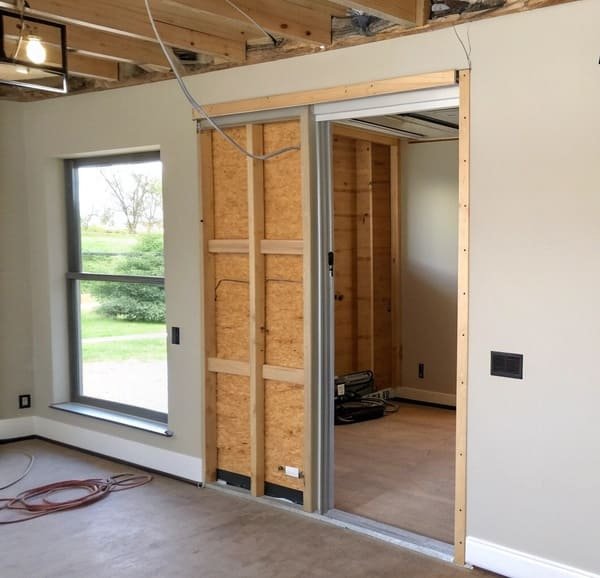
As someone who provides the hardware, I always advise my customers to look at the total project cost. The price of our kit is just one piece of the puzzle. The biggest expense by far is the labor involved in opening a wall, framing the pocket, installing the system, and then finishing the drywall and paint.
Hardware Kit Costs
The hardware kit itself is a relatively small part of the budget. A basic, low-quality kit might be under $100. A high-quality, heavy-duty kit with soft-close features, like those we offer, can range from $150 to $400 or more. Saving $50 on the kit is not worth it when a failure could lead to a $1,000 repair job.
Labor & Construction Costs
This is where the costs vary the most. For new construction, adding a pocket door is simpler. In a remodel, you have demolition, potential rerouting of utilities, and more complex framing. The labor for a professional can easily be $500 to $2,000+.
| Cost Component | Typical Price Range (USD) | Key Factors |
|---|---|---|
| Pocket Door Hardware Kit6 | $75 – $400+ | Weight capacity, soft-close, brand |
| Door Slab | $100 – $1,000+ | Material (hollow vs. solid core), style |
| Labor (Installation)7 | $400 – $2,000+ | New build vs. remodel, load-bearing wall |
| Finishing Materials | $50 – $200 | Drywall, paint, trim |
| Total Estimated Cost | $625 – $3,600+ | Varies greatly by location and project scope |
Conclusion
Pocket doors are a smart, space-saving choice for modern projects. With quality hardware and simple care, they are a reliable, low-maintenance solution that will perform smoothly for years, not a constant headache.
Explore the advantages of high-quality kits to understand their long-term value and performance benefits. ↩
Explore this link to learn expert tips and techniques for successfully installing pocket doors, ensuring a smooth and efficient process. ↩
Discover valuable insights on managing repairs for pocket doors, helping you avoid costly mistakes and ensuring longevity. ↩
Discover essential features of vacuum cleaners that make them ideal for cleaning hard-to-reach areas like door tracks. ↩
Explore this link to find top-rated silicone-based sprays that ensure smooth operation and longevity for your door system. ↩
Explore this link to find top-rated pocket door hardware kits that ensure durability and functionality for your project. ↩
Understanding labor costs is crucial; this resource will provide insights into pricing and factors affecting installation expenses. ↩