
Struggling to trust rail materials from China for your high-stakes projects? A material mismatch causes costly failures and client dissatisfaction. The solution is to verify the material specifications against your exact needs.
Yes, rail materials from Chinese suppliers can absolutely meet your project requirements. The key is to shift focus from the country of origin to the technical specifications. You must verify the material’s load capacity, corrosion resistance, and finish against your door’s weight, environment, and local building codes.
Over my years in this business, I’ve seen buyers hesitate, worried that sourcing from overseas means compromising on quality. But I’ve learned that the most successful purchasers, like my client Jacky in Canada, know it’s not about where the rail is made, but what it’s made of. Getting this right is about asking the right questions—about durability, customization, installation, and certification. Let’s break down exactly what you need to look for to ensure every rail you source is a perfect match for your project.
Which materials are standard for durability?
Confused by all the material options for rails? Choosing the wrong one leads to frequent replacements and unhappy clients. Let’s clarify the most durable and reliable choices for your sliding systems.
For durability, high-grade aluminum and stainless steel are the industry standards. Stainless steel offers unmatched strength and corrosion resistance, perfect for heavy doors or harsh environments. Aluminum provides a lightweight, rust-proof, and cost-effective solution for most standard interior and exterior applications.
When I talk to buyers, the conversation always comes back to two main players: aluminum and stainless steel. But even within these categories, there are important distinctions you need to understand to make the right choice for durability.
Aluminum: The Versatile Performer
Most of the rails we produce are made from high-grade aluminum alloys1, typically 6061 or 6063. This material is fantastic because it’s lightweight, which simplifies shipping and installation, yet it’s strong enough for most residential and commercial glass doors. Its natural resistance to corrosion is a major plus, especially when paired with an anodized or powder-coated finish. For the majority of projects where you need a reliable, cost-effective, and easy-to-handle solution, aluminum is the go-to standard.
Stainless Steel: The Heavy-Duty Champion
For projects that demand maximum strength and longevity, stainless steel is the answer. It’s ideal for oversized, heavy glass doors or for installations in coastal areas with salt in the air. We typically work with two grades:
- Grade 304: The most common grade, offering excellent corrosion resistance for most environments.
- Grade 316: Known as "marine grade," this contains molybdenum, giving it superior resistance to chlorides and salt. If your project is near the ocean, this is non-negotiable.
Here is a simple breakdown:
| Material | Best For | Key Benefits |
|---|---|---|
| Aluminum | Standard interior/exterior doors | Lightweight, cost-effective, rust-proof |
| Stainless Steel 304 | Heavy doors, high-traffic areas | High strength, excellent corrosion resistance |
| Stainless Steel 3162 | Coastal or corrosive environments | Superior corrosion resistance, ultimate durability |
Can I request alternative materials for special projects?
Have a unique project with very specific aesthetic or functional needs? Standard materials just won’t cut it. You need a supplier who can accommodate your vision without compromising on quality.
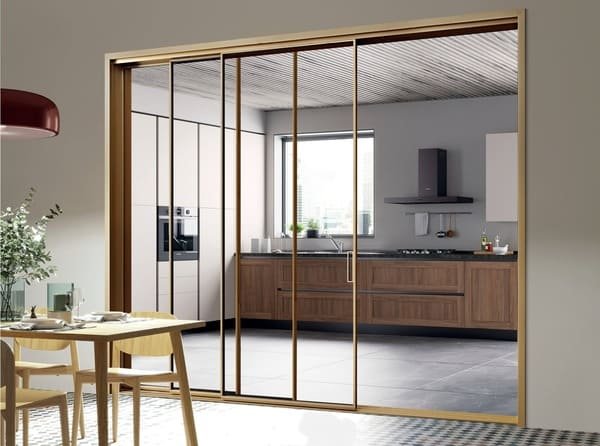
Absolutely. As a factory, we frequently handle requests for alternative materials. Whether you need a specific metal finish like brass for a luxury design or powder-coated steel for industrial projects, a good supplier can work with you. Just provide clear specifications and performance requirements.
One of the biggest advantages of working directly with a factory like ours is the ability to customize. Jacky often comes to me with projects that require something beyond the standard catalog offerings. This is where a true manufacturing partner shines.
The ODM and Customization Process
When you have a special project, the process is straightforward. You come to us with your requirements. This could be a specific aesthetic, like the warm look of brass for a high-end hotel, or a functional need, like extra-thick carbon steel for an industrial warehouse door. We then discuss the feasibility, material properties, and production timeline. Our engineers can provide feedback on how the material choice will affect the system’s performance, such as load capacity and wear resistance. This collaborative approach ensures the final product is not only beautiful but also perfectly engineered for its purpose.
Common Alternative Material Requests
Beyond aluminum and stainless steel, we’ve produced rails in a variety of materials. Here are a few examples to show what’s possible:
- Carbon Steel3: Often chosen for its strength and lower cost, especially for interior applications where corrosion is not a major concern. It’s usually powder-coated or painted to match a specific color scheme.
- Brass and Bronze4: Selected purely for their classic, high-end appearance. These materials are heavier and more expensive but deliver an unmatched aesthetic for luxury residential or hospitality projects.
- Specialty Finishes: Sometimes, the base material is standard aluminum, but the request is for a unique finish, like a wood-grain effect or a specific RAL color. We can achieve this through advanced powder coating or sublimation processes.
The key is clear communication. If you provide detailed drawings and performance specs, we can source and manufacture the hardware to match your vision.
How does material choice affect installation?
Think your job is done once you’ve chosen the material? The material directly impacts the installation process, potentially adding time, labor, and complexity if you don’t plan for it.
Material choice significantly affects installation. Lighter materials like aluminum are easier to handle and cut on-site, simplifying the process. Heavier materials such as stainless steel require more robust structural support and specialized tools, demanding more labor and precision during installation.
I always remind my clients to think about the installation team when they’re specifying materials. A choice made in the purchasing office can have a big impact on the crew in the field. The properties of the metal dictate not just the final performance, but also how easy it is to get there.
Weight and Handling
This is the most obvious factor. An aluminum rail5 is significantly lighter than a stainless steel one of the same size. For a long rail, this can be the difference between a one-person and a two-person job. Lighter rails are easier to lift, position, and secure, which speeds up the installation process and reduces the risk of accidents or damage to surrounding surfaces. For large-scale projects with hundreds of doors, this time savings adds up quickly.
Required Tools and Fasteners
Different materials require different tools.
- Aluminum: Can be easily cut with standard power tools and drilled without much effort.
- Stainless Steel: It’s much harder and requires specialized, high-quality drill bits and saw blades. Trying to use standard tools will just burn them out.
Furthermore, the fasteners used must be compatible. You can’t use standard steel screws on an aluminum rail5 in an outdoor setting due to the risk of galvanic corrosion6. You need to use stainless steel or properly coated fasteners. The weight of a stainless steel system also demands stronger anchoring into the wall structure.
Are certifications provided for the rail material?
Worried about compliance and quality control? Without proper certification, you risk installing a product that fails inspections, violates building codes, and could even be unsafe for end-users.
Yes, reputable suppliers in China will provide material certifications upon request. These documents, known as Mill Test Reports (MTRs), verify the material’s chemical composition and physical properties, ensuring it meets international standards like ASTM or EN. Always ask for this documentation.

This is a non-negotiable point for any serious buyer. When Jacky places a large order, especially for a commercial project, one of the first things he asks for is the material certification. It’s a simple request that separates the professional factories from the rest.
Understanding Mill Test Reports (MTRs)
A Mill Test Report is like a birth certificate for the metal. It’s issued by the raw material manufacturer and traces the material back to its source. The report details several key pieces of information:
- Chemical Composition7: It shows the exact percentages of elements in the alloy (e.g., chromium and nickel in stainless steel). This confirms you’re getting the grade you paid for, like 304 or 316.
- Mechanical Properties8: This includes data on tensile strength, yield strength, and elongation. It proves that the material is strong enough to handle the specified loads for your sliding door system.
- Standards Compliance: The report will state which international standards the material conforms to, such as ASTM (American Society for Testing and Materials) or EN (European Norms).
Why You Must Always Ask
Requesting an MTR is your ultimate quality assurance check. It gives you documented proof that the material is what the supplier claims it is. This is crucial for meeting local building codes, passing project inspections, and protecting yourself from liability. A supplier who is unwilling or unable to provide this documentation should be a major red flag. At opensliding, we maintain these records for all our raw materials and provide them to our clients to ensure complete transparency and confidence in every order.
Conclusion
Choosing the right rail material is about matching specifications to your project’s needs. Verify durability, customization options, installation requirements, and always demand certification to ensure quality and compliance.
Discover the advantages of using high-grade aluminum alloys for construction projects, including strength, weight, and corrosion resistance. ↩
Learn why Stainless Steel 316 is essential for coastal projects, focusing on its superior resistance to corrosion and durability. ↩
Explore this link to understand why Carbon Steel is a popular choice for its strength and cost-effectiveness in various applications. ↩
Discover the unique aesthetic and durability benefits of Brass and Bronze, making them ideal for luxury projects. ↩
Explore the advantages of aluminum rails, including their lightweight nature and ease of installation, which can enhance project efficiency. ↩ ↩
Understanding galvanic corrosion is crucial for selecting the right materials and fasteners, ensuring the longevity of your projects. ↩
Understanding the chemical composition ensures you receive the correct metal grade, vital for quality assurance. ↩
Exploring mechanical properties helps you choose materials that meet strength and safety requirements for your projects. ↩