
Worried about a lack of transparency when ordering from China? This uncertainty can risk your project timelines and budget, but what if you could easily track your order’s progress?
Yes, reputable Chinese suppliers for glass sliding door pulley systems often provide production updates. However, this is not automatic. You must proactively negotiate for photos, videos, and milestone checks and include these terms in your purchase contract to ensure you get them.

Getting these updates isn’t just about peace of mind; it’s about maintaining control over your supply chain and ensuring quality from thousands of miles away. As a factory owner, I understand that trust is built on transparency. Let’s break down exactly how you can make this a standard part of your procurement process.
How often are updates provided?
You’ve agreed on updates, but how often should you expect them? Infrequent updates leave you in the dark, while too many can feel overwhelming. Finding the right balance is key.
Update frequency depends on your agreement. For a standard order, weekly updates or updates at key milestones are common. For complex or large custom orders, you might request more frequent communication. Always define this clearly in your contract before paying the deposit.
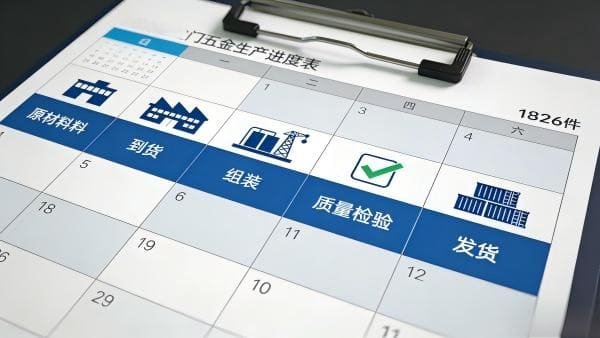
The right frequency really depends on the complexity of your order. A simple, off-the-shelf order might only need a final pre-shipment update. But for a large, custom ODM order of glass sliding door pulleys, you need more detail. At my factory, opensliding, we work with our clients to establish a schedule that makes them comfortable. We had a client from Canada, an experienced buyer like Jacky, who needed a large batch of our slow-close glass door systems. We agreed on weekly photo updates and a video call at the halfway point. This simple plan gave him confidence and kept the project perfectly on track. You should set clear expectations based on key production stages.
Key Production Milestones for Pulley Systems
| Milestone | Best Update Format | What to Ask For |
|---|---|---|
| Raw Material Arrival | Photo | "Please send a photo of the confirmed raw materials (e.g., steel, nylon) on-site." |
| First Article Inspection1 | Photo/Video | "Send a video of the first completed unit being tested and measured." |
| Mid-Production Check | Photo/Video Call | "Let’s schedule a video call to see the pulleys during the assembly stage." |
| Final QC & Testing2 | Video/Report | "Please share the final quality control report and a video of the batch testing." |
| Packaging & Loading | Photo | "Send photos of the goods packaged with our logo and being loaded." |
Can I request photos or videos during production?
Wondering if you can actually see your products being made from afar? Without visual proof, you’re just trusting words in an email, which can feel like a big risk.
Absolutely. Reputable factories like ours are happy to provide photos and videos. It shows transparency and builds trust. Specify exactly what you want to see—raw materials, production processes, quality testing, or final packaging. Make this a clear requirement in your purchase order.
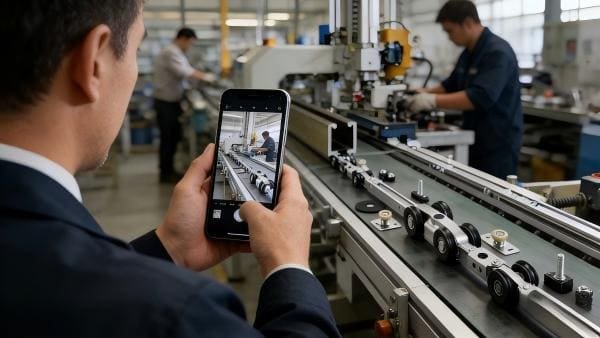
Requesting visual proof is not being difficult; it’s being a smart buyer. A good supplier will welcome it. When you make a request, be specific. Instead of asking for "an update," ask for "a short video of the pulley wheels being assembled" or "a photo of the finished products before they are packed." This removes any misunderstanding. We often use WhatsApp or email to send quick, informal updates to our clients. It’s an easy way for us to show progress and for you to see your investment is being handled correctly. Remember, a factory that is hesitant to provide photos or videos might have something to hide. Transparency is a key sign of a reliable long-term partner.
What to Look for in Production Photos and Videos
To get the most value, you need to know what you’re looking for.
- Material Check: Does the raw material in the photo match the specifications in your contract? Look for markings or packaging that can help verify the grade of steel or type of polymer.
- Workmanship3: Zoom in on photos of the assembly line. Are the work areas clean and organized? Do the components look clean and well-machined? This gives you clues about the factory’s attention to detail.
- Consistency: When you see a video of multiple units, do they all look identical? Consistent quality across the batch is crucial for hardware like sliding door pulleys.
- Testing: If you request a video of testing, make sure they are performing the tests you agreed on, such as load-bearing or cycle tests.
How do I verify progress against the order schedule?
You received an update, but how does it align with the delivery date? An email saying "production is going well" is nice, but it doesn’t give you concrete information for your timeline.
Compare the supplier’s updates directly against the production schedule in your contract. This schedule should have clear milestones and dates. If an update shows the raw materials have just arrived but you are one week from the shipping date, you have a problem.
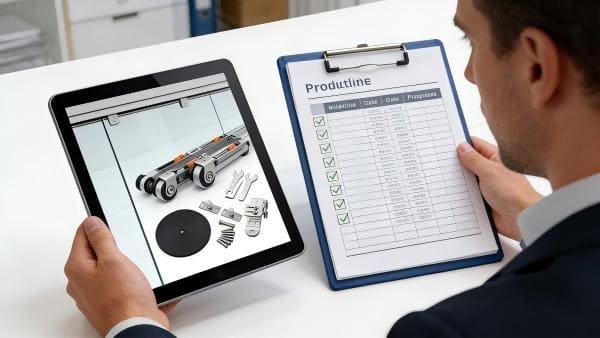
Your purchase contract is your most important tool. Before you sign it, make sure it includes a detailed production timeline with key milestones. Don’t accept vague terms like "45-day lead time." Instead, break it down. For a glass door pulley system order, a good schedule will have specific deadlines for raw material procurement, machining, assembly, quality control, and packaging. When your supplier sends an update, like a photo of the completed components, check your timeline. Does the date of the photo match the scheduled completion date for that stage? If it’s late, you can ask why immediately instead of finding out about a major delay just before the shipping date. This proactive approach gives you time to find solutions with your supplier.
Sample Milestone Verification Table
| Milestone | Agreed Date | Actual Update Date | Status | Notes / Action Required |
|---|---|---|---|---|
| Raw Materials | Week 1 | Week 1 | ✅ On Track | Photo received, materials confirmed. |
| Machining4 | Week 3 | Week 4 | ⚠️ 1 Week Delay | Supplier reports machine maintenance. Need to confirm impact on final ship date. |
| Assembly | Week 5 | – | Pending | Follow up on assembly start. |
| Final QC5 | Week 6 | – | Pending | – |
| Shipping | Week 7 | – | At Risk | Discuss with supplier how to make up for the 1-week delay. |
Are updates included in contract terms?
You’ve discussed getting updates, but what happens if the supplier forgets or refuses? A verbal promise is not enough when your project and money are on the line.
No, updates are not automatically included. You must explicitly add a "Production & Quality Reporting" clause to your purchase order or contract. This section should detail the frequency, format (photo/video), and milestones for all updates you require.
This is the most critical step. A handshake agreement over email or WhatsApp is good for building a relationship, but the contract is what protects you legally. Any serious supplier will have no problem putting their communication promises in writing. Your contract clause should be simple and clear. For example: "Supplier agrees to provide photo updates via email at the completion of each production milestone: 1) Raw Material Arrival, 2) Assembly Start, 3) Final Pre-Shipment Inspection. A final inspection video is required before balance payment." This language is specific and ties the updates to your payment schedule, giving the supplier a strong incentive to comply. If a potential supplier resists adding this clause, consider it a major red flag and think about finding another partner.
Sample Contract Clause
Here is a simple clause you can adapt for your own contracts:
X. Production Reporting and Inspection6`
X.1 The Seller agrees to provide the Buyer with production progress updates via email or WhatsApp at the following milestones:`
Within 3 business days of raw material arrival (photo required).Upon completion of the first production unit for inspection (photo and video required).Within 3 business days of final quality control testing (copy of QC report and photo required).
X.2 The Buyer reserves the right to request additional photos or a live video call with one (1) week’s notice.`
X.3 The final balance payment7 is contingent upon the Buyer’s approval of the final pre-shipment photos and/or video demonstrating the goods conform to the order specifications.`
Conclusion
In short, getting production updates from China is possible and recommended, but you must be proactive. Negotiate for them and write them directly into your contract to ensure full transparency.
Understanding First Article Inspection can enhance your production quality and compliance. ↩
Exploring Final QC & Testing will help ensure product reliability and customer satisfaction. ↩
Exploring Workmanship can provide insights into the quality control processes that impact the final product. ↩
Understanding the causes of machining delays can help you mitigate risks in your projects. ↩
Exploring the significance of final QC can enhance your knowledge of quality assurance in production. ↩
Understanding this clause can help ensure transparency and accountability in contract agreements. ↩
Exploring this concept is crucial for managing financial transactions and ensuring compliance in business agreements. ↩