
Excited about your new barn door but worried about installing it? A wrong move can damage your wall and the door. Let’s walk through the simple steps to get it right.
Installing a barn door involves mounting a track above the doorway and hanging the door on it. You’ll need to install a header board for support, attach the track, hang the door, and then add floor guides. With the right tools and hardware kit, it’s a manageable project.
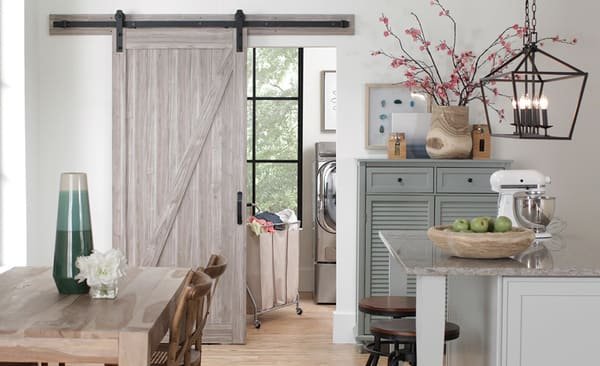
You’ve picked out the perfect barn door, and now it’s time for the final piece of the puzzle: the installation. You might be wondering if you should hire a pro or do it yourself. Here at opensliding, we’ve supplied hardware for thousands of projects, and we’ve learned a lot about what makes an installation successful. We want to share that knowledge with you. Let’s break down the process so you can make the best choice and feel confident tackling this job.
Are barn doors easy to install?
Is the thought of installing a barn door yourself holding you back? Complex instructions and tools can be scary. But with a good hardware kit, it’s a straightforward weekend project.
Yes, barn doors can be easy to install, especially when you use a complete hardware kit. The difficulty depends on your wall’s structure and your comfort with basic tools. Most kits from reliable suppliers like us come with clear instructions, making it a perfectly manageable DIY project.

The ease of installation really comes down to a few key factors. As someone who has seen countless projects, I can tell you that preparation is everything. First, consider your skill level. If you can use a drill, a level, and a tape measure, you have the basic skills needed. Second, think about the wall itself. Installing into solid wood studs is simple. However, if you have plaster walls, concrete, or metal studs, it gets a bit more complex and might require different anchors. Finally, the quality of your hardware kit matters most. A good kit includes all the necessary components and, more importantly, instructions that make sense. At opensliding, we design our kits to be as user-friendly as possible because we know our customers, like Jacky in Canada, value efficiency.
| Factor | DIY Installation | Professional Installation |
|---|---|---|
| Cost | Lower (cost of kit + tools) | Higher (labor costs) |
| Time | Can take a weekend | Usually done in a few hours |
| Skill | Requires basic tool knowledge | No skill required from you |
| Result | Great satisfaction, but risk of errors | Guaranteed professional finish |
How do you install a barn door over an existing doorway?
Ready to replace an old swinging door with a stylish barn door? The existing door frame and trim can seem like an obstacle. Here’s how you can prepare the opening correctly.
First, remove the old door by unscrewing the hinges from the frame. You can leave the door casing (trim) in place. The key is to install the new sliding track high enough so the barn door completely covers and clears the opening and the existing trim when it moves.
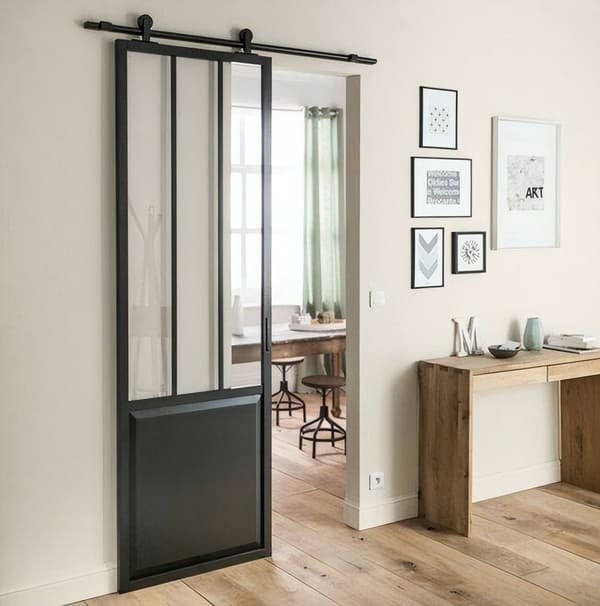
This is a common scenario, and it’s simpler than it looks. I’ve guided many clients through this. Your first job is to get rid of the old door. Unscrew it from the hinges and carry it away. Then, remove the hinges and the strike plate from the door jamb. I suggest filling the old screw holes with wood putty and sanding them smooth for a clean, professional finish. You don’t need to remove the door trim or casing. In fact, it often adds to the final look. The most critical step here is an accurate measurement. Measure from the top of your door casing to where the top of the track will sit. You need enough clearance for the door to hang from the rollers and still glide smoothly over the trim without scraping. This simple preparation makes all the difference.
Step 1: Remove the Old Door
Carefully unscrew the hinges from the door frame. It’s often easier to have a helper hold the door steady while you do this. Once the door is free, remove the remaining hinge plates and the strike plate from the frame.
Step 2: Prepare the Casing
Use wood filler or spackle to fill the holes left by the hinge and strike plate screws. Once it’s dry, sand the area until it’s smooth. You can then touch it up with paint to match the rest of the trim.
Step 3: Measure for the Track
Hold your new barn door1 up against the opening to see how it will look. The track needs to be installed on a header board2 mounted securely into the wall studs, high above the door trim. Ensure there’s at least an inch of space between the top of the door and the bottom of the track rollers.
How do you build a barn door step by step?
Can’t find the perfect barn door in a store that fits your style or specific size? Custom orders can get expensive. Let’s explore how you can build a beautiful, custom door yourself.
To build a barn door, measure your opening to determine the door size. Then, create your design and select your wood. Cut the boards, join them with wood glue and fasteners, and add any decorative trim or braces. Finally, sand it smooth and apply your chosen finish.
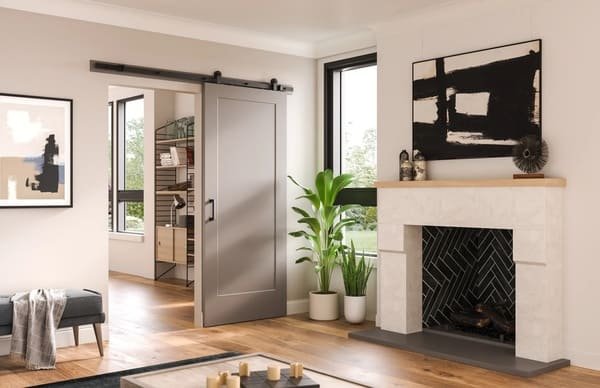
Building your own door is a very rewarding process. It gives you complete control over the style, material, and size. This is something our more hands-on clients, who might even have their own brands, appreciate.
Choosing Your Materials
You can use anything from new pine or cedar boards from a hardware store to reclaimed wood3 from an old barn for authentic character. The key is to select boards that are straight and not warped. You’ll also need wood glue, screws or nails, and materials for your chosen finish (stain, paint, or sealant).
Assembling the Door
Lay your main vertical boards on a flat surface. You can join them using simple butt joints with glue and pocket holes, or use tongue-and-groove for a tighter fit. Once the main panel is assembled, add the cross braces. The classic "Z" brace or a double "X" brace not only adds style but also provides structural support4 to prevent the door from warping over time. Secure these braces with both glue and screws.
Finishing Touches
Sanding is a crucial step that you shouldn’t skip. Start with a coarser grit sandpaper and move to a finer grit for a super smooth surface. After sanding, wipe the door clean and apply your stain, paint, or a clear polyurethane coat to protect the wood. Once it’s dry, it’s ready for the hardware.
How do you install the sliding door hardware step by step?
The hardware kit is unpacked, but the track and parts look confusing. A crooked track means a dysfunctional door. Here is the step-by-step process for a perfect hardware installation.
First, locate the wall studs and install a header board for support. Mark your track holes on the header, drill pilot holes, and mount the track. Attach the rollers to the door, carefully hang the door on the track, and then install the door stops and floor guide.
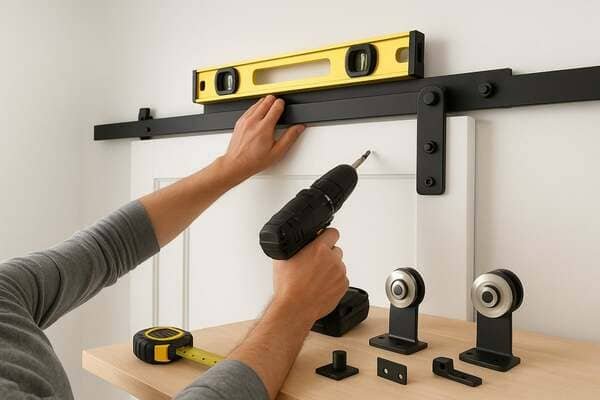
From my experience at opensliding, I can tell you that a successful installation is all in the details. The hardware is the heart of your barn door system; it has to be installed correctly for smooth, safe operation. The most common mistake I see is not getting the track perfectly level. Take your time with this part. A small error here will be very noticeable when the door is hanging, as gravity will cause it to slide on its own. Using a good quality level and measuring twice before you drill will save you a lot of headaches. Our hardware kits are designed for durability and performance, but they rely on a solid installation.
Install the Header Board: Your wall’s drywall is not strong enough to hold a barn door. Use a stud finder to locate the studs above your doorway. Cut a 1×4 or 1×6 board (the header) to be slightly longer than your track. Screw this header securely into the studs. This provides a solid anchor for your track.
Mount the Track: Place the metal track onto the header board. Use a level to ensure it is perfectly horizontal. Mark where the holes for the lag bolts go. Drill pilot holes, then securely bolt the track to the header board.
Attach Hardware to the Door: Following your kit’s instructions, measure and mark the locations for the roller straps on the top of your door. Drill the holes and bolt the rollers firmly in place.
Hang the Door & Install Guides: With a helper, carefully lift the door and set the rollers onto the track. Slide it back and forth to test the motion. Install the door stops at each end of the track to prevent the door from rolling off. Finally, mount the floor guide to keep the bottom of the door from swinging out.
Conclusion
Installing a barn door is a satisfying project that adds major style and function to your space. With the right hardware and these steps, you can achieve a professional result yourself.
Explore expert tips on barn door installation to ensure a smooth and successful project. ↩
Learn the proper techniques for installing a header board to support your barn door effectively. ↩
Explore the advantages of reclaimed wood, including sustainability and unique character, to enhance your woodworking projects. ↩
Understanding structural support can help you build more durable doors, ensuring they last longer and maintain their shape. ↩