
Tired of fingerprints on your sleek, handle-less cabinets? Or trying to open a door with your hands full? Push-to-open latches offer a simple, hands-free solution for a clean look.
A push-to-open latch uses a spring-loaded mechanism. When you press the door, a spring inside the device activates a bumper or plunger. This action pushes the door forward a few centimeters, allowing you to open it easily without a handle.
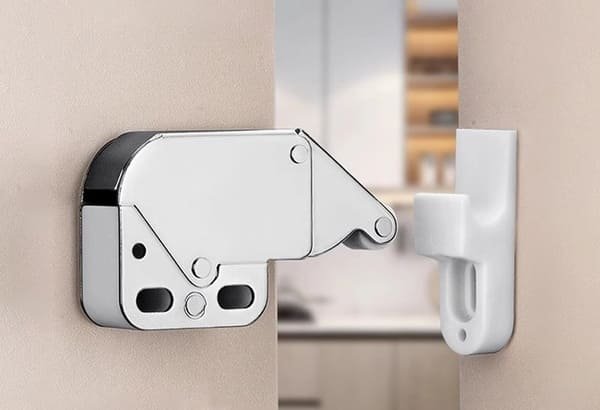
The idea behind this hardware is simple, but as a manufacturer, I know the details are what matter most for a reliable product. I’ve seen countless projects get delayed because of small misunderstandings about how these systems work. It’s not just about the latch itself; it’s about how it works with the other components. Let’s dive deeper into the specific questions I get from buyers like you so you can source the right hardware with confidence.
Confused by the different terms? Is a "push button" latch the same as "push-to-open"? Using the wrong term can lead to ordering the wrong parts, costing you time and money.
A push button cabinet latch uses a spring and a catch. Pressing the door front, which acts as the "button," releases a plunger from the catch. The stored energy in the spring then pushes this plunger forward, popping the door ajar for easy, handle-free opening.
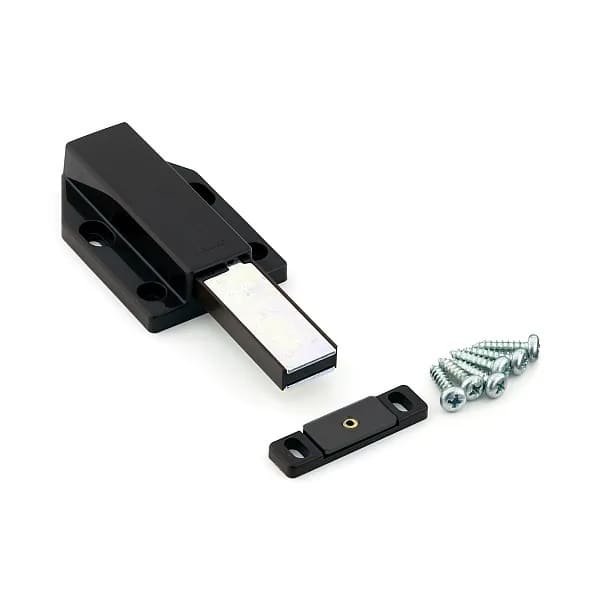
Let’s break down exactly what happens inside that small mechanism. It’s a simple but clever sequence of events that creates the hands-free experience. Understanding this helps you troubleshoot issues and appreciate why quality components are so important for longevity.
The Core Components
The system relies on just a few key parts working together:
- The Spring1: This is the engine of the latch. It stores potential energy when compressed.
- The Latch/Catch2: This is the clever part. It’s a mechanism that holds the spring in a compressed state and releases it with a push.
- The Plunger/Bumper: This is the part that physically pushes the door open when the spring is released.
The magic is in how they interact.
| Step | Action | Result |
|---|---|---|
| 1. Close | You push the door shut. | The plunger retracts, compressing the spring and engaging the catch. The door is held closed. |
| 2. Push | You apply a gentle push to the closed door. | The catch mechanism disengages, releasing the compressed spring. |
| 3. Open | The spring expands rapidly. | The stored energy pushes the plunger forward, which in turn pushes the door open by an inch or two. |
This process happens in an instant, giving you that smooth, pop-open effect.
How do push-open cabinets work?
Thinking about push-open cabinets for a project but not sure about the whole system? The latch is just one piece of the puzzle. The entire system needs to work together correctly.
Push-open cabinets combine a spring-loaded push latch with unsprung hinges. When you push the door, the latch releases and pushes it open. The unsprung hinges allow the door to swing freely, so it doesn’t fight against the latch mechanism when you push it shut.
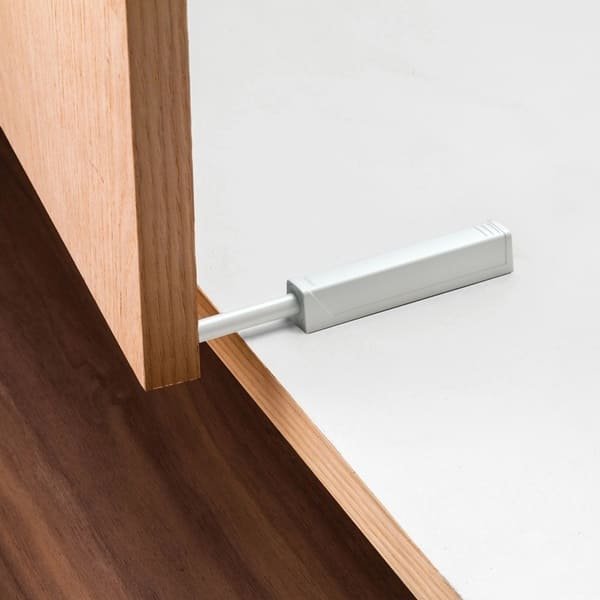
From my experience at the factory, the biggest mistake buyers make is pairing push latches with the wrong hinges. Standard cabinet hinges are "sprung," meaning they have their own spring designed to pull the door closed. If you use these, the hinge spring will constantly fight against the push latch, preventing it from staying securely shut. You create a system that works against itself. For a push-open cabinet to function properly, every component has to do its job correctly.
The System’s Key Players
| Getting this right is all about using the right combination of hardware. | Component | Function | Why It’s Critical |
|---|---|---|---|
| Push-to-Open Latch3 | Provides the opening "push." | This is the core of the hands-free function. Choose a magnetic tip for metal strike plates or a rubber tip. | |
| Unsprung Hinges4 | Allow the door to move freely. | Prevents the hinge from pulling the door shut. Without these, the system fails. Also called "free-swinging" hinges. | |
| Cabinet Door | The surface you press. | Must be rigid and properly aligned. A warped door won’t make consistent contact with the latch. | |
| Cabinet Frame | Where hardware is mounted. | Precise installation and alignment of both the latch and hinges are essential for smooth, reliable operation. |
When you source parts for a push-open cabinet project, you absolutely must ensure you are getting unsprung hinges to pair with your latches.
How does a push-to-open drawer work?
Do you want that same sleek, handle-less look for your drawers? Drawers slide instead of swing, so the hardware you need is quite different from what you’d use on a cabinet door.
A push-to-open drawer uses special drawer slides with an integrated spring-and-latch system. When you push the drawer front, the mechanism inside the slide releases, and a spring propels the drawer forward. Pushing it back in re-engages the latch for a secure close.
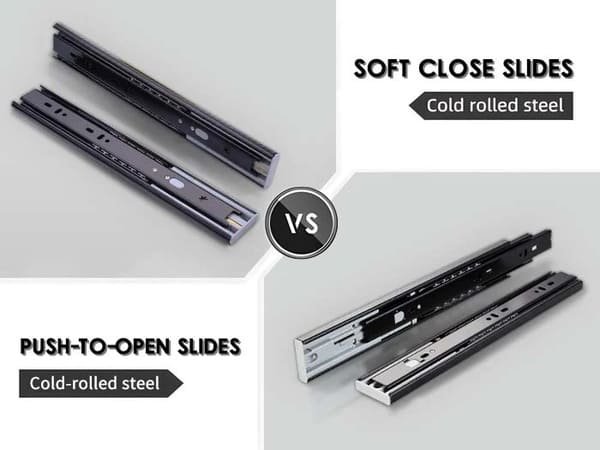
The key difference here is that the opening mechanism isn’t a separate part you mount in the cabinet; it’s built directly into the drawer slides themselves. This makes installation a bit more straightforward, as you are simply installing a set of specialized slides instead of coordinating multiple components. However, this also means you must choose the right type of slide from the start. As a supplier, I often have to clarify this with buyers. You can’t just add a cabinet latch to a standard drawer slide and expect it to work.
Integrated Slides: The All-in-One Solution
The mechanism is similar in principle to a cabinet latch but adapted for linear movement. It’s often mistaken for a soft-close slide, but the function is the opposite.
| Feature | Push-to-Open Slides5 | Soft-Close Slides6 |
|---|---|---|
| Opening Action | User pushes in to activate spring opening. | User pulls out to open manually. |
| Closing Action | User pushes shut until it "clicks." | A damper pulls the drawer gently closed. |
| Main Goal | A handle-less, clean aesthetic. | A quiet, slam-free closure. |
| Core Technology | Spring-loaded release mechanism. | Hydraulic or pneumatic damper. |
Some high-end slides now combine both push-to-open and soft-close features, but for most projects, you’ll choose one or the other based on your design goals.
How does push lock work?
Have you heard the term "push lock" and wondered if it’s the same thing? This is a very common mix-up, and ordering a push lock when you need a push-to-open latch causes problems.
A push lock is a security device, not an opening convenience. You push a central button or cylinder in to engage a lock bolt, securing the door. It is opened with a key or by turning the knob, which makes the button pop back out.
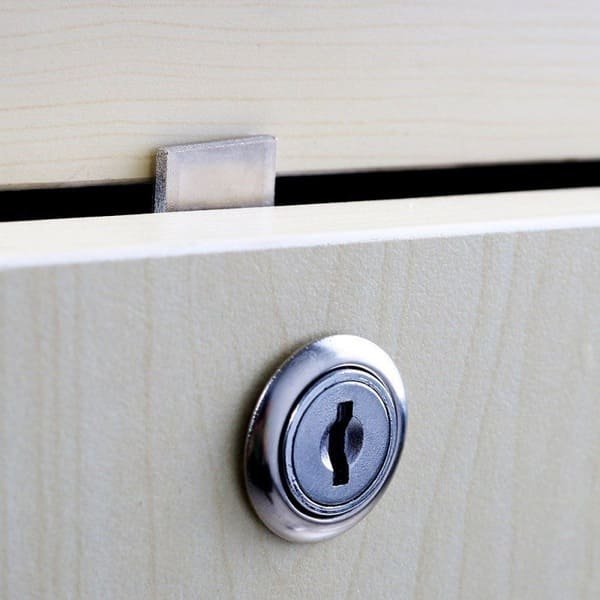
The core function here is completely different. A push-to-open latch is designed to help you open a door. A push lock is designed to keep a door from being opened. I see this confusion often with clients sourcing for RVs, boats, or display cases, where both types of hardware might be considered. While both are operated by a "push," their purposes are opposite. One is for convenience and aesthetics; the other is for security.
Convenience vs. Security: A Clear Distinction
Understanding the goal of the hardware is the easiest way to tell them apart. If the goal is a sleek look, you want a push-to-open latch7. If the goal is to prevent access, you need a push lock8.
| Aspect | Push Lock | Push-to-Open Latch |
|---|---|---|
| Primary Goal | Security (Locking). | Convenience (Hands-free opening). |
| Mechanism | A metal bolt engages to lock the door. | A spring plunger pushes the door open. |
| Typical Use | RVs, boats, mailboxes, retail cases. | Kitchens, media centers, wardrobes. |
| Keyed? | Often, yes. Or requires a specific action. | Never. It’s designed for effortless access. |
In my business, when a customer asks for a "push lock8" for a residential furniture project, I always ask for clarification. Nine times out of ten, they actually need a push-to-open latch7. Making sure we are talking about the same thing saves everyone a lot of trouble.
Conclusion
Push-to-open systems use a simple spring latch for a handle-less look. The hardware for doors and drawers is different, and it is not the same as a push lock for security.
Understanding the role of the spring can enhance your knowledge of mechanical systems and their efficiency. ↩
Exploring the latch mechanism will provide insights into innovative designs and improve your DIY skills. ↩
Understanding the mechanics of a Push-to-Open Latch can enhance your cabinet design and functionality. ↩
Learn about Unsprung Hinges to ensure your cabinet doors operate smoothly and effectively. ↩
Explore the advantages of Push-to-Open Slides to enhance your cabinetry design with a sleek, handle-less look. ↩
Learn about Soft-Close Slides to ensure a quiet and gentle closure for your drawers, improving user experience. ↩
Discover the advantages of push-to-open latches for convenient access in various settings. ↩ ↩
Explore this link to understand the mechanics and applications of push locks for enhanced security. ↩ ↩