
Struggling with a sliding door that clashes with your home’s style? This mismatch can ruin your design. I will guide you to find the perfect, cohesive match for your space.
To match a glass sliding door, first assess your home’s style. Then, select a door with a complementary frame material, color, and glass type that fits your opening. Using matching window treatments like curtains can also create a unified and cohesive look with the rest of the room.
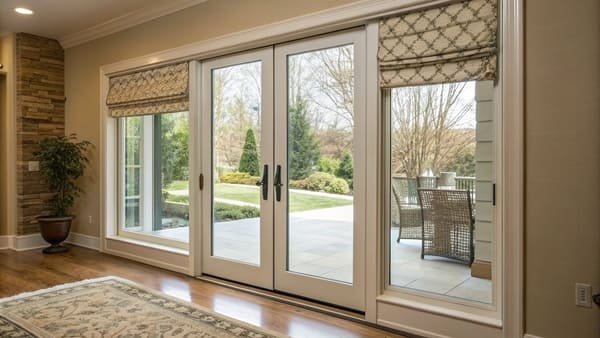
Choosing the right look is a great start. But before you can get to the fun part of design, you need to handle the technical details. You have to know exactly what kind of door you have and what you need to replace it with. Let’s break down the practical steps to identifying your current door so you can find the perfect new match. This is crucial for a smooth project.
How do I identify my sliding door?
Need to replace or repair a sliding door part but don’t know the make or model? Ordering the wrong parts wastes time and money, causing massive delays for your project.
To identify your sliding door, look for a manufacturer’s logo or label, often found on the glass corner, the lock mechanism, or inside the frame. Also, check the hardware like rollers and handles, as these often have unique designs or part numbers stamped on them.
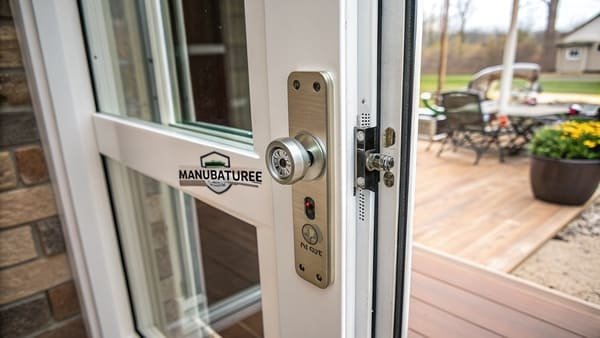
Finding the right parts starts with knowing your door. In my experience as a factory owner, the small details tell the whole story. You need to look in a few key places to figure out what you are working with.
Check Key Locations
First, do a visual sweep of the entire door unit. Look in the corners of the glass panes. Manufacturers often etch a small logo or some identifying information there. Next, inspect the locking hardware. The handle or lock faceplate might have a brand name stamped on it. Finally, slide the door open and check the frame, especially in the top channel or along the side jamb. Sometimes there is a sticker with the manufacturer’s name and model information.
Examine the Hardware
The hardware is a huge clue. As a specialist in sliding door systems1, I always look at the rollers first. You may need to lift the door off the track to get a good look. Different brands use unique roller assemblies2. If you can find a part number stamped on the roller housing or the wheel itself, you can often identify the supplier directly. The handle design is another giveaway. Specific shapes and screw hole patterns are often unique to a particular manufacturer, making them easier to match.
Make a Checklist
When you are inspecting the door, it helps to be systematic. Use a simple checklist to make sure you do not miss anything.
| Component to Check | What to Look For |
|---|---|
| Glass Pane | Etched logo in the corner |
| Door Frame | Sticker in the top or side channel |
| Lock & Handle | Brand name stamped on the hardware |
| Roller Assembly | Part number or unique design |
Where to find the serial number on a sliding glass door?
You are looking for a specific part, and the supplier asks for a serial number you cannot find. Without it, you are stuck, unable to order replacements or get warranty support.
Find the serial number on a sliding glass door by checking for a sticker on the interior frame, usually in the top or bottom channel. It might also be etched into a corner of the glass or printed on a metal plate located on the edge of the door panel.

A serial number is the key to getting exact replacement parts and service. Manufacturers use it to track every door they produce. While they can sometimes be hard to find, they are almost always there if you know where to look. I’ve helped countless customers track these down over the years.
Look on the Frame and Jamb
The most common place for a serial number is on a sticker. Slide the door fully open and carefully inspect all the surfaces of the frame that are normally hidden. Check the head jamb (the top part of the frame) and the side jamb where the lock engages. The sticker might be small, maybe a silver or white label with a barcode and a series of numbers. Sometimes, it is on the edge of the door panel itself, visible only when the door is open.
Inspect the Glass
Some manufacturers, especially for higher-end doors, will include the serial number in the same area as their logo. Look closely at the etched information in one of the bottom corners of the glass. It will be very small text, but it often contains the date of manufacture and a unique serial number for that specific glass unit. This can be very useful if the frame sticker is missing or worn off.
Check the Original Paperwork
For professional buyers and contractors, this is often the fastest method. If you have the original invoice, purchase order, or architectural plans for the project, the serial number for the door unit should be listed there. I always advise my clients to keep good records for this exact reason. It saves a lot of time and prevents ordering errors down the line. It ensures you get the right hardware, like our top-quality rollers, every single time.
Are all sliding glass doors the same size?
Assuming all sliding doors are standard size can be a costly mistake in any project. You order a door, it arrives, and it does not fit the opening. Now you have project delays.
No, all sliding glass doors are not the same size. While there are common standard sizes, such as 60, 72, or 96 inches wide, many are custom-made to fit specific openings. Always measure the rough opening carefully before ordering a replacement to ensure a perfect fit.

One of the biggest lessons in this business is to measure twice and order once. I have seen too many projects get delayed because someone guessed the door size. The reality is that there is a lot of variation, and you must be precise.
Understanding Standard Sizes
There are several "standard" sizes that are very common in new construction. These sizes are made in bulk and are generally more affordable. They are designed to fit common rough opening1 dimensions. Knowing these can help you quickly identify if you are working with a standard or custom unit.
| Standard Width | Standard Height |
|---|---|
| 60 inches (5’0") | 80 inches (6’8") |
| 72 inches (6’0") | 80 inches (6’8") |
| 96 inches (8’0") | 80 inches (6’8") |
| 108 inches (9’0") | 96 inches (8’0") |
The Importance of Rough Opening
The single most important measurement is the "rough opening1." This is the distance between the wall studs, from the floor to the header. The actual door unit will be slightly smaller than this to allow for shimming and insulation. When you order a replacement door, you need to provide the rough opening1 measurements, not the size of the old door. This ensures the new unit will fit perfectly into the wall structure. Always measure the width at the top, middle, and bottom, and use the smallest measurement. Do the same for the height.
When to Go Custom
If your measurements do not match any standard sizes, you likely have a custom door2. This is common in older homes or architect-designed spaces. While custom door2s cost more, they are necessary for a proper fit in a non-standard opening. Trying to force a standard door into a custom space will lead to poor operation, bad seals, and a lot of headaches. In these cases, ordering a custom-sized door is the only professional solution.
How to determine left or right sliding glass door?
Ordering a sliding door with the wrong "handing" is a simple but frustrating error. The door arrives, and it opens the wrong way, disrupting room flow. It is an installation nightmare.
To determine if a sliding glass door is left or right-handed, view it from the outside. If the operable panel (the one that slides) is on the left, it’s a left-hand door (XO). If it’s on the right, it’s a right-hand door (OX).
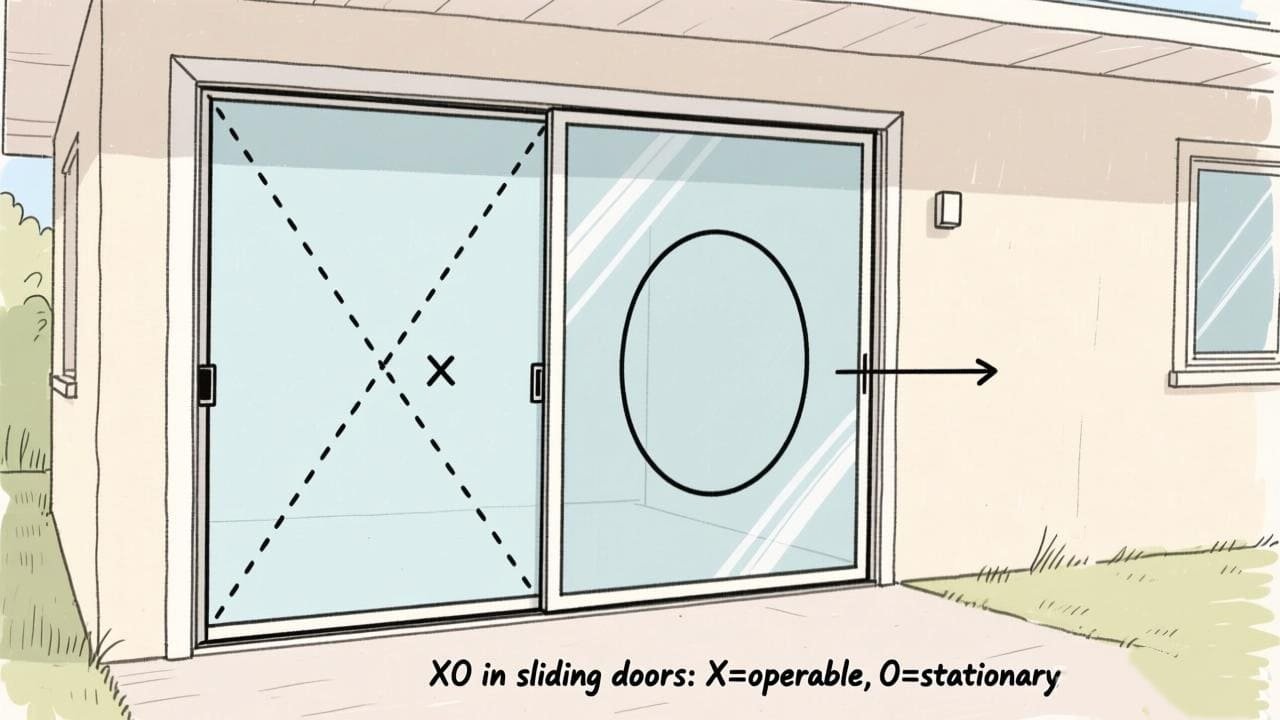
Getting the "handing" right is critical. It dictates how people move through a space and where you can place furniture. It seems like a small detail, but it has a big impact on functionality. I always double-check this with my clients before we start production.
The View from Outside Rule
The industry standard for determining handing is always to view the door from the exterior of the building. Stand outside and face the door. Which panel slides? If the panel on your left is the one that moves, it is a left-hand door. If the panel on your right is the one that moves, it is a right-hand door. This rule is simple and eliminates all confusion. Do not determine handing from the inside, as this can lead to mistakes.
Understanding XO vs. OX Configuration3
In technical drawings and order forms, you will see the letters ‘X’ and ‘O’ used to describe the configuration. This is a very clear way to specify the door you need.
- X stands for the operable, or sliding, panel.
- O stands for the fixed, or stationary, panel.
When viewed from the outside:
- XO Configuration: The left panel slides ("X") and the right panel is fixed ("O"). This is a left-hand door.
- OX Configuration: The left panel is fixed ("O") and the right panel slides ("X"). This is a right-hand door.
Memorizing this simple code will make you communicate like a pro with any supplier.
Why Handing Matters for Your Project4
The direction the door opens affects everything. Think about the flow of traffic from the inside to the outside patio or deck. The opening should direct people naturally without creating a bottleneck. Also, consider furniture placement. If a sofa is against the left wall, you would want a right-hand (OX) door so the sliding panel does not open up behind the furniture. Getting this detail right at the start of a project ensures the final space is not just beautiful, but also functional and easy to live in.
Conclusion
Matching your sliding door involves checking the style, identifying your model, measuring correctly, and choosing the right configuration. These steps ensure a perfect fit and a cohesive design every time.
Understanding rough openings is crucial for ensuring proper door fit and installation, making this resource invaluable. ↩ ↩ ↩ ↩
Exploring custom door options can help you achieve the perfect fit and aesthetic for your unique space. ↩ ↩ ↩
Explore this link to gain a deeper understanding of door configurations, which is crucial for making informed decisions in your projects. ↩
This resource will help you understand the significance of door handing in design, ensuring your space is both functional and aesthetically pleasing. ↩