
Struggling to choose a barn door? A wrong decision wastes space and time on a project. Let me guide you to the perfect fit for your needs and budget.
Your best option depends entirely on your space. A two-way, or double, barn door works great for wide openings with wall space on both sides. However, a one-way single door is much better for smaller doorways or rooms with limited wall space on one side.
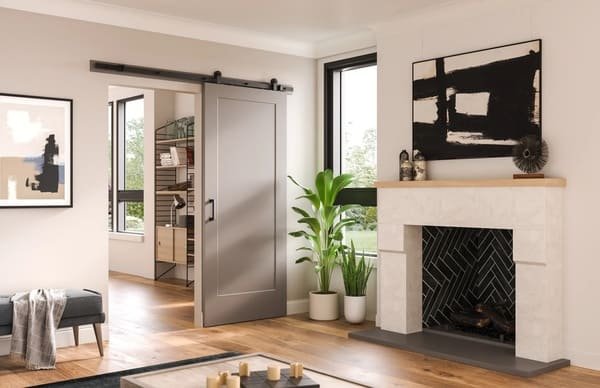
This is one of the first decisions you need to make for any project involving barn doors. It affects the hardware you order, the space you need, and the final look of the room. As a factory supplier, I work with purchasers like you every day, and I know getting this detail right from the start saves a lot of headaches. Let’s look at the specifics so you can make a smart buy for your business or your clients.
What is the difference between single and double bypass barn doors?
Confused by "single" versus "double bypass"? Ordering the wrong hardware kit is a costly and time-consuming mistake. Let’s clear it up so you get the right system every time.
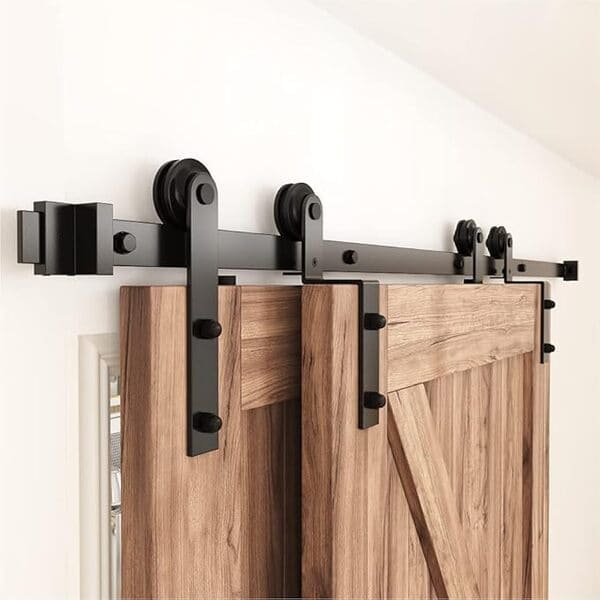
Single bypass systems let two doors stack over each other on one side using special brackets and a double track. Double bypass systems also have two doors on a longer double track, but they open from the middle, with each door sliding to an opposite side of the opening.
Dive Deeper
Understanding the mechanical and spatial differences is critical for procurement. A wrong order can halt a project. From my experience manufacturing these systems, the key is in the track hardware and how it guides the doors.
A single bypass system1 is designed for efficiency in limited spaces. Imagine an opening where you only have wall space on one side. The hardware uses special hangers and a dual-rail track that allows one door to slide in front of the other, stacking them neatly on one side of the doorway. This is perfect for closets or pantries where you can’t have doors sliding to both sides.
A double bypass system2 is for grander openings. It allows two doors to cover one large opening, parting in the middle like a curtain. Each door slides on its own track to its respective side. This requires clear wall space on both sides of the opening, each at least as wide as one of the doors.
Here’s a quick breakdown for purchasing:
| Feature | Single Bypass System | Double Bypass System |
|---|---|---|
| Doors | 2 | 2 |
| Tracks | 2 tracks, stacked with bypass brackets | 2 parallel tracks on a long rail |
| Opening Action | Both doors slide to one side | Doors part in the middle to opposite sides |
| Wall Space | Required on only one side | Required on both sides |
| Best For | Closets, pantries, limited-space rooms | Large room dividers, wide entries |
When sourcing, you need to specify not just the system type but also the total track length and the number of door hanger kits required.
Which direction should a barn door face?
You have a beautiful, stylish barn door. But which room gets to see the best view? Installing it backwards can completely spoil the look of your main living space. Here’s a simple rule to follow.
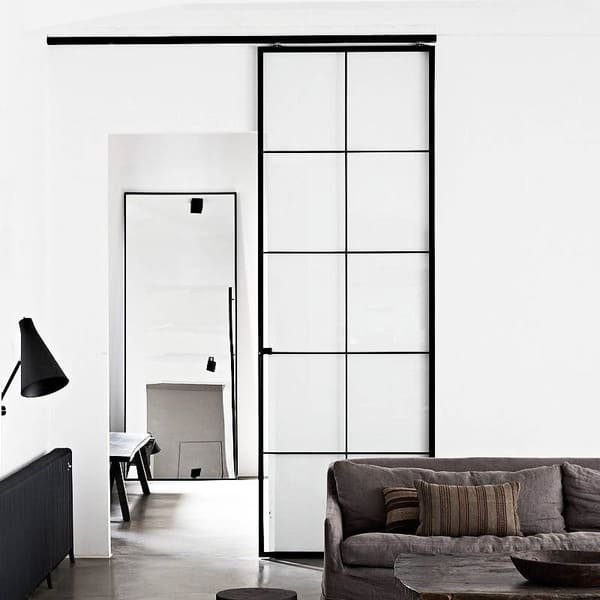
The decorative or "finished" side of the barn door should always face the main living space or the area where it will be seen most often. Think about which room you want to show off the door’s design in. That’s the direction it should face.
Dive Deeper
This question is all about visual impact and a little bit of interior design theory. The decision determines the daily experience of the space for your client.
The General Rule
The "face" of the door, which typically has the cross-braces, patterns, or finest finish, should be visible from the more public or frequently used room. If a barn door3 separates a master bedroom from an ensuite bathroom, the decorative face4 should be in the bedroom. If it separates a living room from a home office, the face belongs in the living room. It’s the showpiece, so you want it where people will appreciate it most.
Specific Room Examples
- Bedroom to Hallway: The face should be in the hallway. Guests walking by will see the feature, making the hallway more interesting. The "back" of the door, which is often plainer, is less critical inside a private bedroom.
- Living Room to Kitchen: This depends. Which room is more formal or has a more cohesive design theme? Usually, the living room wins, so the door’s decorative side faces out into that space.
Considering Both Sides
The "back" of a standard barn door3 is often flat and less detailed. For high-end projects, this can be a problem. As a manufacturer, this is something we solve by offering doors that are finished on both sides or by providing hardware that looks good from either direction. This is a key feature to ask about when you are sourcing products. Providing a door that looks great from all angles is an excellent upsell and a sign of quality.
What are the disadvantages of barn style doors?
Love the look of barn doors? They are very popular for their style. But they have real disadvantages that can cause problems later. Let me share the potential issues you should know about.
The biggest drawbacks are poor privacy and sound control because they don’t create a seal. Barn doors also need a lot of clear wall space to slide open. Plus, their weight requires strong wall support for the track system, which can complicate installation.

Dive Deeper
Barn doors are a fantastic aesthetic choice, but for a purchasing professional, knowing the practical downsides is essential to guide your clients and select the right supporting accessories.
Lack of Privacy and Sealing5
This is the most common complaint I hear. Unlike a traditional swing door that fits snugly into a frame, a barn door hangs in front of an opening, leaving a gap of about a half-inch or more all around. This means:
- Sound travels easily. It’s a poor choice for offices where phone calls need to be private, or for bedrooms of light sleepers.
- Light and odors can pass through. This makes them less than ideal for bathrooms or kitchens where you want to contain smells.
- Solution: To help with this, we manufacture and supply accessories like brush strips and rubber seals that can be fitted to the door or frame to close some of the gap. This is a crucial add-on for many projects.
Wall Space Requirement
A barn door doesn’t disappear. To open fully, it needs an adjacent, clear section of wall that is at least as wide as the door itself. This means no light switches, outlets, or artwork in that space. In a double door setup, this requirement doubles. Always measure first.
Installation and Structural Support6
Barn doors, especially solid wood ones, are heavy. The track system must be mounted securely.
- Wall Reinforcement: You cannot mount the track directly to drywall. It needs to be screwed into solid wood blocking or studs within the wall.
- Header Board: A common practice is to first mount a solid wood header board to the wall studs, and then mount the track to the header board. This distributes the weight effectively.
As a hardware supplier, our kits come with heavy-duty fasteners, but we always tell contractors to verify the wall’s integrity first. High-quality rollers, like the ones from our factory, make even heavy doors slide smoothly, reducing daily strain.
Can you open a barn door from both sides?
A barn door looks great from the outside. But what about opening it from the inside? Getting stuck in a room is a real problem. Here’s a simple solution.
Yes, but you must install handles on both sides. Typically, you use a standard pull handle on the main side. On the back, you need a flush-pull handle. This recessed handle lets the door slide completely open without hitting the door frame.

Dive Deeper
Functionality is just as important as aesthetics. A door that can’t be opened from one side is a failure in design. As a hardware manufacturer, we produce a variety of handle solutions to ensure this never happens. The key is selecting the right type of handle for each side of the door.
The Right Hardware for Each Side
You need two different types of handles for a typical installation.
Exterior Handle (Pull Handle)7: This is the decorative handle mounted on the "face" of the door. It can be a large bar, a classic pull, or any design that matches the door’s style. Since it’s on the outside face, it doesn’t interfere with the door’s movement.
Interior Handle (Flush Pull)8: This is the critical component for two-sided use. It’s a recessed handle that is mortised into the door, so it sits "flush" with the surface. Why is this necessary? Because the back of the door needs to slide very close to the wall or door trim. A protruding handle would hit the frame and prevent the door from opening all the way.
Here’s a quick guide to handle types:
| Handle Type | Description | Main Function |
|---|---|---|
| Pull Handle | Protrudes from the door surface. | For pulling the door from the decorative side. |
| Flush Pull | Recessed into the door surface. | For pulling from the back without hitting the frame. |
| Door Edge Pull | A small, pop-out pull installed on the edge of the door. | Useful for pulling a door out of a wall pocket or from a fully open position. |
When ordering hardware, be sure to specify a full set that includes both a pull handle and a flush pull to create a fully functional door.
Conclusion
Choosing between one-way and two-way doors depends on space. Remember the trade-offs in privacy and always install the right handles for easy use from both sides.
Explore this link to understand the efficiency and design of single bypass systems, ideal for limited spaces. ↩
Learn about double bypass systems, perfect for grand openings, and how they function effectively in larger spaces. ↩
Explore this link to understand how barn doors can enhance your space’s aesthetics and functionality. ↩ ↩
This resource will guide you in selecting the perfect decorative face to elevate your interior design. ↩
Understanding the privacy issues with barn doors can help you make informed decisions for your space. ↩
Learn the best practices for installing barn doors to ensure safety and functionality in your home. ↩
Explore this link to understand how exterior handles enhance door functionality and aesthetics. ↩
Discover why flush pulls are essential for seamless door operation and design integrity. ↩