
Struggling to find door hardware that fits your project’s style and budget? A bad choice can ruin a design, but the perfect handle elevates the entire space.
A door handle is much more than a way to open a door. It is a critical design element that communicates quality and sets the tone for a space. Choosing the right handle involves balancing aesthetics, functionality, material durability, and cost to enhance your project’s final appeal.
I’ve been in the hardware business for years. I’ve seen how a small detail like a door handle can make or break the impression of a multi-million dollar construction project. It’s a small part, but it’s the part people touch every single day. Getting it right is crucial, but it’s not as complicated as it seems. Let’s break it down together.
What Does a Door Handle Say About a Building?
Think a handle is just for opening a door? This small part actually sends a big message about a building’s quality and the attention to detail behind the design.
People often call the door handle "the handshake of the building." It’s the first physical point of contact someone has with a space. A solid, well-designed handle implies quality and care throughout, while a flimsy one can suggest the opposite, regardless of the building’s other features.

In all my years as a manufacturer, I’ve seen this play out time and again. A developer of luxury apartments once told me they allocate a significant part of their budget to hardware for this very reason. When potential buyers tour a unit, they interact with handles on the main door, interior doors, and cabinets. A heavy, smooth-operating handle feels premium. It creates a subconscious sense of value and quality before they even look at the countertops or flooring. On the other hand, I had a client, a contractor for a budget hotel chain, who learned this lesson the hard way. They initially saved money with cheap handles, but after a year of complaints about loose, rattling, and broken hardware, the cost of replacements and negative reviews far outweighed their initial savings. The handle tells a story about durability and the owner’s commitment to the user experience.
How Do You Describe a Door Handle Technically?
Are you struggling to communicate your exact handle requirements to a supplier? Misunderstandings can lead to ordering the wrong product, causing costly delays for your project.
To describe a door handle technically, specify its type (lever or knob), mounting (rose or backplate), function (passage, privacy, or keyed entry), and material. Including details like finish, backset, and handing ensures you get the precise product for your needs.
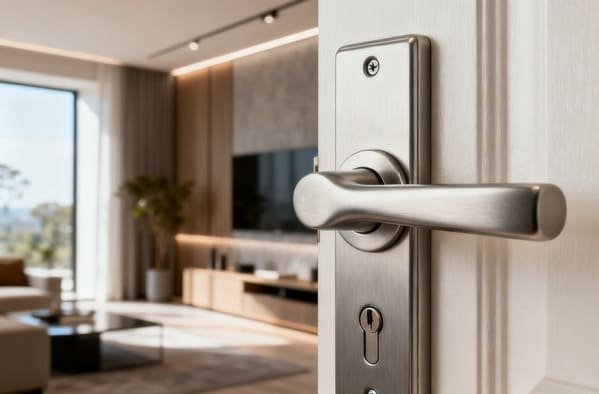
When a purchasing manager like Jacky from Canada sends me an inquiry, the more detail, the better. A simple request for "modern door handles" isn’t enough. A good technical description helps me provide an accurate quote and the right product. It avoids guesswork. For example, instead of just "stainless steel handle," a proper description would be "Lever handle on a round rose, privacy function, for a 45mm door thickness, in a brushed PVD stainless steel finish." This tells me everything I need to know.
To help you, here’s a breakdown of common materials we use. Understanding them is key to making a cost-effective choice.
Key Material Properties
| Material | Pros | Cons | Best For |
|---|---|---|---|
| Stainless Steel | Excellent corrosion resistance1, durable. | Higher initial cost. | High-traffic areas, coastal or humid regions |
| Zinc Alloy | Very cost-effective2, easy to cast complex shapes. | Less durable than steel or brass. | Residential interiors, mid-range projects |
| Brass | Strong, antimicrobial, classic look. | Expensive, can tarnish if unlacquered. | High-end projects, traditional designs |
| Aluminum | Lightweight, modern look, recyclable. | Prone to scratching and denting. | Modern interiors, light-duty applications |
Choosing the right material from the start prevents issues with durability and client satisfaction down the line.
How Do You Specify a Door Handle in Your Project?
Do you find project hardware orders are sometimes incorrect upon arrival? Incomplete specifications often lead suppliers to make assumptions, resulting in the wrong parts being delivered.
To specify a door handle correctly, create a detailed schedule or list. For each door, you must include the handle’s type, function, material, finish, and all relevant measurements like door thickness and backset. This eliminates ambiguity and ensures order accuracy.

I work with buyers from furniture factories and construction contractors all the time. The most successful ones provide a clear "hardware schedule." This is basically a spreadsheet that lists every door and the exact hardware it needs. It removes all the guesswork for me as the supplier and acts as a final checklist for them. A simple mistake, like forgetting to specify "handing" (whether a handle is for a left-hand or right-hand door), can make a set of levers useless. A clear specification sheet is your best tool against costly ordering errors and project delays. For buyers who want to put their own brand on the product (ODM), this detailed schedule is even more critical. It becomes part of the manufacturing blueprint.
Essential Specification Checklist
Here is what your specification sheet should include for each handle:
- Door ID: A unique number or location (e.g., "Office 1," "Unit 203 – Bedroom").
- Handle Type3: Lever or Knob.
- Mounting: Round Rose, Square Rose, or Backplate.
- Function: Passage (no lock), Privacy (thumb-turn lock), or Keyed Entry.
- Material4: e.g., Grade 304 Stainless Steel, Zinc Alloy.
- Finish: e.g., Brushed Nickel, Matte Black, Polished Chrome, PVD Gold.
- Door Thickness: The measurement in mm or inches.
- Backset: The distance from the door edge to the center of the lock.
- Handing: Left-Hand (LH), Right-Hand (RH), or Universal.
How Do You Find the Correct Door Handle?
Overwhelmed by thousands of handle options? Choosing the wrong one can mean compromising on style, durability, or budget, but a methodical approach makes it simple.
To find the correct handle, first define your project’s needs: function and style. Then, select a material and finish that suits the environment and budget. Finally, source from a reliable supplier who can provide quality products and support your requirements.
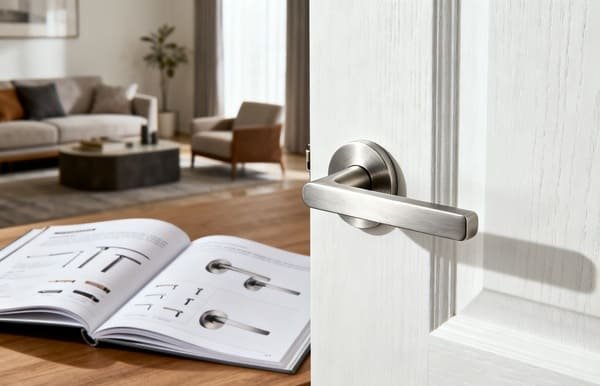
Finding the perfect door handle is a four-step process. First, assess the door’s function. Is it a public restroom needing a heavy-duty passage set, or a bedroom needing a simple privacy lever? Second, match the handle to your interior design. A modern, minimalist apartment needs a sleek, simple handle, not an ornate brass one. Third, consider the environment. A project near the ocean needs marine-grade stainless steel to prevent rust, while a standard zinc alloy might be perfect for a dry, inland climate. This is where you balance performance and cost. Finally, find a good partner. As a factory owner, I believe a good supplier doesn’t just sell you a product. They should be able to answer your technical questions, offer customization like your LOGO, and deliver consistent quality on time. By following these steps, you systematically narrow down the options to find the perfect fit for both your design and your bottom line.
Conclusion
Choosing the right door handle is not just a small detail. By focusing on function, style, and material, you ensure this key touchpoint adds value and quality to your project.
Understanding corrosion resistance can help you choose materials that last longer and perform better in various environments. ↩
Exploring cost-effective materials can lead to significant savings and better project budgeting. ↩
Explore this link to understand the various handle types and their applications for better selection. ↩
Discover the benefits of different materials used in door handles to make an informed choice. ↩