
Choosing the right door for a project can be confusing. Making the wrong choice impacts space, function, and budget, but understanding their core differences will simplify your decision.
The primary difference is their mechanism and how they open. Sliding doors use tracks and rollers to glide sideways along a wall. Flat doors, also known as hinged doors, use hinges to swing open into or out of a room, requiring clear floor space to operate.
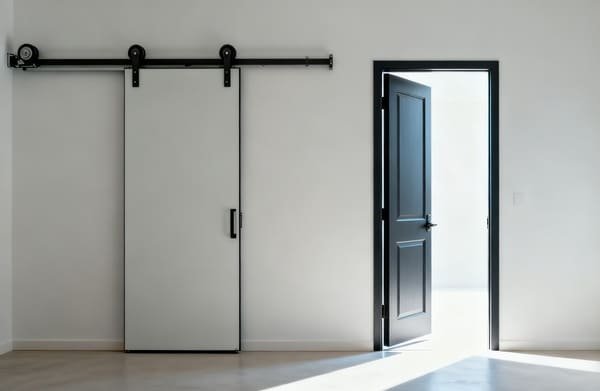
Understanding this basic mechanical difference is the first step. But as a purchasing manager or contractor, you know the details are what really matter. The choice impacts everything from the hardware you need to source to the final usability of the space for your customer. Let’s break down the specific differences, advantages, and disadvantages so you can make the most informed purchasing decisions for your projects.
What is the difference between a sliding door and a regular door?
It’s easy to see they move differently, but what does that mean for your project? Choosing based on looks alone can lead to functional headaches and costly changes later on.
A regular hinged door swings into a room, demanding clear floor space for its arc. A sliding door glides parallel to the wall, saving that floor space. This affects room layout, accessibility, and the specific hardware, like rollers or hinges, required for a successful installation.
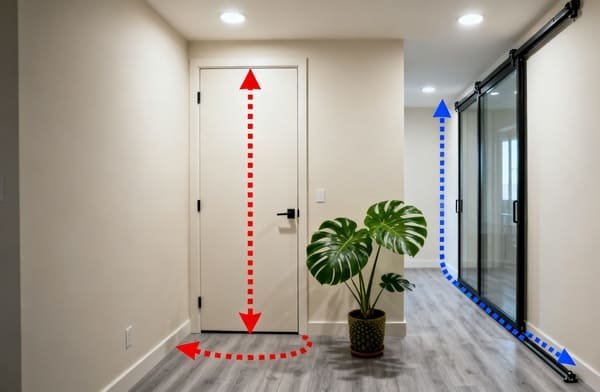
As a hardware manufacturer, I see clients weigh these differences every day. The choice goes deeper than just movement; it defines the very structure and components needed for the door system. Let’s look closer at the core distinctions that will impact your inventory and installation plans.
Mechanism and Hardware
A regular, or flat, door is a simple system. It relies on a set of hinges attached to the door frame and the door itself. The quality and number of hinges determine how much weight it can support. It’s a time-tested design.
A sliding door system is more complex. It requires a track, which can be top-hung, bottom-rolling, or both. High-quality rollers, like our Partition Room Sliding Door Rollers System1 or heavy lifting wheels, are essential for a smooth, quiet glide. You also need guides to keep the door stable. This means more components to source, but it also offers more opportunities for customization, like adding a soft-close mechanism2 for a premium feel.
Space Requirement
This is the most significant practical difference. A hinged door needs "swing space," an empty area equal to the door’s width. In a tight hallway or small room, this can be a major problem, blocking furniture or walkways.
A sliding door needs "stacking space"—a clear section of wall for the door to slide over. It saves valuable floor space, making it a brilliant solution for compact areas. This is why our Wardrobe Sliding Wheels System is so popular for modern closets and small bedrooms where every square inch matters.
What is the disadvantage of a sliding door?
Sliding doors seem like the perfect modern, space-saving solution for any project. But they have specific drawbacks that can cause serious issues for the end-user if not considered.
The main disadvantages are often related to imperfect sealing and limited access width. They typically don’t seal as tightly as hinged doors, affecting sound and temperature insulation. Also, with standard setups, you can only ever open one side at a time, restricting the passageway.

These aren’t deal-breakers, but they are critical factors a professional like you needs to communicate to clients. Understanding these limitations helps you guide them to the right application and select the right accessories to mitigate the issues.
Sealing and Insulation
A hinged door presses firmly into the door frame, creating a relatively tight seal. This is great for blocking noise, drafts, and light. A sliding door, by design, hangs or rolls with a small gap between the door and the wall/frame. This means less privacy from sound and potential energy loss. For applications where this is a concern, we recommend using high-quality brush strips3 and glass door rubber seals to help close that gap, but it’s an inherent trait of the design.
Maintenance and Cleaning
The tracks, especially bottom tracks, are magnets for dust, hair, and debris. If not cleaned regularly, this buildup can obstruct the rollers, making the door difficult to open or even causing it to jam. While using top-quality, durable hardware like ours at opensliding minimizes wear and tear, the need for cleaning the track remains a long-term maintenance point for the property owner.
Limited Access
With a standard two-panel bypass sliding door, the maximum opening you can achieve is less than 50% of the total width. This can be a major hassle when trying to move large furniture or equipment through the opening. For wider access, you might consider a pocket door (which slides into the wall) or a more complex linkage door system4, but for a basic setup, the limited opening is a key disadvantage compared to the full access of a swing door.
Which is better sliding door or open door?
You need to make a final decision for a client: a sliding door or a regular hinged door. The "better" choice isn’t universal; it depends entirely on the specific project’s priorities.
Neither is universally "better." Sliding doors are superior for saving floor space in tight areas like closets and small bathrooms. Hinged (open) doors are better for security, sound insulation, and providing a complete, unobstructed opening, making them ideal for bedrooms and main entrances.
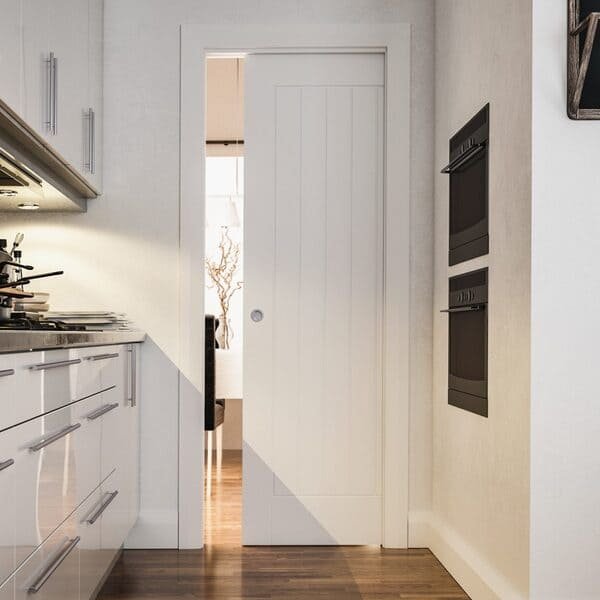
The right answer lies in analyzing the function of the room. As a supplier, my job is to provide the best hardware for whichever choice you make. But to help you decide, here’s a breakdown of when to choose one over the other.
| Feature | Sliding Door | Hinged Door |
|---|---|---|
| Space Efficiency | Excellent (Saves floor space) | Poor (Requires swing space) |
| Sealing & Insulation | Fair (Gaps are common) | Excellent (Tighter seal) |
| Access Width | Limited (~50% of opening) | Excellent (Full opening) |
| Hardware Complexity | Medium (Tracks, rollers, guides) | Low (Hinges, handle) |
| Best For | Closets, pantries, small rooms | Bedrooms, entrances, bathrooms |
When to Choose a Sliding Door
Opt for a sliding door when floor space is the number one priority. They are the perfect solution for:
- Wardrobes: Using a quality Wardrobe Sliding Wheels System5 creates a sleek, modern look that doesn’t eat into the bedroom space.
- Room Dividers: Our Partition Room Sliding Door Rollers System6 allows for flexible open-plan living.
- Pantries & Small Bathrooms: Where a swinging door would just get in the way.
When to Choose a Hinged Door
Choose a hinged door when sealing, security, and full access are critical. They are the go-to standard for:
- Bedrooms & Main Entrances: Where privacy, soundproofing, and security are non-negotiable.
- Offices: To ensure conversations remain private.
- Any room where you anticipate needing to move large items in and out frequently.
What are the disadvantages of a sliding door wardrobe?
A sliding door wardrobe looks sleek, modern, and is a fantastic space-saver. But some hidden drawbacks in their design can make daily use frustrating if not planned for correctly.
The primary disadvantages are limited visual access and challenges with the bottom track. You can never see the entire wardrobe contents at once, as one door always covers a section. The bottom track also inevitably collects dust and debris, making cleaning a chore.
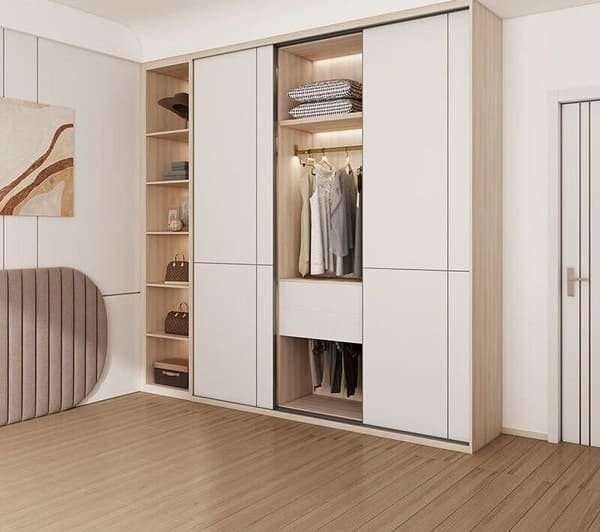
As a furniture factory purchaser or contractor, these are the details your customers will notice after installation. Addressing them upfront by choosing the right hardware and design layout is key to a successful project.
Obstructed View and Access
This is the biggest functional complaint. With a two-door system, the middle section of the wardrobe is always partially obscured where the doors overlap. This makes it impossible to open central drawers fully or get a clear view of everything at a glance. It forces a specific organizational style and can be a daily annoyance for users. A three-door system can help, but the fundamental problem of one panel blocking another remains.
Bottom Track Challenges
While top-hung systems are an option, most wardrobe doors use a bottom track for stability. This track becomes a trough for dust, lint from clothes, and lost small items like earrings. This buildup can jam the rollers, leading to a gritty, difficult sliding motion. It requires regular vacuuming. This is why investing in a high-quality, smoothly engineered Wardrobe Sliding Wheels System7 is so critical—it can’t prevent dust, but it can resist jamming and wear far better than cheap alternatives.
Potential for Derailment
Lower-quality systems are prone to the doors jumping off the track, especially if they are pushed too hard or if the track is obstructed. This is not only annoying but can be a safety concern, particularly with heavy doors. Sourcing from a reliable factory like opensliding8 ensures you get robust rollers and tracks designed to stay aligned and operate smoothly for years, preventing these frustrating callbacks.
Conclusion
Ultimately, choosing between sliding and flat doors depends on project priorities. Consider space, access, and insulation needs to select the best door and hardware for a successful, functional result.
Explore this link to discover how this system enhances door functionality and aesthetics. ↩
Learn about the advantages of soft-close mechanisms for a quieter and smoother door operation. ↩
Explore this link to understand how brush strips can enhance insulation and reduce energy loss in sliding doors. ↩
Discover the advantages of linkage door systems for maximizing space and ease of access in your home. ↩
Explore this link to discover top-rated wardrobe sliding wheel systems that maximize space and enhance your bedroom’s aesthetics. ↩
Check out this resource to learn how partition room sliding door rollers can transform your living space into a flexible and stylish area. ↩
Explore this link to discover top-rated wardrobe sliding wheel systems that maximize space and enhance your bedroom’s aesthetics. ↩
Learn about opensliding’s reliable products that ensure smooth operation and prevent derailment in wardrobe doors. ↩