
Struggling to trust the load capacity numbers from suppliers? A failed roller on a heavy glass door is a disaster waiting to happen. Understanding testing standards is the key to buying with confidence.
To verify load-bearing capacity, you must request test reports based on recognized standards like Europe’s EN 1527 or China’s QB/T 2189. A reliable supplier will provide reports for both static (maximum weight) and dynamic (durability) tests from a certified third-party lab.
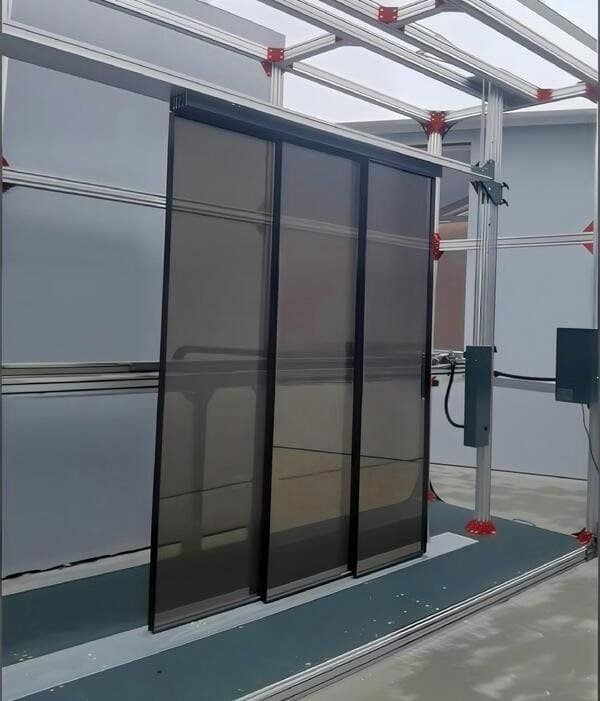
I’ve been in this business for years, and I know that a product is only as good as the proof behind its claims. Just reading a number in a catalog isn’t enough, especially when safety and your reputation are on the line. You need to know exactly what to ask a supplier and how to read the documents they send you. Let’s break down the essential questions you need to ask to ensure you’re getting a product that performs as promised.
How can I confirm real load-bearing capacity vs. advertised values?
You see a great price on a roller system, but the load capacity seems too good to be true. Trusting that number could lead to project failures. There are direct ways to verify a supplier’s claims.
Always request third-party test reports for the specific product model you are buying. Cross-reference the model number on the report with the product. Also, ask for videos of their in-house batch testing for extra proof.
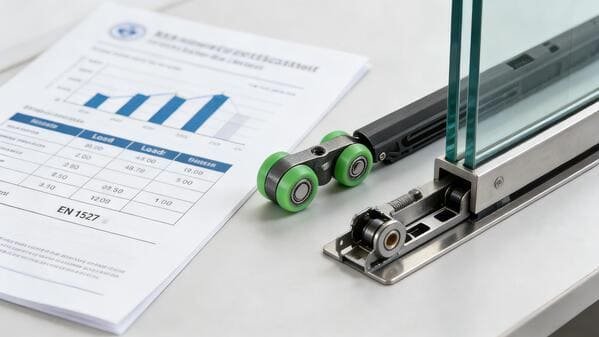
The gap between a catalog number and real-world performance can be huge. As An Industry Professionals In Sliding Door Pulleys System, I see this all the time. Here’s how you can cut through the marketing and get to the truth.
The Role of Test Reports
A test report from a reputable lab like SGS, TÜV, or Intertek is your best piece of evidence. When I provide a report to a client like you, I make sure it clearly shows the product model number, the standard it was tested against (e.g., EN 1527), and the date of the test. An old report for a different product is a red flag. The report is your independent proof that the product can handle the specified weight.
In-House vs. Third-Party Testing
We do a lot of in-house testing at my factory. It’s essential for quality control on every batch. However, for your peace of mind, a third-party report is non-negotiable. It provides an unbiased, professional assessment. I always recommend asking for both. An in-house test video shows the supplier’s commitment to quality control, while the third-party report proves it meets international standards.
Here’s a quick breakdown:
| Verification Method | Why It’s Important | What to Watch For |
|---|---|---|
| Third-Party Report1 | Unbiased proof of performance. | Check if the model and date are current. |
| In-House Test Video | Shows ongoing quality control. | Ensure it’s for the product you’re buying. |
| Physical Sample | Allows for your own testing. | Can be costly and time-consuming. |
Should I ask for static and dynamic load test reports?
You know you need test reports, but you aren’t sure which ones to ask for. Getting the wrong report won’t reveal the weaknesses that cause failures over time. You need to ask for the right tests.
Yes, you must ask for both. A static load test confirms the system can hold a heavy, stationary glass panel without failing. A dynamic load test proves the rollers can withstand repeated opening and closing.

A roller system doesn’t just hold a door; it has to move it, thousands of times. That’s why looking at just one type of test only gives you half the picture. Both static and dynamic strength are critical for a safe and long-lasting installation.
What is a Static Load Test?
Think of a static load test as a simple strength check. We take the roller system and apply a weight much heavier than its rated capacity—often 1.5 to 2 times heavier. The system must hold this weight for a set period without any bending, cracking, or permanent damage. This test answers a crucial question: Can the hardware support the full weight of your heavy glass door when it is standing still? It’s a fundamental safety check.
What is a Dynamic Load Test?
The dynamic test is where we check for durability. This test simulates real-world use. The system is installed with a door of its maximum rated weight and is then opened and closed continuously by a machine. A common standard like EN 1527 requires 100,000 cycles. This test reveals wear and tear on the roller bearings, the track, and other moving parts. It tells you if the product will last for years or fail after a few months.
Can suppliers simulate long-term load resistance testing?
You worry that standard tests don’t truly reflect years of use in different conditions. Environmental factors can cause failures over time. So, you wonder if suppliers can prove long-term durability.
Yes, this is done through durability cycle tests and salt spray tests. A durability test runs the system for 50,000 to 100,000 cycles to simulate years of use. A salt spray test checks for corrosion resistance.

A product that works perfectly on day one might fail after two years of humid coastal air or constant use. That’s why we go beyond basic load tests. As a manufacturer, it’s my job to prove that our hardware is built to last, not just to pass a simple test.
Durability Cycle Testing2
This is the dynamic load test I mentioned earlier, but it’s worth looking at from a long-term perspective. Running a system for 100,000 cycles is like opening and closing a door ten times a day for over 27 years. This is how we simulate long-term mechanical wear. When a client like you asks about long-term resistance, I show them the report from this test. It proves the bearings won’t seize and the wheels won’t degrade after years of service.
Environmental Resistance: The Salt Spray Test3
For hardware, corrosion is a major enemy. This is especially true for projects in coastal areas or humid climates. The salt spray test is how we simulate long-term exposure to corrosive elements. We place the hardware components in a sealed chamber and expose them to a continuous, dense saltwater mist for a set number of hours (e.g., 48, 72, or 96 hours). Afterward, we check for any signs of rust or degradation. This test is critical for proving the quality of the finish, whether it’s stainless steel, anodized aluminum, or powder coating.
How do I evaluate the safety margin for my project?
You’ve got the test reports, but how do you apply them to your specific project? Choosing a roller rated for exactly your door’s weight feels risky. You need a buffer for unexpected stress and long-term safety.
Always choose a roller system with a load capacity at least 25-50% higher than the actual weight of your glass door. This creates a safety margin that accounts for usage stress, minor installation imperfections, and long-term wear.

In my experience, the safety margin is the most important calculation you will make. It’s the difference between a project that lasts for decades and one that fails prematurely. Never push a product to its absolute limit.
Why is a Safety Margin4 Crucial?
A door’s weight is not the only force acting on the rollers. When someone opens or closes a door forcefully, it creates dynamic stress that briefly exceeds the door’s static weight. If your hardware is rated exactly for the door’s weight, this repeated stress can lead to failure. A safety margin absorbs these shocks. Furthermore, no installation is perfect. A track that is not perfectly level can put uneven stress on the rollers. The safety margin helps compensate for these real-world variables, ensuring smooth and reliable operation over the product’s entire lifespan.
A Simple Calculation
Here is how I advise my customers to calculate it.
- Determine Your Door’s Weight: Get the exact weight of the glass panel and any attached frames or handles. Let’s say it’s 80 kg.
- Add the Safety Factor: I recommend a minimum safety factor of 1.5.
- Calculate Required Capacity5: Multiply the door’s weight by the safety factor.
In our example: 80 kg * 1.5 = 120 kg.
You should therefore source a roller system with a certified load capacity of at least 120 kg. This simple step gives you, and your client, complete peace of mind.
Conclusion
To buy glass sliding door rollers safely, verify advertised claims with third-party test reports for both static and dynamic loads. Always calculate a safety margin of at least 25-50% for your project.
Understanding Third-Party Reports is crucial for ensuring product safety and compliance with international standards. ↩
Understanding Durability Cycle Testing can help you appreciate how products withstand long-term use, ensuring reliability. ↩
Exploring the Salt Spray Test will provide insights into how hardware is protected against corrosion, crucial for longevity. ↩
Understanding the importance of safety margins can enhance your engineering knowledge and improve project outcomes. ↩
Learning how to calculate required capacity ensures you choose the right hardware, preventing future failures and ensuring safety. ↩