
Struggling with clunky, space-wasting doors? They can make your home feel dark and cramped. Internal sliding doors are a sleek, modern solution that creates an open, light-filled environment.
Internal sliding doors offer five main benefits: they create open and flexible spaces, maximize the flow of natural light, save valuable floor space, offer great versatility, and come in many styles. They are an excellent way to add modern functionality and a feeling of luxury to any home.
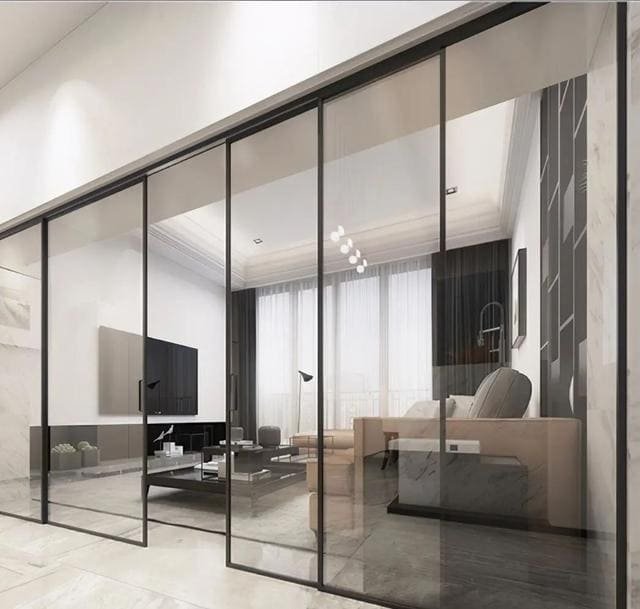
These advantages sound great on paper, but how do they actually impact a living space? As someone who manufactures the hardware systems that make these doors work, I’ve seen firsthand how they can completely transform a project. You see, the magic isn’t just in the door panel itself, but in the quality of the sliding mechanism that allows it to glide effortlessly and reliably for years. Let’s explore each benefit in more detail so you can see why so many contractors and designers are choosing them for their projects.
How Do Sliding Doors Create an Open Space?
Do separate rooms in a project feel small and disconnected? This can make an entire property feel less cohesive and smaller than it is. Sliding doors can instantly merge two rooms.
By removing the swing space of a traditional hinged door, sliding doors allow you to completely open the boundary between two areas. This creates a seamless flow, turning a separate kitchen and dining room into one large, open-plan area perfect for modern family life and entertaining.
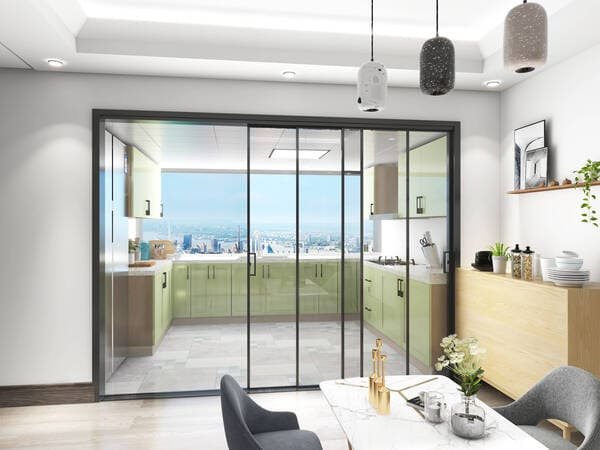
This concept of "flow" is something my customers, like door factory purchasing managers, always talk about. A traditional door, even when open, still acts as a visual and physical barrier. It juts out into the room. A sliding door, especially a pocket door that disappears into the wall, removes that barrier entirely. The result is a single, expansive space. This is a game-changer for creating flexible layouts. For example, you can have a home office that’s open to the living area during the day but can be closed off for privacy when needed. This adaptability is key in modern design. The quality of the track system is vital here; a smooth, silent glide is what makes the transition feel truly luxurious and effortless.
| Feature | Sliding Door | Traditional Door |
|---|---|---|
| Space Division | Flexible, can be fully opened | Rigid, always a partial barrier |
| Footprint | Slides along the wall | Swings into the room |
| Feeling | Creates a large, unified area | Creates distinct, separate rooms |
Do Sliding Doors Maximize Natural Lighting?
Are interior rooms without windows feeling dark and unwelcoming? This reliance on artificial light can make a space feel dreary and increase energy costs. Glass sliding doors solve this problem.
Yes, glass sliding doors are one of the most effective ways to maximize natural light. They act like large internal windows, letting sunlight from exterior-facing rooms travel deep into the core of a building. This brightens up hallways, en-suite bathrooms, or offices that lack their own windows.
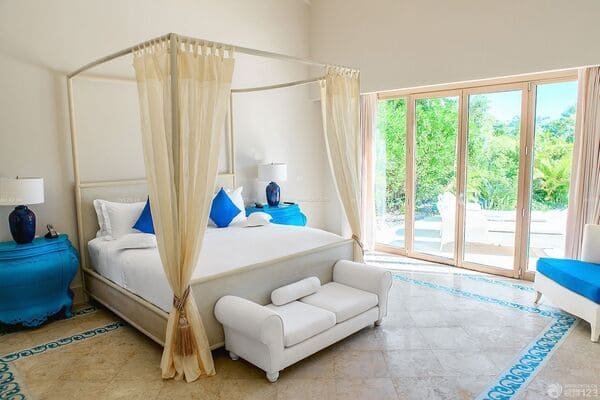
In modern design, light is often considered a luxury. By using glass sliding doors, you can "borrow" light from one room to brighten another. This is something I discuss frequently with contractors. They might use a large frosted glass sliding door for a master bathroom entrance. This solution provides complete privacy but allows the light from the bedroom’s windows to illuminate the bathroom, making it feel much larger and more pleasant. The type of glass is also a key consideration.
Glass Options and Their Uses
- Clear Glass: Offers maximum light transfer and a completely open feel, perfect for connecting a living room and dining room.
- Frosted Glass1: Provides privacy while still allowing excellent light diffusion. Ideal for bathrooms, bedrooms, and offices.
- Reeded or Textured Glass2: Adds a decorative element and partial obscurity, a stylish choice that still shares light.
This strategy not only enhances the atmosphere but also reduces electricity bills by decreasing the need for artificial lighting during the day.
How Do Sliding Doors Maximize Limited Space?
Is the arc of a swinging door making a small room feel even more cramped? This wasted space limits your furniture layout and makes the area feel cluttered and inefficient.
Sliding doors are the ultimate space-savers. A traditional door needs about 10 square feet of clear floor space just to swing open. A sliding door needs none. It glides parallel to the wall, freeing up valuable room that can be used for furniture, storage, or just to have more open space.
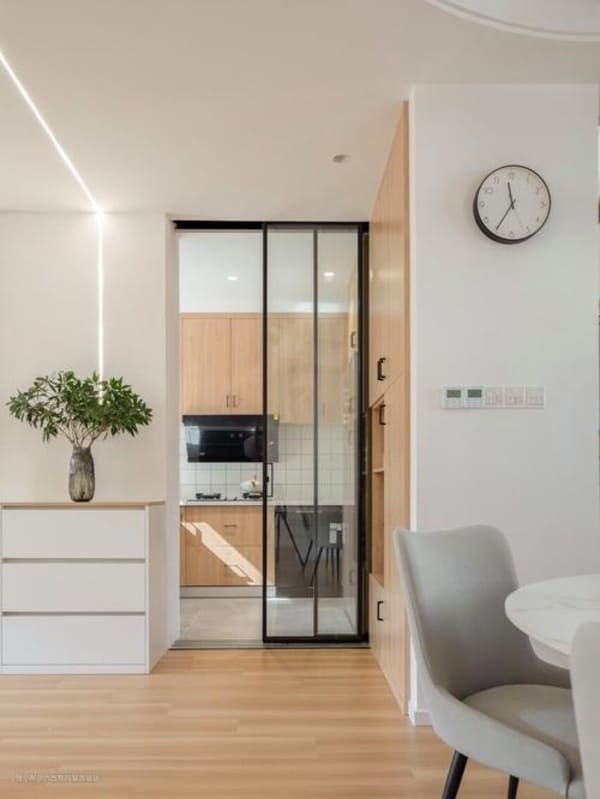
This is probably the most practical benefit, and it’s a huge selling point for our hardware systems. Think about a small bedroom, a compact laundry room, or a narrow hallway. In these areas, every inch counts. By installing a sliding door, you reclaim that "dead" swing space. A purchasing manager I know, Jacky from Canada, often sources our systems for apartment projects where maximizing usable square footage is critical for developers. He knows that using a sliding door for a closet or an en-suite bathroom can make a small bedroom feel significantly more spacious and functional. It allows for a more flexible furniture arrangement, like placing a dresser or a chair right where the door would have swung open. This simple change has a massive impact on the livability of a small space.
Are Sliding Doors Versatile and Functional?
Are you looking for a single solution that can do more than just open and close? Traditional doors have one function, but modern projects demand more flexibility and creative applications.
Sliding doors are incredibly versatile. Beyond being a simple doorway, they can be used as dynamic room dividers, clever concealers for storage or utility areas, or even as moving feature walls. Their functionality goes far beyond that of a standard hinged door, offering creative solutions for any space.
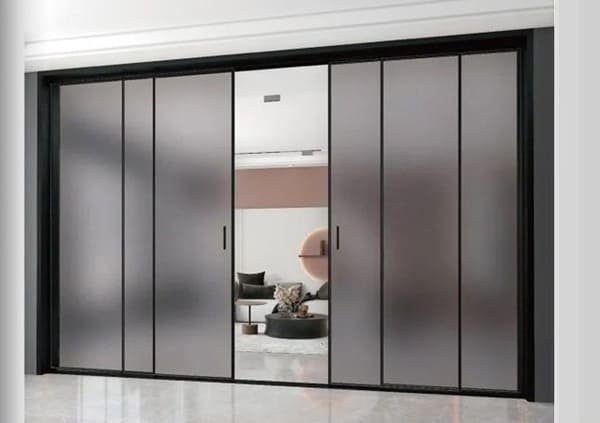
The versatility is what excites designers. I’ve seen our hardware used in so many creative ways. For example, a set of double sliding doors can be used to partition a large, open-plan living area. You can close them to create a cozy TV room and a separate dining space, or open them up for a large party. They can also be used to hide things. A client in the hospitality industry uses our systems to create sliding panels that conceal kitchenette areas in studio hotel rooms. Another popular use is for "hidden" pantries in kitchens or to cover up a laundry nook in a hallway. The door becomes part of the wall, creating a clean, minimalist look. This ability to transform and adapt a space on demand is what makes sliding doors a truly functional and modern architectural element.
Do Sliding Doors Come in Many Different Styles?
Do you worry that a sliding door might not match your project’s aesthetic? The concern that functional means "plain" can stop designers from considering them. This is no longer the case.
Yes, there is a huge variety of styles. From rustic barn doors to sleek, frameless glass panels, you can find a sliding door to complement any interior design scheme, whether it’s modern, industrial, traditional, or minimalist. The door itself becomes a key decorative feature.
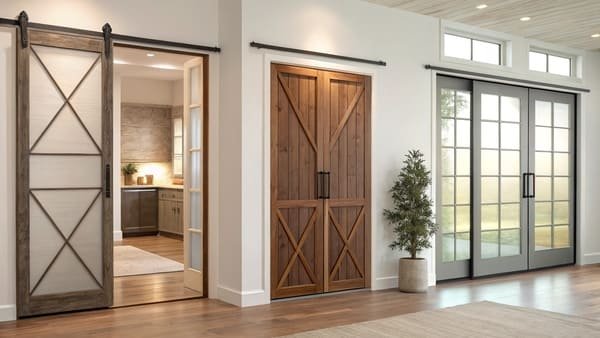
As a hardware manufacturer, we see the full range of door panels that our systems are paired with. The style is truly unlimited. The key is to match the door panel and the hardware to the room’s overall theme.
Popular Style Combinations
- Rustic/Farmhouse3: A solid wood barn door on a black, top-mounted track system. This is a classic look that adds warmth and character. I see this requested a lot by distributors in North America.
- Modern/Minimalist4: A frameless frosted glass panel with a concealed or stainless steel track. This creates a super clean, high-end look that focuses on light and space.
- Industrial: A metal-framed door (like Crittall style) on a robust, exposed roller system. This works perfectly in lofts and converted commercial spaces.
- Traditional: A classic paneled wooden door, painted to match the walls, used as a pocket door. This provides the space-saving benefits while maintaining a traditional aesthetic.
The door is no longer just a utility; it’s a piece of furniture that can define a room’s personality.
Conclusion
In short, internal sliding doors create open spaces, boost natural light, save floor space, offer great versatility, and come in countless styles, making them a superior choice for modern projects.
Explore the advantages of frosted glass for privacy and light diffusion in your home. ↩
Discover how reeded glass can add style and elegance to your spaces while maintaining light. ↩
Explore this link to understand how Rustic/Farmhouse style can enhance warmth and character in your home. ↩
Discover insights on how Modern/Minimalist design can create a clean, spacious feel in your living areas. ↩