
Struggling with drawers that stick and jam? It’s frustrating when furniture doesn’t work smoothly. There’s a simple hardware solution that guarantees a perfect slide every single time.
A drawer runner is a hardware mechanism fitted to drawers and cabinets to allow for smooth opening and closing. It typically consists of a track (runner) and a rolling carriage (slide) that reduces friction and supports the drawer’s weight, ensuring fluid motion.
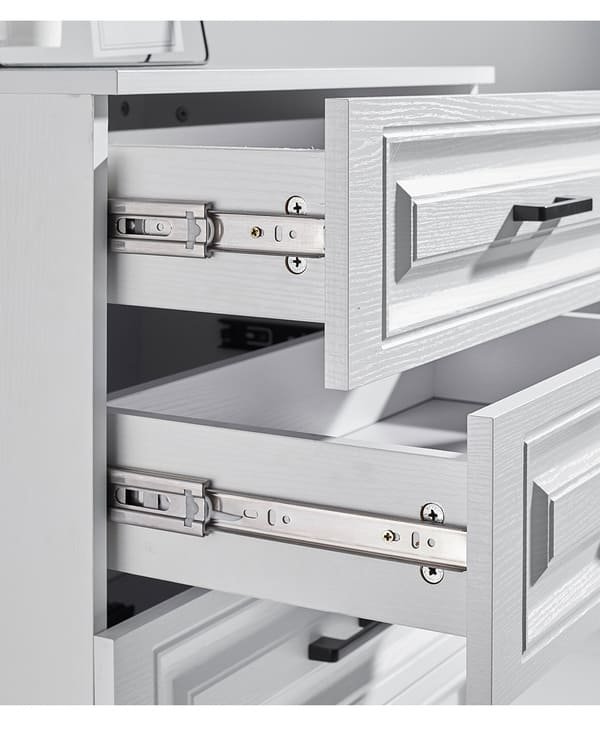
As a manufacturer of furniture hardware, I’ve seen how a small component can make a huge difference in product quality. I remember a B2B client, a furniture factory purchasing manager like Jacky in Canada, who was having issues with his high-end cabinets. The drawers were a nightmare for his customers. The fix was simple: upgrading the drawer runners. This small change completely transformed the user experience and boosted his brand’s reputation. Let’s explore what these essential parts are and why they matter so much for any quality piece of furniture.
What Are Drawer Runners?
Tired of drawers grinding against the cabinet frame? This friction wears down wood and makes access difficult. A simple hardware addition can completely eliminate this problem for good.
Drawer runners are devices used to enable smooth motion when opening and closing a drawer. They work by mounting a track inside the cabinet and a corresponding slide on the drawer, often with wheels or ball bearings to minimize friction and support the drawer’s weight.
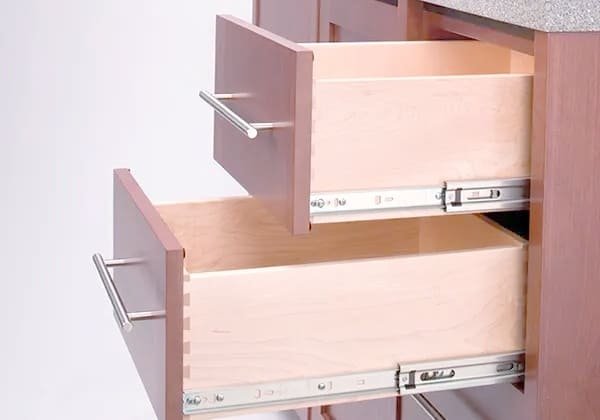
Let’s dive deeper into how they work. In the old days, drawers were just wooden boxes sliding inside a wooden frame. This wood-on-wood contact created a lot of friction, making them hard to open, especially when full. Adding a runner system solves this. The simplest types use a set of wheels on the drawer’s side that glide along a metal track inside the cabinet. This setup requires a bit more space but ensures the drawer moves effortlessly. At my factory, opensliding, we manufacture various types to meet different needs, from simple roller slides for budget projects to advanced ball-bearing slides for heavy-duty applications. It’s a fundamental part of modern cabinet design that I always recommend to my clients.
| Runner Type | Best Use Case | Key Feature |
|---|---|---|
| Roller Slides | Basic cabinets, light loads | Economical, simple wheel mechanism |
| Ball-Bearing Slides | Kitchens, offices, heavy use | Very smooth, quiet, high load capacity |
| Undermount Slides | High-end custom cabinetry | Invisible, clean look, soft-close option |
What Is the Difference Between a Drawer Slide and a Runner?
Are you confused by the terms "drawer slide" and "drawer runner"? Using the wrong term can lead to ordering mistakes. Knowing the distinction ensures you get the exact part you need.
Essentially, there is no major difference; the terms "drawer slide" and "drawer runner" are often used interchangeably in the industry to refer to the entire mechanism. "Runner" sometimes specifically refers to the stationary track inside the cabinet, while "slide" refers to the moving part on the drawer.
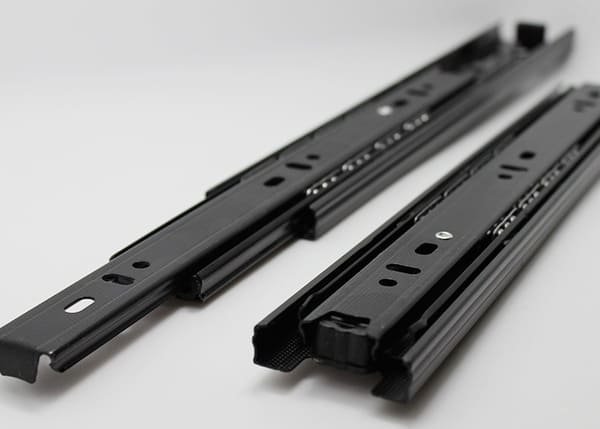
In my experience dealing with purchasers from all over the world, this is a common point of confusion. Think of it like this: the "runner" is the path, and the "slide" is what glides along it. Together, they form the complete system. However, most suppliers, including us at opensliding, will understand what you mean regardless of which term you use. When a client like Jacky sends a request for "drawer runners," I know he means the full assembly. The important thing is to specify the technical details: load capacity, length, extension type (full or 3/4), and features like soft-close. These details are far more critical than whether you call it a slide or a runner.
| Term | Common Association | Technical Meaning |
|---|---|---|
| Drawer Runner | The stationary track fixed inside the cabinet. | Often used for the entire system. |
| Drawer Slide | The moving profile fixed to the drawer. | Also used for the entire system. |
| System | Complete assembly of both parts. | The most precise term. |
What Are the Advantages of Drawer Runners?
Ever pulled a drawer so hard it fell out, spilling its contents? It’s not just messy, it’s unsafe. There is a built-in feature in modern hardware that prevents this from happening.
The main advantages are smooth and quiet operation, increased drawer stability, and higher load capacity. They also offer safety features like stoppers to prevent drawers from being pulled out accidentally and options for soft-close mechanisms that add a touch of quality.
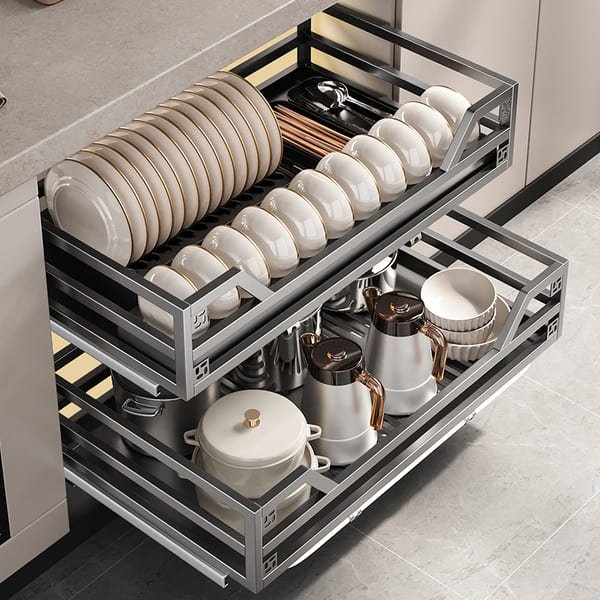
From a manufacturing perspective, the benefits are clear and add significant value. The first is enhanced control. A stopper is often molded into the guide track. This small obstruction stops the wheels from exiting the track, preventing the drawer from falling. To remove it, you typically just lift the drawer at an angle to bypass the stopper. This is a simple but critical safety feature. Another advantage is durability. By reducing friction, runners prevent the wear and tear that happens with wood-on-wood contact, making the furniture last longer. For my B2B customers, like furniture factories, this translates to fewer customer complaints and a better brand reputation. It’s an investment in quality that pays off.
| Advantage | Benefit for the End-User | Benefit for the Manufacturer |
|---|---|---|
| Smooth Motion | Effortless opening and closing. | Perception of high quality. |
| Safety Stopper | Prevents drawers from falling out. | Reduced liability and accidents. |
| High Load Capacity | Can store heavy items without strain. | Allows for more versatile furniture design. |
| Durability | Less wear and tear on furniture. | Fewer warranty claims, higher customer satisfaction. |
Do Drawers Need Runners?
Considering cutting costs by building drawers without runners? This might save a few dollars upfront. But it could lead to long-term problems and unhappy customers who expect modern functionality.
While drawers don’t technically need runners to function, they are essential for modern furniture. Without them, drawers are noisy, stick, sustain damage, and have a very low load capacity. For quality and user satisfaction, runners are considered a standard requirement today.
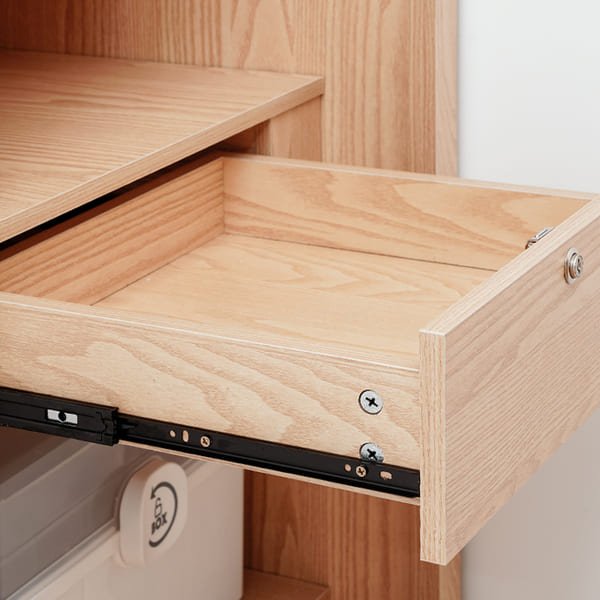
I’ve advised many clients against skipping runners to save a small amount on production costs. I always tell them the story of a budget furniture brand that tried this. Their drawers were just wood boxes in wood frames. They faced a wave of negative reviews complaining about sticking drawers, especially in humid climates where the wood would swell. The user experience was poor. In contrast, even our most basic roller systems at opensliding provide a significantly better experience. For a purchasing manager, the choice is clear. The small cost of adding runners is easily justified by the huge increase in product quality and customer satisfaction. Drawers without runners feel cheap and outdated.
| Feature | Drawer Without Runners | Drawer With Runners |
|---|---|---|
| Operation | Jerky, noisy, sticks easily | Smooth, quiet, effortless |
| Load Capacity | Very low | High, supports heavy items |
| Durability | High wear on wood frame | Protects drawer and cabinet |
| User Experience | Frustrating, feels cheap | Modern, satisfying, premium |
Conclusion
In short, drawer runners are essential hardware. They provide smooth motion, safety, and durability, transforming a basic box into a functional, high-quality piece of furniture everyone expects.