
Frustrated with cabinet doors that slam shut or don’t feel right? Choosing the wrong hinge can ruin a project. Understanding hinge types ensures the perfect function and feel you need.
A one-way hinge, or one-stage force hinge, closes a door in a single, swift motion. In contrast, a two-way (two-stage force) hinge allows the door to pause at an angle before closing automatically, offering greater safety and control by preventing pinched fingers.
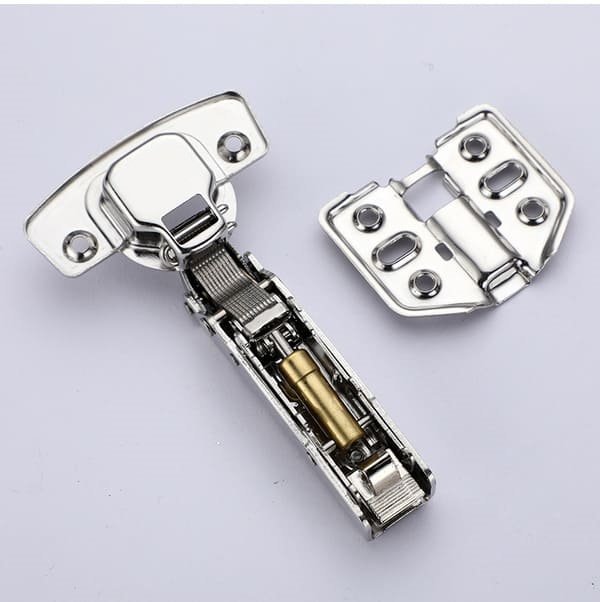
Choosing the right hinge is more than just a functional decision; it impacts the entire feel of the furniture you’re building or installing. As a factory owner, I see how this small component makes a huge difference in the final product’s quality and user experience. For professionals like door factory purchasers or contractors, getting this detail right is crucial for customer satisfaction. Let’s break down the specifics so you can confidently select the perfect hinge for every application, whether it’s for a large-scale production run or a custom cabinetry project.
How to tell which way hinges go?
You have a box of hinges, but you’re not sure which are one-way or two-way. Using the wrong one by mistake means a poor user experience and potential rework.
To identify the hinge type, simply test its closing action. A one-way hinge will close smoothly and quickly from any open position. A two-way hinge will offer resistance or hold its position at a certain angle before it begins to close on its own.
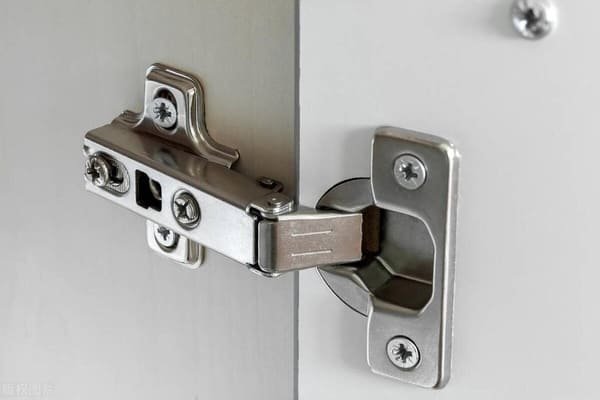
In my factory at opensliding, we test these constantly. The easiest way is a simple physical test. Take the hinge and slowly close it with your hand. The one-way hinge will have a single, consistent spring tension that pulls it shut. You’ll feel one smooth action. The two-way hinge feels different; it has a "catch." As you close it, at a certain angle (often around 45 degrees), the resistance changes, and it will hold its position before continuing to close automatically. For my B2B clients, I always recommend checking the product specifications. Reputable manufacturers will clearly mark or describe the hinge type. This simple check saves time and ensures the end user gets the experience they expect.
| Feature | One-Way (One-Stage) Hinge | Two-Way (Two-Stage) Hinge |
|---|---|---|
| Closing Action | Smooth, single motion | Pauses at a set angle (e.g., 45°) then closes |
| Feel | Consistent spring tension | Tension changes, feels like a "catch" |
| Common Use | Standard cabinets, where quick closing is desired | High-end furniture, kid-safe applications |
| Markings | May be marked as "1S" or "One-Stage" | Often marked "2S" or "Two-Stage" |
What kind of hinge goes both ways?
You need a door to swing open in both directions, like a kitchen or saloon door. A standard hinge just won’t work, limiting traffic flow and creating a bottleneck.
Hinges that allow a door to swing in both directions (in and out) are called double-action hinges. They are also known as saloon door or cafe door hinges. They are self-closing, returning the door to the center closed position after being opened from either side.
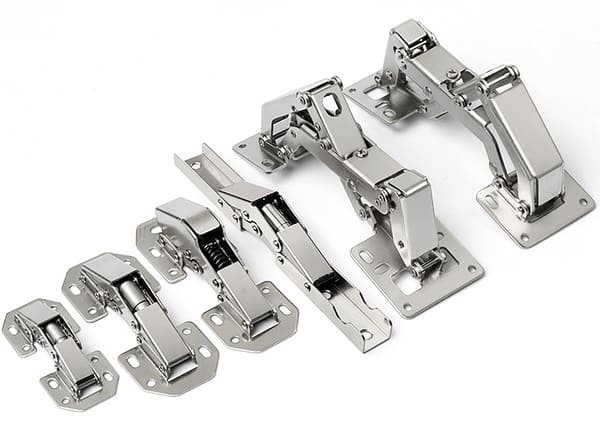
Let me clarify a common point of confusion for purchasers. The "two-way hinge" we discussed earlier refers to a two-stage closing action for a cabinet. A "double-action" hinge, however, literally allows a door to swing in two directions. These are completely different products for different applications. A double-action hinge uses a powerful spring mechanism that allows it to swing 180 degrees and then automatically returns the door to its center, closed position. You see them all the time on doors between a restaurant dining room and kitchen, or in residential settings for pantries or laundry rooms. While my factory focuses on sliding systems and cabinet hardware, it’s critical for my customers—purchasers like you—to know the correct industry terms to avoid costly ordering mistakes.
Double-Action vs. Two-Stage Hinge
A two-stage cabinet hinge controls the speed of closing in one direction. A double-action door hinge controls the direction of swing.
What is a one way hinge mechanism?
You need a simple, reliable, and cost-effective closing action for your cabinet projects. Overly complex hardware can add unnecessary cost and introduce potential points of failure down the line.
A one-way hinge mechanism, also called a one-stage force hinge, uses a simple spring system. This spring provides consistent tension to pull the cabinet door shut in a single, fluid motion as soon as it’s pushed. It is engineered for quick, efficient closing.
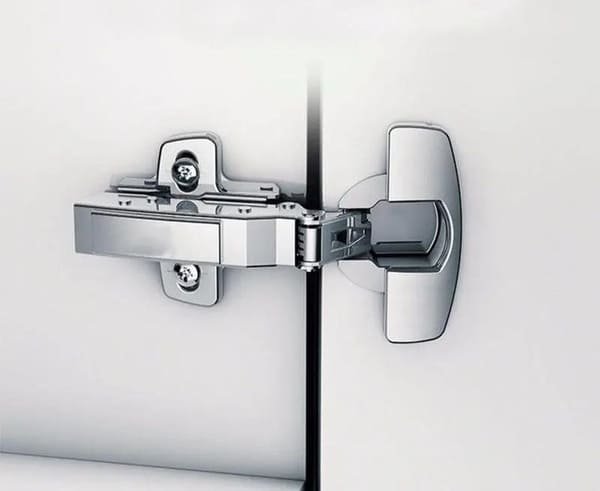
At our opensliding facility, our one-way hinges are built for simplicity and reliability. The core of the mechanism is a high-tensile steel spring. This spring is calibrated to engage and pull the door shut with a crisp, clean action. The effect is what many people describe as a refreshing and powerful closure. For large-scale production of furniture or cabinets, this mechanism is highly cost-effective and dependable. We ensure our springs are tested for thousands of cycles to guarantee a long service life. The main benefit is its straightforward, powerful function. The potential downside is that without a separate soft-close damper, it can slam shut, which is why it’s important to consider the end application. For many standard cabinetry projects, its efficiency and satisfying feel make it the ideal choice.
Key Components of a One-Way Hinge
- Hinge Cup: The part that is mortised into the door.
- Hinge Arm: Connects the cup to the mounting plate.
- Spring: The primary mechanical part that provides the closing force.
- Mounting Plate: The part that fastens to the cabinet frame.
What is a 3-way hinge?
Cabinet doors are installed, but they are misaligned. The uneven gaps make the entire unit look cheap and poorly made, leading to callbacks from unhappy customers and damaging your reputation.
A 3-way hinge is not a closing type, but a type of adjustment. It allows for the precise alignment of a cabinet door in three directions after installation: side-to-side (lateral), up-and-down (vertical), and in-and-out (depth).
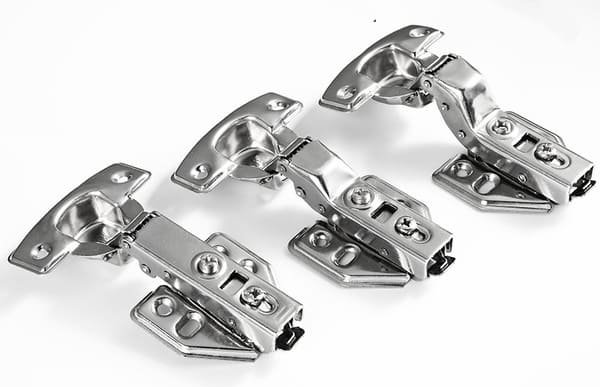
This feature is a game-changer for installers and a non-negotiable for high-quality furniture. It’s important to know that both one-way and two-way hinges can be 3-way adjustable. The "3-way" part has nothing to do with the closing action itself. For my customers, especially construction contractors and furniture factory purchasers, 3-way adjustability is a mark of quality hardware. It acknowledges that perfect alignment during initial installation is difficult. These simple screw adjustments save a huge amount of time on the job site and ensure a flawless, professional finish with perfect, even gaps around every door. This is the kind of detail that separates high-end work from the rest.
The Three Directions of Adjustment
A 3-way hinge allows for micro-adjustments to get the door position just right.
| Adjustment | Purpose | How it’s done |
|---|---|---|
| Side-to-Side (Lateral) | Adjusts the gap between doors. | Turning a screw on the hinge arm. |
| Up-and-Down (Vertical) | Aligns the top/bottom of the door. | Loosening slotted screws on the mounting plate. |
| In-and-Out (Depth) | Moves door closer to/further from the cabinet frame. | Turning a cam screw, usually at the back of the hinge. |
Conclusion
Choose one-way hinges for efficiency and two-way for safety. For a professional finish, always select hinges with 3-way adjustment to ensure perfect alignment on every project you deliver.