
Struggling with a floor plan where a swinging door just gets in the way? This wastes valuable space and design freedom. A pocket door is the sleek, space-saving solution.
A pocket door is a type of sliding door that vanishes into a compartment, or "pocket," inside the adjacent wall when it’s open. Unlike a hinged door, it requires no floor space to operate, making it an excellent choice for maximizing room in tight areas.

I’ve been in the door hardware business for a long time, and I’ve seen trends come and go. Pocket doors once had a bad reputation, but I’m here to tell you things have changed. They are a brilliant solution, but you need to know what you’re getting into before you commit. Let’s look at the good, the bad, and the reality of using them in a modern build.
What is the disadvantage of a pocket door?
Worried a pocket door will be noisy, get stuck, or be impossible to fix? A jammed door inside a wall sounds like a real nightmare. Understanding the potential downsides helps you prevent them.
The main disadvantages are a more complex installation process and the risk of maintenance issues if cheap hardware is used. The wall pocket cannot house electrical or plumbing lines, and some find the recessed pulls less user-friendly than traditional door handles.

Let’s dive deeper into these concerns. As someone who manufactures the hardware, I see firsthand where things can go wrong. It almost always comes down to two things: a poor installation or low-quality components.
Installation and Structural Concerns
You can’t just cut a hole and slide a door in. A pocket door1 requires a specialized frame kit that creates the "pocket" and reinforces the wall opening. The wall itself ends up being thicker than a standard interior wall. This is a job for a skilled builder, not a simple weekend project. If the frame is not installed perfectly plumb and level, the door will never slide correctly. It will scrape, jam, or roll on its own.
Durability and Daily Use
This is where my experience really comes in. The "bad reputation" of pocket door1s comes from builders in the past using flimsy tracks and cheap plastic rollers. Those systems would fail, the door would jump the track, and you’d have a door stuck inside your wall. Today, quality hardware changes everything. At my factory, opensliding, we use heavy-duty aluminum tracks2 and rollers with high-quality bearings. We also manufacture soft-close mechanisms. This feature gently pulls the door into its final position, preventing any banging noise and reducing wear and tear. It solves that problem of having to gently stop the door yourself. A quality system is smooth, quiet, and will last for decades.
What is the difference between a sliding door and a pocket door?
Confused by all the different terms for doors that slide? Using the wrong terminology can lead to ordering the wrong system for your project. Let’s clear up the key difference right now.
Both are sliding doors, but the difference is where the door goes when open. A standard sliding door, like a barn door, slides along a track parallel to the wall and remains visible. A pocket door slides into a hidden cavity concealed within the wall.

While they both slide on a track, their impact on a room is completely different. The decision between them depends on your space, budget, and the aesthetic you want to achieve. As a hardware supplier, I provide systems for both, and each has its place. The core components—the rollers and the track—are based on the same principles, but the application is worlds apart.
Let’s break down the main differences in a simple table:
| Feature | Pocket Door | Standard Sliding Door (e.g., Barn Door) |
|---|---|---|
| Visibility | Hidden inside the wall when open. | Always visible, slides alongside the wall. |
| Wall Space | Requires no adjacent wall space. | Needs a clear section of wall equal to the door’s width. |
| Installation | Complex, requires opening the wall and building a pocket frame. Best for new builds. | Simpler, track is mounted directly onto the wall surface. Good for retrofitting. |
| Aesthetics | Minimalist, clean look. The door disappears completely. | Creates a rustic or industrial design statement. The hardware is part of the look. |
| Hardware | The track and rollers are hidden inside the wall. | The track and rollers are exposed and part of the visual design. |
Choosing the right one is about understanding these trade-offs. A pocket door gives you a cleaner look and more usable wall space, but a barn door is much easier to install in an existing home.
Why don’t we use pocket doors anymore?
Do you think of pocket doors as an outdated feature from your grandparents’ house? Believing that could mean you’re missing out on a very clever modern design solution. Let’s talk about their impressive comeback.
We absolutely do still use pocket doors! In fact, their popularity is growing in modern architecture. The idea that they are "not used" comes from past experiences with cheap, faulty hardware that gave them a bad reputation for jamming, noise, and being difficult to repair.
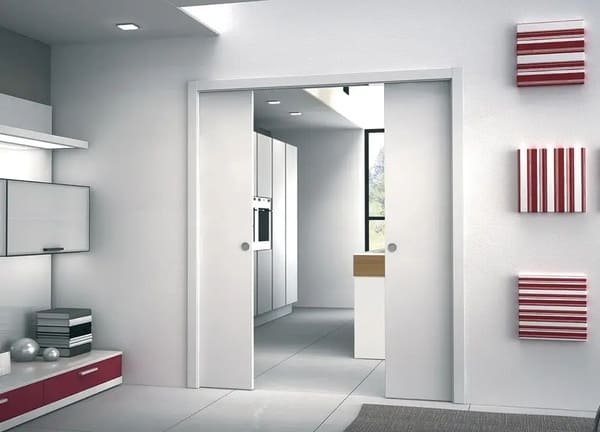
I hear this question from time to time, and it’s based on a real problem from the past. For many years, the hardware available for pocket doors was simply not good enough.
The Source of the Bad Reputation
In the 20th century, especially in post-war construction booms, builders often cut corners. They used flimsy stamped steel tracks that would bend, and nylon rollers without proper bearings that would wear out and break. The result? Doors would get stuck inside the wall cavity. Repairing them meant tearing open the drywall, which was a huge, expensive mess. Naturally, homeowners and builders started to avoid them. They were seen as a liability waiting to happen.
The Modern Hardware Revolution
Today, things are completely different. As a manufacturer at opensliding, I can tell you that the quality of modern hardware is a world away from those old systems. We now use precision-extruded aluminum tracks3 that are incredibly strong and perfectly straight. Our rollers use durable materials with enclosed ball bearings, ensuring a glassy-smooth glide for years. Innovations like soft-close and soft-open mechanisms4 have made them even better. These systems are so reliable that the old fears are no longer relevant. Architects and designers love them again for their space-saving benefits and minimalist aesthetic.
What are the benefits of a pocket door?
Do you need to get the most use out of every single square foot in your design? A traditional swinging door can easily waste 10 square feet of floor space. A pocket door reclaims that space for you.
The number one benefit of a pocket door is saving space. It completely eliminates the "swing space" a hinged door requires, freeing up valuable floor and wall area for furniture, storage, or simply a more open feel. They are perfect for tight spaces.

The practical advantages of a pocket door are significant, especially in today’s designs where efficiency is key. It’s not just about one benefit; it’s about several that work together to improve a space.
Unmatched Space Efficiency
This is the main reason clients choose a pocket door system5. A standard 32-inch hinged door needs around 8-9 square feet of clear floor space just to swing open. In a small bathroom, laundry room, or walk-in closet, that is a huge amount of wasted potential. A pocket door gives you all that space back. You can now place a vanity, a shelf, or a hamper where the door swing would have been. For a purchasing manager like Jacky from Canada, who I often work with, this kind of efficiency is a major selling point for his construction projects.
Clean, Minimalist Aesthetics6
Beyond pure function, pocket doors offer a unique visual benefit. When the door is open, it’s gone. This creates a wide-open, seamless connection between two spaces. It’s perfect for creating flexible rooms, like a home office that can be opened up to the living room, or a pantry you want hidden from the kitchen. The lack of visible hinges and a bulky door frame contributes to a clean, uncluttered look that is very popular in contemporary design.
Conclusion
Pocket doors are a brilliant space-saving solution. With today’s high-quality hardware, their old problems are gone, making them a practical and stylish choice for almost any project.
Explore the advantages of pocket doors, including space-saving benefits and aesthetic appeal, to see if they’re right for your home. ↩ ↩
Learn about the significance of heavy-duty aluminum tracks in ensuring durability and smooth operation of pocket doors. ↩
Explore this link to understand how precision-extruded aluminum tracks enhance durability and performance in modern building projects. ↩
Discover the advantages of soft-close and soft-open mechanisms for smoother operation and enhanced user experience in door systems. ↩
Explore the advantages of pocket doors, including space efficiency and aesthetic appeal, to enhance your home design. ↩
Discover how clean, minimalist aesthetics can transform your space, making it more inviting and stylish. ↩