
Struggling with a swinging door that eats up valuable floor space? This common problem limits your room layout and makes small spaces feel even more cramped. A pocket door kit is the perfect solution.
A pocket door kit is all the hardware you need to install a door that slides into a hollow cavity inside a wall. It includes the overhead track, rollers that attach to the door, and a frame that creates the "pocket" for the door to disappear into.

Now that you see the space-saving benefit of a pocket door, you probably have more questions about how it works and where it can be used. It’s a great system, but installation requires some planning. Let’s look at the most common questions our customers ask me. This will help you decide if a pocket door project is right for you.
Can any door be hung as a pocket door?
You found the perfect door style for your design. Now you worry it won’t work with a pocket system, potentially forcing a change of plans. The good news is most doors can work.
Almost any standard interior door can be used as a pocket door, as long as it is flat, not warped, and meets the weight and thickness limits of the kit. Solid-core doors are often preferred over hollow-core doors because they are more stable and resist warping.
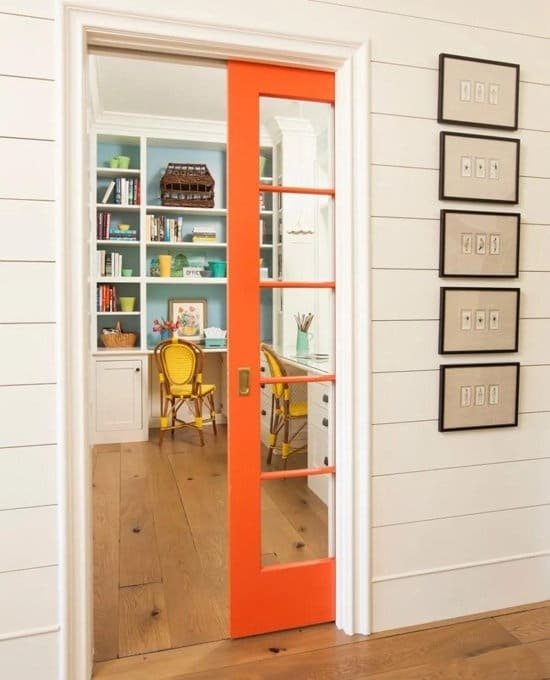
Choosing the right door is critical for a smooth, long-lasting pocket door system. As a hardware manufacturer, I’ve seen which doors work best. A door for this system must be perfectly straight. A warped door will rub against the frame inside the wall and get stuck. You also need to consider the door’s construction.
Door Construction and Weight
Hollow-core doors are lightweight and cheap, but they can feel flimsy and are more likely to warp over time, especially in humid areas like a bathroom. Solid-core doors are heavier and more expensive, but they are much more durable. They also provide better sound insulation, which is a big plus. Always check the weight capacity of your pocket door hardware1. Our standard kits at opensliding handle doors up to 150 lbs (about 68 kg), but we also produce heavy-duty kits for heavier solid wood or glass doors.
Here is a simple table to guide you:
| Door Feature | Ideal for Pocket Door | Why It Matters |
|---|---|---|
| Material | Solid-Core Wood2 | More stable, better sound dampening, feels higher quality. |
| Condition | Perfectly Flat | A warped or bowed door will jam inside the pocket. |
| Weight | Within Kit’s Limit | Exceeding the weight limit will wear out rollers and track. |
| Thickness | Standard 1-3/8" | Must fit easily inside the pocket frame without rubbing. |
Can you put a pocket door where there is electrical?
You have the perfect wall for a pocket door, but there is a light switch or electrical outlet right in the middle. Moving wiring sounds difficult and expensive. It is possible to do, but it requires careful work.
Yes, you can install a pocket door in a wall with electrical wiring, but you must reroute it. Wires cannot be in the pocket where the door slides. An electrician must move them to meet safety codes, often using shallow boxes or rerouting them around the frame.
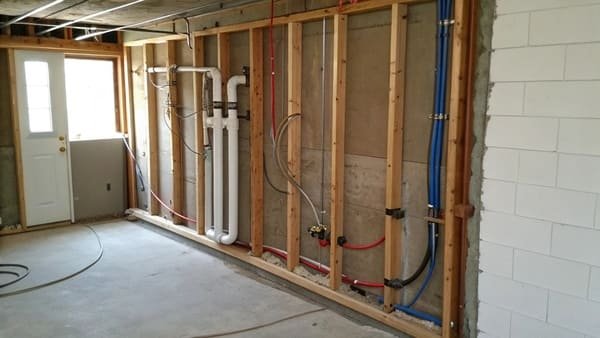
Safety is the number one priority here. The pocket needs to be a completely empty space for the door to slide in and out of. If a wire is in the pocket, the door could rub against it, damage the insulation, and create a serious fire hazard. This is why you cannot simply leave the wiring as is. The work must be done by a licensed electrician who understands local building codes.
How to Handle the Wiring
There are a few professional methods to solve this problem.
- Reroute Completely3: The most common solution is to move the wires. An electrician can run the wiring up into the ceiling or attic, or down into the basement or crawlspace. They then bring the wire back into the wall outside of the pocket door frame.
- Use Adjacent Studs: Sometimes, the wiring can be moved to the side of the framing. The electrical box can be attached to the main stud that frames the entire pocket door opening, keeping it clear of the sliding door’s path.
- Shallow Electrical Boxes4: In some cases, an electrician might use special shallow-depth outlet boxes. These are designed for tight spaces, but you have to be sure there is enough clearance between the box and the door.
I always tell my clients, like Jacky in Canada who buys our systems for his construction projects, to never cut corners on electrical work. The cost of hiring a professional is small compared to the risk.
Where are pocket doors used?
You understand that pocket doors save space, but you are not sure where they would be most effective. You want to know the best places to use them. They are very versatile and have many great applications.
Pocket doors are most often used in small rooms where a regular door would get in the way, like bathrooms, closets, and laundry rooms. They are also popular for dividing larger spaces, such as separating a living room from a dining room or home office.
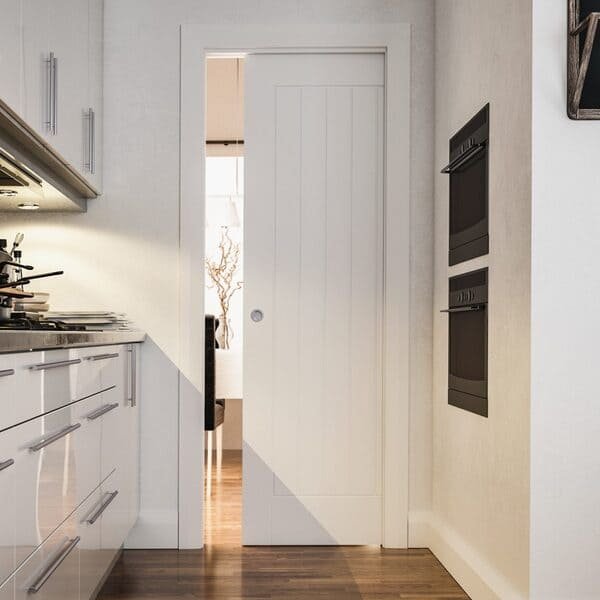
The main advantage of a pocket door is saving floor space. A typical swinging door needs about 10 square feet of clear floor area to open. In a small room, that is a lot of wasted space. By sliding into the wall, a pocket door gives you that space back. This is why we see them used in so many different situations, for both residential and commercial projects. For purchasing managers, knowing these applications helps them plan their inventory.
Common Residential Applications
- Bathrooms: Especially for a small master bathroom or powder room. A swinging door can hit the toilet or vanity.
- Walk-In Closets: A pocket door5 maximizes the usable space inside the closet and in the bedroom.
- Pantries: It keeps the door from blocking walkways in the kitchen.
- Room Dividers: Installing a pair of wide pocket door5s between a living room and a dining area offers great flexibility. You can have a modern open-plan space or a private, closed-off room.
Commercial and B2B Uses
We supply our pocket door5 systems to many contractors and developers. They use them in:
- Apartments and Condos: To make small units feel larger and more premium.
- Hotels: For bathrooms and connecting suites.
- Offices: To create private meeting rooms or individual offices in an open-layout floor plan.
Can you put a pocket door in a supporting wall?
The only wall where a pocket door makes sense in your layout is a load-bearing wall. You know that cutting into this wall is a major job. This makes you question if it is even possible.
Yes, you can install a pocket door in a load-bearing wall, but it is a complex and expensive job. It requires removing structural studs and installing a new, strong header to carry the weight. This must be designed by a structural engineer and built by a professional contractor.

This is not a do-it-yourself project. A load-bearing wall supports the weight of the floor or roof above it. If you cut into it without providing proper alternative support, you could cause serious structural damage to the building. I’ve heard horror stories from contractors who had to fix damage from improper installations. The process must be done correctly and safely.
The Professional Process
Here is how a professional team handles this job:
- Engineering Plan: First, you must hire a structural engineer6. They will assess the loads on the wall and create a detailed plan, specifying the exact size and type of new header required to safely span the opening.
- Temporary Support: Before any cutting begins, the contractor will build a temporary support wall nearby to hold the weight of the structure above.
- Demolition and Header Installation: With the temporary wall in place, the section of the load-bearing wall is removed. Then, the new, much larger header beam (often an LVL – Laminated Veneer Lumber7) is installed according to the engineer’s plan.
- Frame the Pocket: Once the new header is securely in place, the pocket door frame is built underneath it.
This process is complicated and requires building permits and inspections. The cost is much higher than installing a pocket door in a non-load-bearing wall, but it allows you to get the function you need without compromising safety.
Conclusion
Pocket door kits are a fantastic way to save space and add a modern touch. However, a successful installation depends on planning for the door, electrical wiring, and any structural wall changes.
Learn how to assess the weight capacity of pocket door hardware to ensure proper installation. ↩
Explore the advantages of Solid-Core Wood doors for durability and sound insulation. ↩
Explore this link to learn effective techniques for safely rerouting electrical wiring, ensuring your project is done right. ↩
Discover the benefits of using shallow electrical boxes for tight spaces, enhancing your electrical installations. ↩
Explore this link to understand how pocket doors can enhance space efficiency and aesthetics in your home. ↩ ↩ ↩
Understanding the role of a structural engineer is crucial for safe renovations, ensuring your project meets safety standards. ↩
Exploring the advantages of Laminated Veneer Lumber can help you make informed choices for durable and efficient building materials. ↩