
Struggling with a clumsy swinging door in a tight spot? It’s a common issue that wastes precious floor space and makes rooms feel cramped. You need a better way to divide your space.
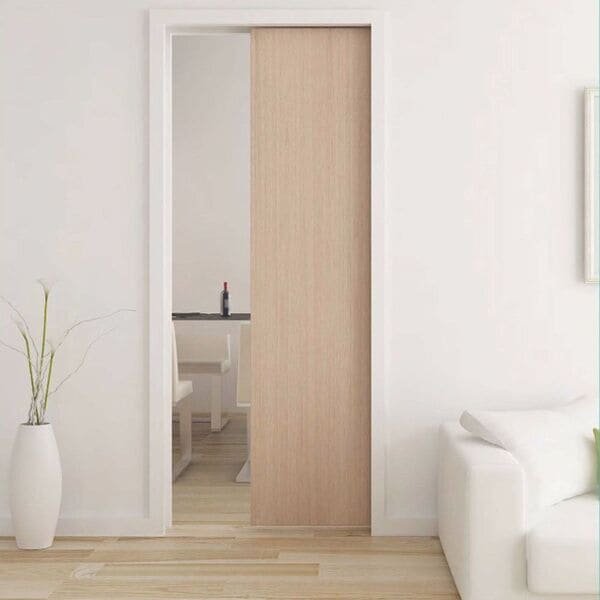
Pocket door hardware is a complete mechanical system that allows a door to slide into a hollow cavity, or "pocket," inside a wall. It consists of a track, rollers that attach to the door, door guides, and often a pre-built frame that creates the wall cavity.
This clever design seems simple, but getting it right means picking the right components for the job. From my years of manufacturing these systems at opensliding, I’ve seen how the quality of the hardware can make or break a project. A good system is silent and smooth for decades; a bad one is a constant headache. Understanding the details is key before you start. Let’s look closer at what you really need to know to make the right choice for your project.
Can You Use Any Door with a Pocket Door Kit?
You’ve found the perfect door slab for your project, but you’re not sure if it will work with a pocket door system. Using the wrong door can lead to jams, sagging, and costly repairs.
No, you cannot use just any door. Most standard, non-warped interior doors will work, but you must check the pocket door kit’s specifications for maximum weight and thickness. Heavier doors made of solid wood or glass require a heavy-duty hardware kit to function properly and safely.

When we design pocket door hardware, we build it for specific limits. A standard kit is usually rated for a door up to about 150 lbs (or 68 kg). This is fine for most hollow-core doors. But if you plan to use a beautiful solid oak door, it could weigh over 200 lbs (90 kg). Forcing a standard kit to carry that load will cause the rollers to fail and the track to bend. I always tell my customers, like Jacky who buys from our factory for projects in Canada, to weigh the door first. It’s a simple step that prevents huge problems. The door’s thickness and condition are also important. A door that is warped will rub against the frame inside the wall, making it impossible to open and close smoothly.
Here’s a simple guide to help you choose:
| Door Material | Typical Weight | Hardware Recommendation | Key Consideration |
|---|---|---|---|
| Hollow-Core Wood | Light (30-50 lbs) | Standard-duty kit | Best for budget projects, but less durable. |
| Solid-Core Wood | Medium (70-150 lbs) | Standard or Heavy-duty | Offers better sound insulation and durability. |
| Solid Wood / Glass | Heavy (150-300+ lbs) | Heavy-duty kit | Must use a kit specifically rated for this weight. |
| Metal / Custom | Varies | Check with manufacturer | Always verify specs; custom doors may need custom solutions. |
What is the Purpose of a Pocket Door?
Are you tired of wasted space behind an open door? You can’t put furniture there, the walkway is blocked, and the area just feels cluttered and poorly designed.
The main purpose of a pocket door is to save space. By disappearing into a wall instead of swinging out, it frees up an average of 10 square feet of floor space that a traditional door requires.

Saving space is the number one reason people choose pocket doors, but it’s not the only one. From a design standpoint, they offer a clean, minimalist look. When the door is open, it’s completely gone, creating an uninterrupted visual line that makes two separate rooms feel like one large, open space. I’ve worked with architects on high-end apartment projects who use our systems for this exact reason. They want to give residents the flexibility to have an open-plan living area or a private office, and pocket doors make that possible without sacrificing style. They are also great for accessibility. For someone in a wheelchair, navigating a narrow hallway with swinging doors is a challenge. A pocket door removes that obstacle entirely. It’s a more functional, elegant solution for modern living, especially in smaller homes or areas like bathrooms, closets, and laundry rooms where every inch counts.
Can a Pocket Door Go in Any Wall?
You love the idea of a pocket door, but you are not sure if your wall can support it. Cutting into the wrong type of wall can create serious structural issues for the entire building.
No, a pocket door cannot be installed in just any wall. The ideal wall is a non-load-bearing wall that is thick and wide enough to contain the door. Walls with plumbing, electrical wires, or structural posts are not suitable without major modifications.
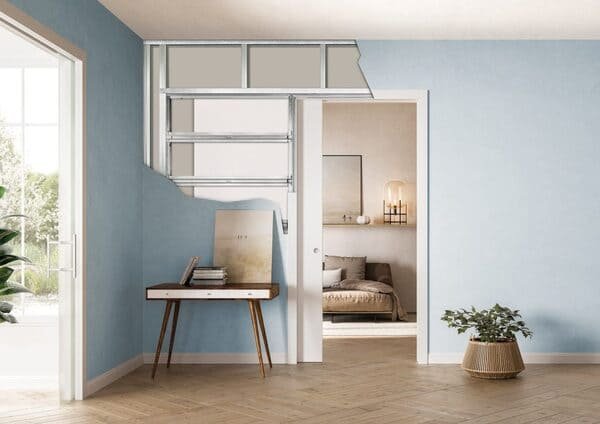
This is the most critical question to answer before you even buy the hardware. First, you must identify if the wall is load-bearing. A load-bearing wall supports the weight of the floor or roof above it. Cutting a large opening in it for a pocket door frame without adding a proper structural header can be catastrophic. If you suspect a wall is load-bearing, you must consult a structural engineer. Most interior walls in modern homes are non-load-bearing "partition" walls, which are perfect candidates. Second, the wall must be wide enough. It needs to have enough space for the door itself when fully open, plus a few extra inches for the frame. A 32-inch door needs at least 65 inches of total wall space. Finally, check for obstructions. Use a stud finder to look for pipes, ducts, and wiring. Rerouting these utilities is a complex and expensive job that can quickly derail your project. I always advise my professional buyers to do a thorough inspection before placing an order.
Which is Better, a Pocket Door or a Sliding Door?
You need a door that slides, but you’re confused by the terms. Choosing between a pocket door and a wall-mounted sliding door, like a barn door, can be a tough decision.
Neither option is better in all situations; the right choice depends on your space, budget, and style. A pocket door is hidden and maximizes space, while a barn-style sliding door is easier to install and serves as a design feature.

As a manufacturer of both systems, I see customers choose them for very different reasons. A pocket door is the ultimate space-saver. Because it disappears into the wall, it frees up both the floor space a swing door uses and the wall space a barn door covers. This makes it perfect for new construction or major renovations where you can open up the walls. The installation is more complex and costly. On the other hand, a surface-mounted sliding door, often called a barn door, is much simpler to install. The track is mounted directly onto the face of the wall above the opening. This makes it a popular choice for home improvement projects because you don’t have to tear out the drywall. The door itself becomes a decorative element. We sell a lot of our barn door kits to distributors who cater to DIY customers.
Here is a quick comparison:
| Feature | Pocket Door | Sliding Barn Door |
|---|---|---|
| Installation | Complex; requires opening the wall. | Simple; mounts on wall surface. |
| Space Use | Most efficient; frees up all floor and wall space. | Requires clear wall space for the door to slide over. |
| Aesthetics | Minimalist, hidden, clean. | Visible, decorative, can be rustic or industrial. |
| Cost | Higher, due to construction work. | Lower, less labor involved. |
| Maintenance | Difficult to repair if problems occur inside the wall. | Easy to access track and rollers for maintenance. |
Do Pocket Doors Increase Home Value?
You’re planning a renovation and want to know which upgrades will give you the best return. Will adding a pocket door actually add to your home’s resale value?
Yes, pocket doors can increase home value, particularly when used thoughtfully. In spaces like small bathrooms, home offices, and closets, they are seen as a premium, space-saving feature that improves a home’s functionality and appeal.
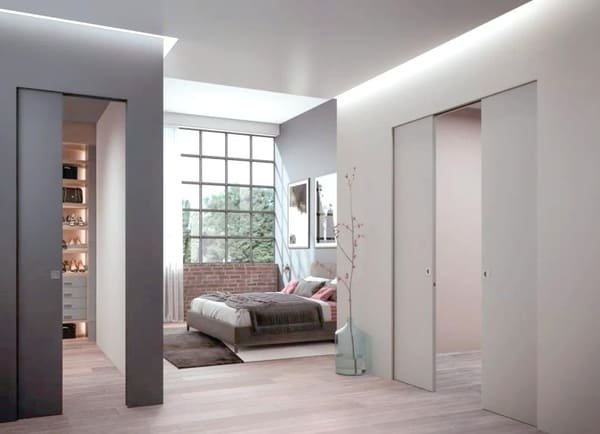
A pocket door is more than just a door; it’s a solution to a problem. When a potential buyer sees one, it shows that thought went into the home’s design. In a small powder room where a swinging door would constantly get in the way, a pocket door makes the space feel instantly larger and more usable. This small detail can leave a big impression. We supply our high-end, soft-close pocket door systems to property developers for this very reason. They know that in competitive markets, these kinds of intelligent features help their properties stand out. A pocket door communicates quality and smart design, which buyers are often willing to pay more for. It turns an awkward layout into a functional space, adds a touch of modern elegance, and can even improve a home’s accessibility. While it might not add thousands to the price tag on its own, it contributes to an overall feeling of a well-designed, high-quality home.
Conclusion
Pocket door hardware is an excellent solution for saving space, enhancing design, and adding value. The key to a silent, smooth, and lasting installation is choosing the right system for your specific door and wall.