
Struggling with unclear warranties from suppliers? This uncertainty can risk your project’s budget and reputation. Understanding the details is key to protecting your investment and ensuring product quality.
The warranty for glass sliding door rollers from China is not fixed. It typically ranges from 1 to 10 years. The final period depends on the manufacturer, the product’s quality level, and your negotiation. Always discuss and confirm the exact warranty terms with your factory partner.
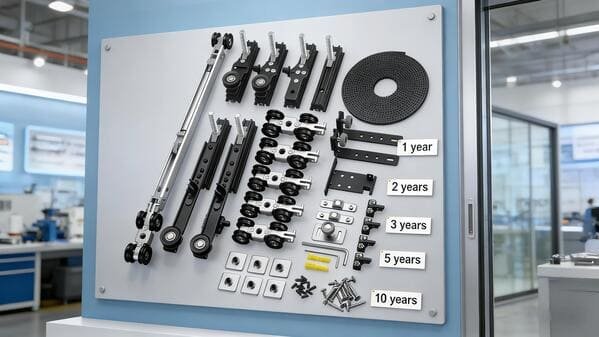
I know that figuring out warranties can be confusing, especially when you are sourcing from overseas. It’s not just about the number of years on a piece of paper. It’s about the trust and reliability of your supplier. Over my years of running opensliding, I’ve talked to many buyers, like Jacky from Canada, who need clear and dependable terms to manage their projects effectively. Let’s break down what you really need to look for, so you can make decisions with confidence and avoid any surprises down the line.
Should I ask whether the warranty covers bearings and rollers?
A general warranty sounds good, but what if it excludes the most vital parts? You could face early failures with no support, leaving you with costly replacements and unhappy clients.
Yes, you absolutely must ask. Bearings and rollers are the core moving components of any sliding system and experience the most wear. A trustworthy warranty will explicitly cover them. If a supplier avoids confirming this, you should see it as a major red flag.
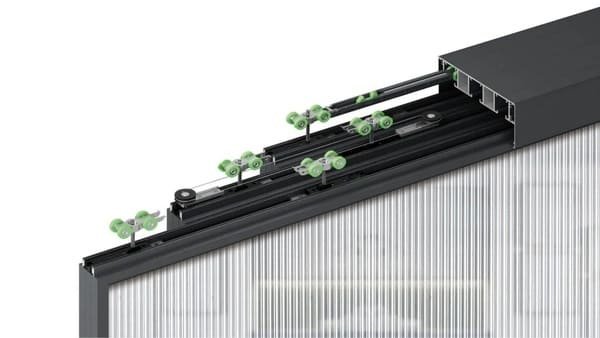
Bearings and rollers are the heart of the sliding door system. They carry the entire weight of the glass panel and are responsible for smooth, quiet operation. Their quality determines the system’s lifespan. A warranty that doesn’t cover these parts is almost meaningless. When I discuss orders with clients, I make sure we talk about the materials used in these components, as it directly impacts durability and the warranty we can offer. For example, a system with high-grade stainless steel bearings will naturally have a longer, more comprehensive warranty than one with standard components.
Warranty Coverage Breakdown
| Component | A Good Warranty1 (What to look for) | A Poor Warranty2 (A red flag) |
|---|---|---|
| Rollers | Covers cracking, breaking, and deformation. | Excludes "wear and tear." |
| Bearings | Covers seizure, excessive noise, or failure. | Only covers manufacturing defects found on arrival. |
| Track/Rail | Covers bending or finish defects. | Not covered at all. |
| Other Parts | Clear coverage for soft-closers, guides, etc. | Vague or excludes all accessories. |
How can I confirm replacement or compensation policies?
You have a warranty on paper, but do you know how to make a claim? A confusing or difficult claims process can make your warranty completely useless when you actually need it.
You must confirm these policies by getting them in writing within your official purchase contract. Ask for a simple, step-by-step process. A reliable partner will clearly define how to file a claim, who pays for shipping, and the timeline for resolution.
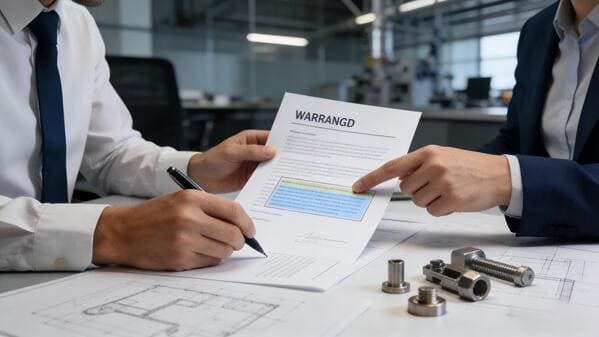
A warranty is only as good as the company that stands behind it. The process for getting a replacement part should be straightforward, not a fight. Before you finalize an order, you need clarity on the exact procedure. This prevents misunderstandings and ensures you get the support you paid for if something goes wrong. I always tell my customers that our goal is to make this process simple. Clear communication is essential for a long-term business relationship. We put these details directly into our supply agreements so there are no questions later.
Key Policy Questions to Ask Your Supplier
- What evidence is needed to start a claim? (e.g., photos, videos, sample return)
- What is the timeframe for you to respond to a claim?
- Who is responsible for the shipping costs of replacement parts? (This is critical for international B2B orders).
- If a product is discontinued, what is the solution? (e.g., a credit, an upgraded model).
- Is the replacement a new part or a refurbished one?
Does warranty differ for soft-closing systems?
Soft-closing mechanisms add value, but they are also more complex. Are you sure your warranty covers this popular feature, or could a failure leave you with a big problem?
Yes, the warranty for soft-closing systems is often different and may be shorter than the warranty for the basic rollers and track. These are complex hydraulic or pneumatic dampers with more potential failure points. Always ask for the specific warranty period for the soft-close mechanism itself.
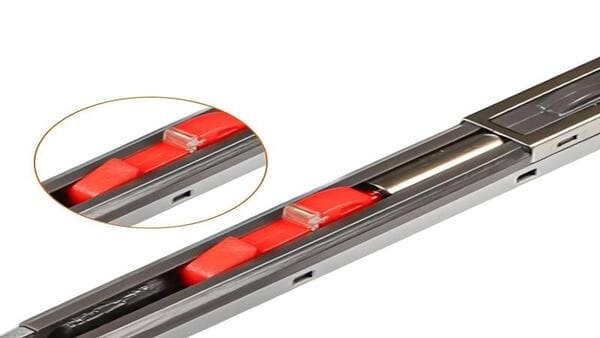
Soft-closing systems contain precision parts like dampers, springs, and activators. They are engineered to handle a certain number of cycles under specific door weights. Because of this complexity, many manufacturers provide a separate warranty for the soft-close feature. For example, the rollers and track might have a 10-year warranty, but the soft-close damper might be covered for 3 years or 100,000 cycles. This is a normal industry practice. As a manufacturer, we at opensliding specify this clearly in our technical sheets. We test our soft-close systems rigorously, but it’s important for buyers like you to understand that their lifespan and warranty terms are distinct from the simpler mechanical rollers. Always check the cycle rating and ensure it fits your project’s needs.
How do I evaluate long-term durability before ordering?
A long warranty looks promising, but how do you know the product will actually last? Relying only on a warranty paper without checking the product’s real quality is a huge risk.
Evaluate durability by requesting product certifications, third-party test reports (like SGS), and material specification sheets. Also, order samples to personally inspect the build quality, weight, and smoothness of operation. A good supplier will happily provide these things.

A warranty is a promise for the future, but you need evidence of quality today. I always encourage serious buyers to look beyond the marketing claims. Ask for the hard data. For our glass sliding door systems, we provide reports that show they have passed tests for a specific number of cycles (e.g., 100,000 cycles), which simulates years of real-world use. You should also check the materials. For example, are the rollers made from durable POM or cheap nylon? Are the metal parts 304 stainless steel or a lesser grade? Finally, nothing beats getting a sample in your hands. You can feel the quality. You can operate the mechanism. A heavy, smooth-gliding roller tells you a lot more about its durability than any document can.
Conclusion
In short, warranty periods from China vary widely. You must discuss details like component coverage, replacement policies, and test reports with your supplier to ensure long-term quality and support.