
Struggling with the complex installation of pocket doors? Tearing open walls is a major hassle. Thankfully, there are many easier, stylish alternatives available for your space-saving needs.
Instead of a pocket door, consider surface-mounted options like barn doors, bypass doors, bifold doors, or even accordion doors. These alternatives save space similarly to pocket doors but are much easier to install as they don’t require creating a wall cavity. They offer diverse styles and functionalities.

Pocket doors are a brilliant solution for saving space since they disappear into the wall. As a hardware manufacturer, I admire the engineering. But I also know the installation isn’t for everyone. It requires a specific wall structure and a lot of work. So, what are the real-world options you can use instead? Let’s break down the best alternatives and see which one fits your project perfectly. You might be surprised by the variety and how easy they are to implement.
What is the alternative to a pocket door?
Need a space-saving door but can’t build a wall cavity? Feeling like your design options are limited? Discover the best alternatives that are stylish and much simpler to install.
The primary alternatives to pocket doors are surface-mounted sliding doors like barn doors, bypass doors for wider openings, and folding doors such as bifold or accordion styles. Each offers unique aesthetic and functional benefits without the need for major structural changes to your walls.

In my experience at opensliding, buyers like you are always looking for that perfect balance of function, style, and cost-effectiveness. Pocket doors are great, but the installation costs and complexity can be a deal-breaker for many projects. The good news is that the market is full of excellent hardware systems for other space-saving doors. You are not limited. Let’s categorize them to make it clearer.
Surface-Mounted Sliding Doors
These doors slide along a track installed on the face of the wall.
- Barn Doors1: A single door slides over to one side of the opening. They make a strong design statement.
- Bypass Doors: Two or more doors slide past each other on parallel tracks. This is ideal for wide closets or room dividers where you don’t have wall space on both sides for a door to retract.
Folding Doors
These doors fold in on themselves to open up the space.
- Bifold Doors2: Doors are hinged in pairs and fold to one or both sides of the opening. Commonly used for closets.
- Accordion Doors: Made of many narrow panels, these fold up tightly like an accordion. They are great for dividing spaces where a solid door isn’t necessary.
| Door Type | Installation Difficulty | Space Required | Key Hardware System |
|---|---|---|---|
| Barn Door | Low | Requires clear wall space next to the opening | Top-hung track, rollers, guides |
| Bypass Door | Low-Medium | Only the width of the opening | Double track, roller sets for each door |
| Bifold Door | Low-Medium | Minimal, folds within the door frame | Pivot hinges, track, guide rollers |
| Accordion Door | Low | Minimal, folds tightly to one side | Top track and wheel carriers |
As a supplier, we provide high-quality hardware systems for all these options, so you can offer your clients a range of solutions.
What door can be used as a pocket door?
Your pocket door is damaged or outdated, but the track is fine. Worried you’ll need a special, costly replacement? You can actually adapt many standard door types easily.
Almost any standard interior door slab without pre-drilled hinge mortises can be used as a pocket door. This includes flush doors, paneled doors, and even glass-inset doors. The key is ensuring the door’s thickness and weight are compatible with your existing pocket door hardware and frame.
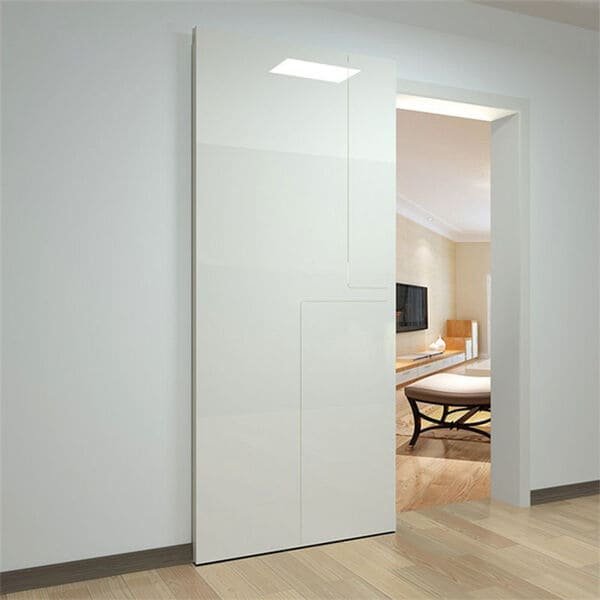
This is a question we get a lot from purchasing managers. You have a project with an existing pocket door frame, and you just need to replace the door itself. You don’t need a special "pocket door." You need a standard door slab that meets a few key criteria. From our factory floor, here is what you need to focus on to ensure a successful replacement and avoid costly mistakes.
Door Material and Weight
This is the most critical factor. Every pocket door hardware system has a maximum weight capacity. A solid core wood door3 is much heavier than a hollow core one. Check the specifications of the installed roller hardware. If you overload the system, the rollers will fail quickly, and the door will be difficult to slide. We manufacture heavy-duty rollers precisely for customers who want to use high-quality, solid wood or glass doors.
Door Thickness and Size
Standard pocket door frames are built for standard door thicknesses, usually 1-3/8 inches. Using a thicker door, like 1-3/4 inches, may require a different hardware kit or a custom-built frame. The door also needs to be sized correctly for the opening, with a small overlap to ensure it fully closes without large gaps.
Hardware Compatibility
The top edge of the door must be solid enough to securely hold the roller brackets. You will need to screw these brackets into the top of the door slab. A hollow-core door might not have enough solid wood at the top for a secure connection, so be sure to check its construction.
Is a barn door better than a pocket door?
Choosing between a barn door and a pocket door for your project? The wrong choice can ruin a room’s functionality. Let’s compare them directly so you can decide confidently.
A barn door isn’t inherently better, just different. Barn doors are easier and cheaper to install but require clear wall space for the door to slide over. Pocket doors are visually cleaner and offer better privacy and sound insulation but involve complex, costly installation.
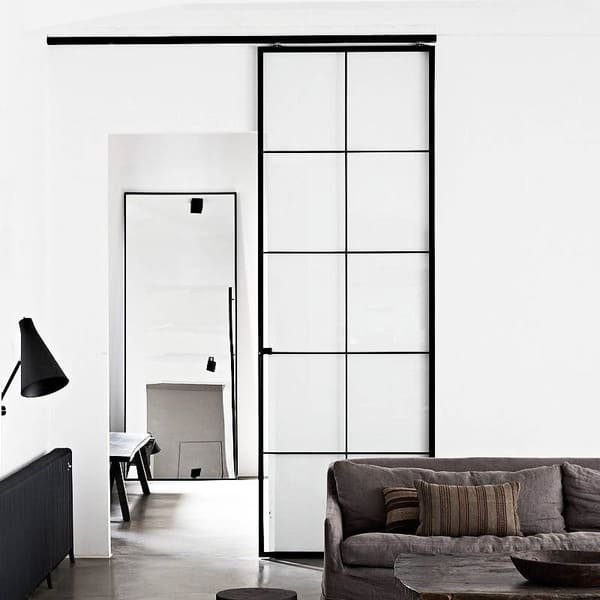
As a hardware manufacturer, we see strong demand for both systems. The choice depends entirely on the project’s priorities: budget, aesthetics, and function. A professional buyer like you needs to present the right option to your client or for your product line. Here is a direct comparison to help you advise them.
| Feature | Pocket Door | Barn Door |
|---|---|---|
| Installation | Complex. Requires opening the wall to install a cavity frame. Best for new builds or major renovations. | Simple. Track is mounted directly onto the wall above the opening. Can be a weekend DIY project. |
| Space Required | No floor space, no wall space. The door disappears completely into the wall cavity. | Requires a clear section of wall, equal to the door’s width, for the door to slide onto. |
| Aesthetics | Minimalist and clean. The hardware is completely hidden, making for a seamless look when open. | A decorative statement. The track and hardware are visible and part of the room’s design style. |
| Privacy | Good. Seals well into the frame, offering decent sound and light insulation. Can often be locked. | Poor. There is a natural gap between the door and the wall, which lets light and sound pass through. |
| Cost | High. Involves extensive labor, drywall work, and painting in addition to the hardware kit. | Low to Medium. The main cost is the hardware kit and the door slab. Installation is much cheaper. |
For your projects, if the budget is tight or the client wants a rustic or industrial design feature, a barn door with one of our high-quality roller systems is an excellent, profitable choice. If the goal is a sleek, modern, and quiet space, the investment in a pocket door is justified.
Can I replace a pocket door with a regular door?
Want to switch from a pocket door to a standard swing door? Worried it’s a huge a construction nightmare? It’s a very doable project with the right approach.
Yes, you can replace a pocket door with a regular swing door. The process involves removing the pocket door and its track, building a standard door frame within the opening, and then installing the new pre-hung or slab door. It requires some basic carpentry work.
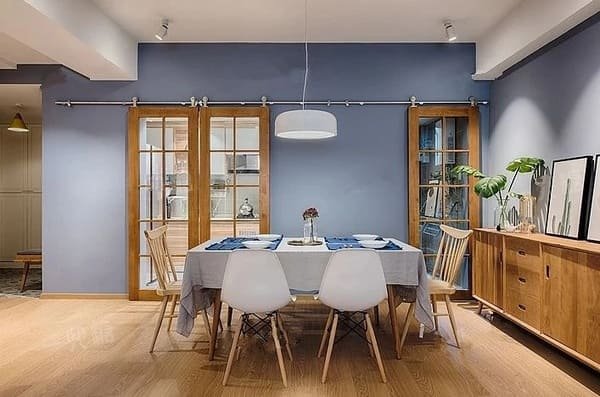
Sometimes a project’s needs change, or a pocket door system is simply too damaged to repair effectively. While we specialize in sliding systems, I understand that sometimes you need to go in the other direction. Replacing a pocket door with a standard hinged door is a common request. It’s essentially a small-scale framing job. Here is a breakdown of the process so you know what your construction team will be dealing with.
Step 1: Removal of the Old System
First, the existing pocket door slab needs to be removed. This is usually done by detaching it from the rollers at the top. After that, the track and any visible parts of the pocket door frame4 inside the opening must be carefully taken out. This will expose the rough opening in the wall.
Step 2: Framing the Opening
This is the most important step. You will need to build out a standard door jamb inside the rough opening. This involves cutting and installing wood studs (jack studs and a header) to create a solid frame that can support the weight of a swinging door and its hinges. The new frame will be narrower than the original rough opening for the pocket.
Step 3: Installing the New Door
Once the new frame is solid and square, you can install a standard pre-hung door5. A pre-hung door5, which comes with the jamb and hinges already attached, is the easiest option. After installation, the gaps are filled, new trim is installed, and the surrounding wall is patched and painted. It’s a multi-step process but well within the skills of any competent contractor.
Conclusion
While pocket doors are excellent space-savers, alternatives like barn, bypass, and bifold doors offer simpler installation and diverse styles. Choose the best fit for your project’s needs and budget.
Explore this link to understand how Barn Doors can enhance your interior design with style and functionality. ↩
Discover how Bifold Doors can maximize your space while adding elegance to your home. ↩
Explore the advantages of solid core wood doors, including durability and sound insulation, to make an informed choice for your project. ↩
Understanding pocket door frames is crucial for a successful installation. This resource will provide detailed insights and tips. ↩
Exploring the benefits of pre-hung doors can help you make informed choices for your project, ensuring ease of installation and better results. ↩ ↩